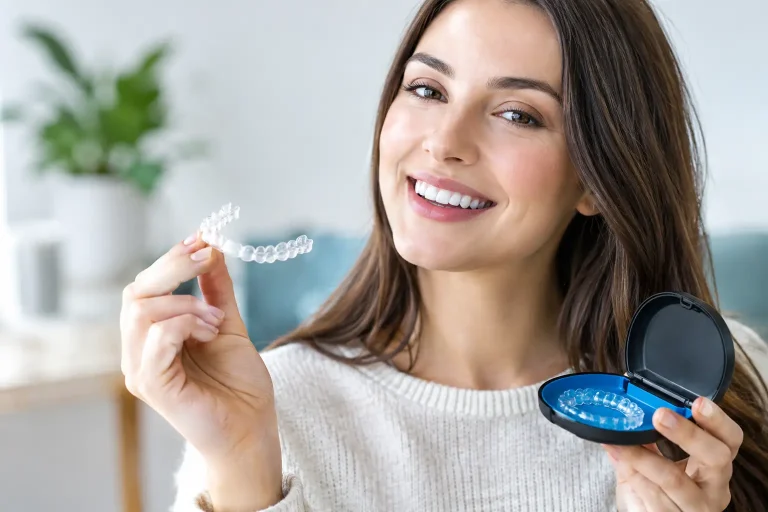
A useful Invisalign treatment timeline example is not a promise that every smile will follow the same calendar. One person may need a few months to straighten mild crowding, while another needs longer to correct bite concerns or create space safely. The reassuring part is that you will know what is planned, why each stage matters and how your progress is being monitored.
For many adults, Invisalign fits around work, family life and social plans more easily than fixed braces. The aligners are discreet and removable, but the best results still depend on wearing them consistently and attending the appointments that keep treatment on track.
Invisalign treatment timeline example: a 9-month case
This example follows a patient with mild to moderate crowding in the front teeth and small gaps that affect the appearance of their smile. Their bite is healthy and stable, so no complex bite correction is needed. A nine-month plan is realistic in this situation, although your own treatment may be shorter or longer.
Weeks 1-2: Consultation and suitability assessment
Treatment begins with a detailed consultation. Your dentist will discuss what you would like to change, examine your teeth and gums, and assess whether clear aligners are a suitable option. Healthy gums and teeth are essential before orthodontic treatment starts, so any decay, gum concerns or urgent dental work should be addressed first.
This is also the point to discuss practical questions. How often will you need to wear the aligners? How will treatment fit around a holiday, a wedding or an important work event? What result is achievable within your teeth and bite? Clear answers early on help avoid unrealistic expectations.
Photographs, digital scans and, where clinically required, X-rays are used to plan tooth movement accurately. Unlike traditional impressions, a digital scan is usually quick and comfortable. Your clinician can use the records to create a tailored treatment plan and talk you through the anticipated stages.
Weeks 3-5: Planning and approving your smile design
The digital plan maps out how teeth are expected to move from one aligner stage to the next. You may be shown a simulation of the planned outcome. This can be exciting, but it is a guide rather than a guarantee of an identical final image. Teeth do not always respond at precisely the same speed, which is why professional review remains important throughout treatment.
Once the plan is agreed and your aligners have been made, you return to begin. Some patients need small tooth-coloured attachments placed on selected teeth. These act as gentle grip points, helping the aligners apply the right force and making more precise movements possible. They are usually subtle, but you may notice them when the aligners are out.
Occasionally, tiny amounts of space are created between certain teeth to relieve crowding. This is carefully planned and is not needed for everyone. Your dentist will explain if it is recommended for you and why.
Months 1-3: Settling into the routine
At your fitting appointment, you will learn how to insert and remove your aligners, clean them and change to the next set. Aligners are commonly worn for around 20 to 22 hours a day, removing them to eat, drink anything other than water, and clean your teeth. Your individual instructions should always take priority.
The first few days with a new aligner can bring pressure or tenderness. This is normally a sign that the aligner is active, not that something is wrong. Most people find the sensation settles quickly. Speaking may feel slightly different at first too, but this generally improves as you get used to wearing the trays.
In this example, the patient changes aligners at the interval set by their dentist, often every one or two weeks. They attend a progress check around six to eight weeks after starting. At this appointment, the clinician checks that the aligners fit closely and that teeth are tracking as planned.
Consistency matters more than people expect. Leaving aligners out for regular long lunches, evenings out or weekends can slow movement. If you are unsure whether you have worn an aligner enough, it is better to ask for advice than move on early.
Months 4-6: Visible changes and progress reviews
By the middle of treatment, the front teeth in this example are beginning to look less crowded. Small changes often become noticeable in photographs or when brushing, even if friends and colleagues have not spotted the aligners.
This stage can feel encouraging, but it is also where patience pays off. The teeth may look straighter before the bite and finer details are complete. Finishing treatment too soon can compromise the result, particularly where edges need to align or spaces need closing fully.
A further review checks the health of your gums, the condition of attachments and how each aligner is fitting. Keeping up good brushing and interdental cleaning is particularly important because food and plaque can be trapped if aligners are put back over unclean teeth. Clean aligners and a healthy mouth support a smoother treatment experience.
If an aligner is lost, cracked or no longer fits properly, contact the practice promptly. Do not simply skip ahead to the next tray unless you have been advised to do so. A quick conversation can prevent a small issue from disrupting the plan.
Months 7-9: Refinement and finishing details
Towards the end of the first set of aligners, the clinician assesses the result against the original plan. In an uncomplicated case, the teeth may be ready to finish at this point. However, many patients benefit from refinement aligners – additional trays designed to make smaller adjustments after the main movements are complete.
Refinements are not a failure. They are a normal part of delivering a careful, personalised result, especially when teeth have moved slightly differently from the original prediction. Depending on what is needed, this stage may add a few weeks or several months.
For our nine-month example, a short refinement phase closes the remaining small gap and improves the alignment of the front teeth. The attachments are then removed and the teeth are polished. Your dentist will check the bite, the appearance of the smile and, importantly, whether you are comfortable with the result.
What can make your Invisalign timeline shorter or longer?
The complexity of your starting position has the greatest effect. Minor spacing or crowding may need only a relatively short course, while more significant rotations, bite changes or tooth movements take longer and require closer monitoring.
Your wear time also matters. Invisalign works when the aligners are worn as prescribed. Repeatedly wearing them for less than the recommended hours can mean teeth fall behind the planned stage. This may lead to extra aligners or a longer overall timeline.
Dental health can affect when treatment starts or pauses. Treating gum disease, decay or an unexpected dental problem first protects your long-term oral health. It may feel like a delay, but it is the right foundation for orthodontic treatment.
Finally, every person responds biologically in their own way. Bone support, tooth shape, previous dental work and the type of movement required can all influence progress. A personalised plan is more reliable than a one-size-fits-all estimate.
Retainers: the part that protects your result
Straightening your teeth is only part of the process. Teeth naturally have a tendency to move after orthodontic treatment, which is why retainers are essential. Once active Invisalign treatment is complete, retainers are made to hold the new positions while the surrounding tissues settle.
Your dentist will advise how to wear them, often full-time at first before moving to night-time wear. Follow that advice carefully. A retainer is the simplest way to protect the time, effort and investment you have put into your new smile.
If you are considering Invisalign in Leytonstone or the surrounding area, a consultation gives you a much clearer answer than an online estimate. The most helpful timeline is the one built around your teeth, your goals and the care needed to keep your smile healthy at every stage.