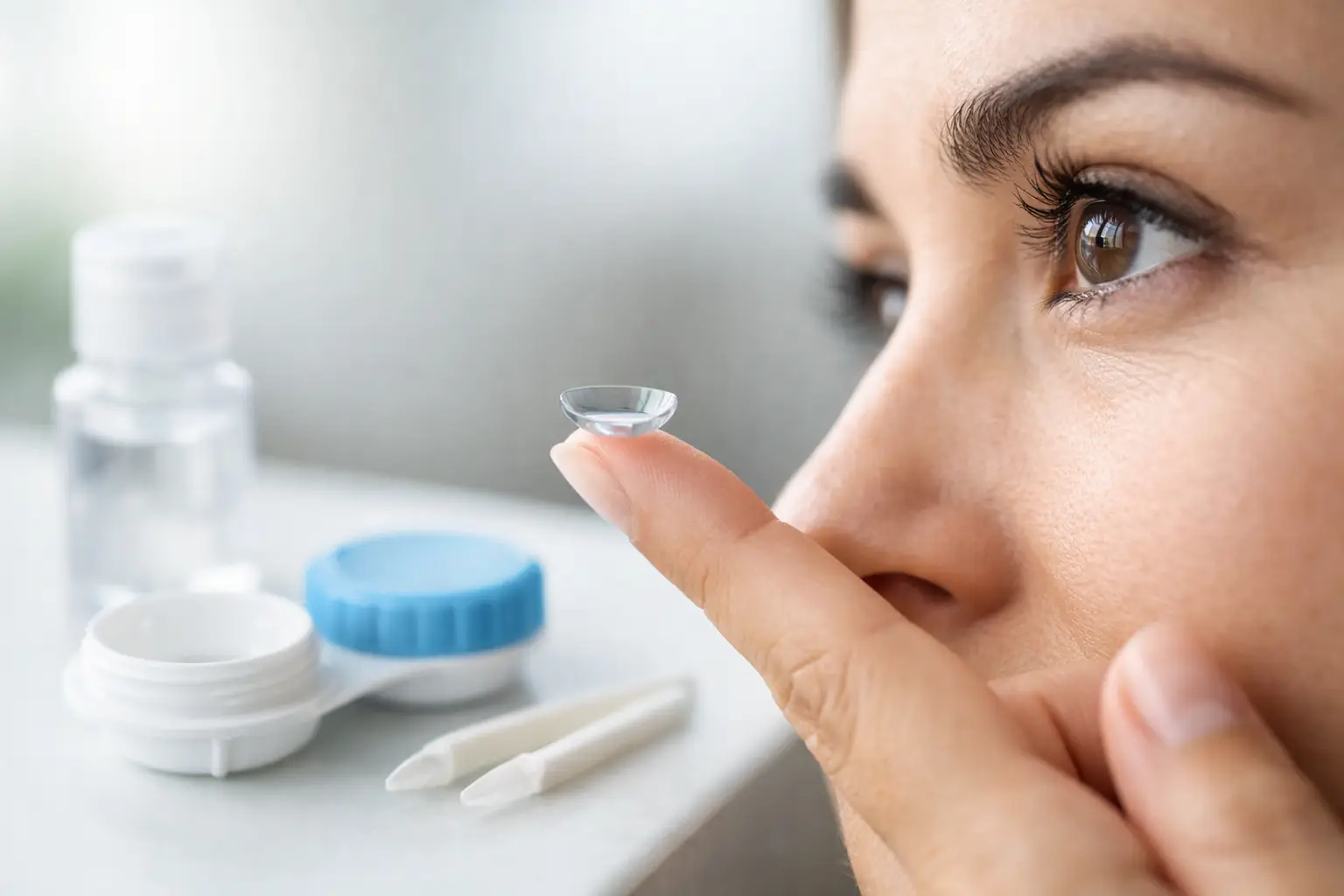
A contact lens should disappear from your awareness once it is in place. If your eyes feel dry, irritated or constantly noticeable, the answer is not simply to tolerate it. The right lens choice begins with your prescription, but it also depends on your eye health, routine, working environment and how often you plan to wear lenses. This guide to choosing contact lenses will help you understand what to discuss at your contact lens appointment.
Start with a contact lens assessment, not just a spectacle prescription
A glasses prescription is a valuable starting point, but it is not enough to select contact lenses safely. Contact lenses sit directly on the surface of the eye, so their fit matters as much as their optical power. During an assessment, your optometrist checks the health of your eyes and takes measurements that help determine the most suitable lens diameter, curvature and material.
This is also the time to talk honestly about your lifestyle. Someone who wants lenses for occasional nights out may need something quite different from a person who wears them for long office days, plays sport several times a week or finds that their eyes become dry in heated rooms.
A proper fitting includes a trial of suitable lenses and a check that your vision remains clear and your eyes are responding well. It is a small amount of time that can prevent a great deal of discomfort later.
Guide to choosing contact lenses by wearing pattern
For most people, the first decision is how often they want to replace their lenses. There is no single best option. The practical choice is the one you can wear comfortably and look after correctly.
Daily disposable lenses
Daily disposable lenses are worn once and discarded at the end of the day. They are often a convenient choice for people with busy schedules, occasional wearers and those who do not want to manage a cleaning routine. A fresh pair each morning can also be helpful if you are prone to deposits building up on reusable lenses.
They can cost more per wear if used every day, although the total value depends on your prescription and how frequently you wear them. For someone who only uses lenses at weekends, for sport or for special occasions, dailies can be particularly straightforward.
Reusable lenses
Reusable lenses are commonly replaced on a schedule set by the manufacturer and your optometrist, often every two weeks or monthly. They can be a cost-effective option for regular wear, but they require reliable cleaning and storage every time you remove them.
That routine cannot be skipped. Reusable lenses need the correct solution, a clean lens case and replacement at the advised interval. Water should never be used to rinse lenses or their case, and lenses should not be worn beyond their planned replacement date simply because they still feel acceptable.
Occasional or regular wear
It is worth being realistic here. If you know you will only wear contact lenses a few times a month, a reusable lens can become less convenient because of the care involved. On the other hand, if lenses are part of your daily routine and you are happy to follow cleaning instructions carefully, a reusable option may suit you well.
Your clinician can explain the costs clearly, including the ongoing cost of solutions where relevant, so you can choose without surprises.
Consider your vision needs, not only your prescription strength
Contact lenses are available for many common prescriptions, including short-sightedness and long-sightedness. If you have astigmatism, you may need a toric lens designed to stay in the right position on the eye. These lenses can provide sharper, more stable vision than a standard spherical lens for the right prescription.
If reading menus, mobile phone screens or small print has become more difficult, multifocal contact lenses may be worth discussing. They are designed to support vision at more than one distance. They can take a little time to adapt to, and the experience varies from person to person, but they offer freedom from constantly reaching for reading glasses for many wearers.
Some prescriptions are more complex and need a more individual approach. The key point is not to assume that contact lenses are unavailable to you because a standard off-the-shelf option did not work in the past. A current eye examination and fitting will show what is appropriate now.
Comfort is about the lens material and your daily environment
Modern contact lenses are made from materials that allow oxygen to reach the front surface of the eye. This supports comfortable, healthy wear when lenses are used as directed. However, a material that feels excellent for one person may not be the best match for another.
Think about the conditions your eyes face through a normal week. Air-conditioned offices, central heating, long periods on screens, outdoor work, pollen and late nights can all affect comfort. When concentrating on a screen, people tend to blink less fully, which can make lenses feel dry or blurry by the end of the day.
If this sounds familiar, mention it during your appointment rather than assuming contact lenses are not for you. A different lens material, replacement schedule or wearing plan may help. You may also be advised to limit wear on certain days or use lubricating drops that are suitable for contact lens wear.
Comfort is not something to compromise on. Redness, pain, light sensitivity, persistent grittiness or reduced vision are reasons to remove your lenses and seek professional advice promptly.
Choose a routine you can follow safely
Good contact lens care is less complicated than it sounds, but it needs consistency. The safest choice is often the lens routine that fits naturally into your life. If you are likely to rush at the end of a long day, daily disposables may remove an important step. If you prefer reusable lenses, make cleaning them part of your evening routine rather than leaving it until the morning.
Whatever type you wear, a few rules protect your eyes:
- Wash and dry your hands thoroughly before handling lenses.
- Never sleep in lenses unless your optometrist has specifically advised that your lenses and eyes are suitable for it.
- Keep lenses away from tap water, swimming pools and showers.
- Follow the replacement schedule and attend recommended aftercare appointments.
Contact lens aftercare is not just an administrative check. It gives your optometrist a chance to assess the health of your eyes, check your vision and make changes before a minor comfort issue becomes a bigger problem.
Think about when you want to wear lenses
Many people do not need to choose between contact lenses and glasses. Keeping an up-to-date pair of glasses is sensible even if you love wearing lenses. Your eyes may need a rest, you may be unwell, or you may simply prefer glasses at home.
Contact lenses can be particularly useful for exercise, events, holidays and days when you prefer an unobstructed field of view. Glasses may be more comfortable for long screen-heavy days or when your eyes feel tired. Using both gives you flexibility rather than forcing one option to do everything.
For parents considering lenses for a child or teenager, maturity matters more than age alone. A young person needs to understand hygiene, take responsibility for handling lenses and feel confident enough to say if something does not feel right. An optometrist can offer clear, age-appropriate guidance for the family.
Questions worth asking at your fitting
A good appointment should leave you feeling clear about the plan. Ask which lens type has been recommended and why, how long you can wear it each day, when it must be replaced and what to do if your eyes become uncomfortable. It is also helpful to ask about the full ongoing cost, including solutions for reusable lenses.
At Eyespy Eye and Dental Care, patients are encouraged to ask questions during their fitting and aftercare. Personal recommendations should make sense for your eyes and your routine, not feel like a pressured purchase.
The most suitable contact lens is rarely the one with the simplest advert or the lowest initial price. It is the lens that gives you reliable vision, feels comfortable throughout its intended wear time and can be used safely as part of your real life. If you are unsure where to begin, a contact lens assessment offers the reassurance of a choice made around your eyes, rather than guesswork.