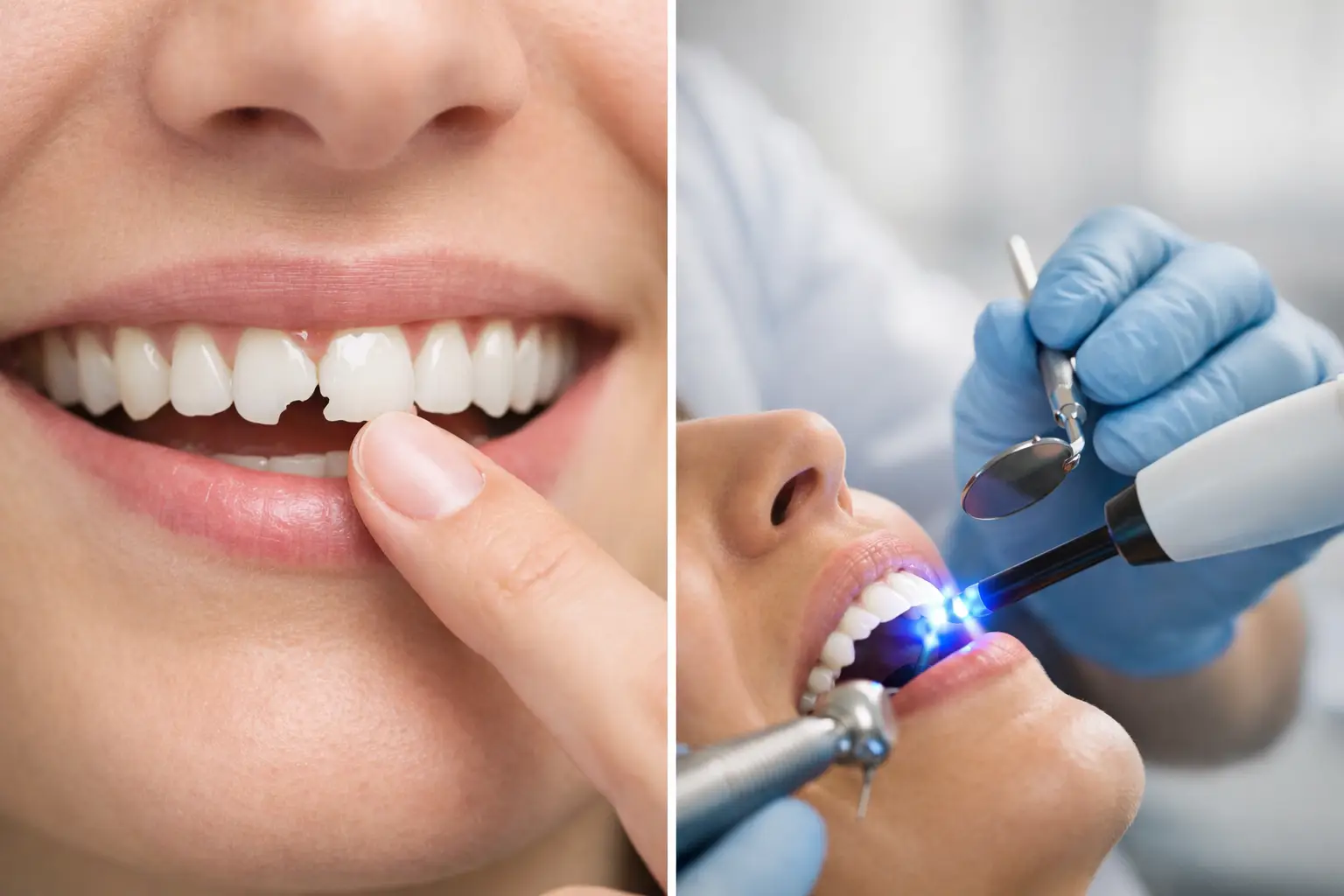
A chipped tooth can happen in a second – while biting something hard, during sport, or after an unexpected fall. Knowing how to fix chipped tooth damage begins with protecting the tooth and arranging a dental assessment promptly. Even a small chip can leave a sharp edge, weaken the tooth or expose an area that becomes sensitive over time.
The reassuring news is that many chipped teeth can be repaired effectively, often in a single appointment. The right treatment depends on how much tooth structure has been lost, where the chip is located and whether the inner part of the tooth has been affected.
What to do straight away after chipping a tooth
First, rinse your mouth gently with warm water to clear away any debris. If you can find the broken piece of tooth, keep it in a clean container with milk or saliva and bring it to your dental appointment. It may occasionally be possible to reattach it, although this is not always the best or most reliable option.
If the edge feels sharp, cover it temporarily with dental wax from a pharmacy, or use sugar-free chewing gum as a short-term measure. Avoid biting on that side of your mouth and choose soft foods until you have been seen. A cold compress against the outside of the cheek can help if there is swelling after a knock or fall.
Do not try to file the tooth yourself, use household glue or place aspirin directly against the gum. These can cause further damage or irritation. Over-the-counter pain relief may help when taken as directed, but persistent pain, sensitivity or swelling needs professional attention.
When a chipped tooth needs urgent care
A minor chip is not always an emergency, but it should still be checked. Contact a dentist as soon as possible if the tooth is painful, very sensitive to hot or cold drinks, bleeding, loose, discoloured or cracked deeply. These signs can suggest that the nerve or root may be involved.
Urgent dental advice is also needed if the injury follows a significant blow to the face, if swelling is developing, or if a broken edge is cutting your tongue or cheek. If you have uncontrolled bleeding, severe facial swelling or difficulty breathing or swallowing, seek emergency medical help immediately.
For children, it is particularly worthwhile arranging an assessment even when a chip seems small. An injury can affect a developing tooth in ways that are not obvious on the day.
How to fix chipped tooth damage at the dentist
Your dentist will examine the tooth, surrounding gums and bite. An X-ray may be recommended where there is concern about a hidden crack, damage below the gum line or an injury to the tooth root. From there, treatment is chosen to protect the tooth as well as improve how it looks.
Smoothing and polishing for tiny chips
If only a very small amount of enamel has chipped away, smoothing and polishing the edge may be enough. This is a conservative option that can remove roughness and make the tooth feel comfortable against your tongue. It is generally best for superficial chips where the shape of the tooth has not changed noticeably.
Composite bonding for visible chips
Composite bonding is one of the most common ways to restore a chipped front tooth. Your dentist builds up the missing area using a tooth-coloured resin, carefully matching its shade and shaping it to blend with the surrounding enamel. The material is then hardened and polished.
This approach is usually minimally invasive because little or no healthy tooth structure needs to be removed. It can often be completed in one visit and is especially useful for small to moderate chips, uneven edges and minor gaps.
Composite is not indestructible, however. It can stain, wear or chip over time, particularly if you bite nails, pens or hard foods, or grind your teeth. It may need maintenance or replacement in the future. A dentist can explain whether bonding is likely to give the appearance and durability you want.
Veneers when appearance is the main concern
A veneer is a thin custom-made covering fitted to the front surface of a tooth. It may be considered when a front tooth has a larger visible chip, repeated bonding has not lasted, or there are other cosmetic concerns such as uneven shape or colour.
Veneers can create a highly natural-looking result, but they are a bigger commitment than bonding. Some tooth preparation may be necessary, and the treatment is usually completed over more than one appointment. The most suitable choice depends on the condition of the tooth, your bite and your long-term goals.
Crowns for more extensive damage
When a large portion of a tooth has broken away, a crown may provide stronger protection. A crown covers the tooth like a protective cap and can restore its shape, function and appearance. It is more commonly used for back teeth that take heavy chewing forces, but can also be appropriate for a severely damaged front tooth.
Because a crown involves preparing the tooth, it is generally reserved for cases where a simpler repair would not be strong enough. Your dentist should talk you through the benefits, alternatives and expected lifespan before treatment begins.
Root canal treatment if the nerve is exposed
A deep chip can reach the pulp, the soft inner tissue containing nerves and blood vessels. This may cause intense pain, lingering sensitivity or, sometimes, no symptoms at all initially. If the pulp is damaged or infected, root canal treatment may be needed to save the tooth.
During treatment, the infected or injured tissue is removed, the inside of the tooth is cleaned and sealed, and the tooth is restored with a filling or crown. While it sounds daunting, modern root canal treatment is carried out with local anaesthetic and is designed to relieve pain and preserve your natural tooth.
Can a chipped tooth repair itself?
Tooth enamel does not grow back, so a chipped tooth will not repair itself in the way a cut on your skin heals. The tooth may stop feeling sensitive after a few days, but that does not mean the chip has resolved or that there is no deeper problem.
Small enamel chips may not always need a build-up, but they should be examined to make sure the edge is safe and the tooth is stable. Leaving a sharper or weakened area untreated can make it more likely to chip further.
Looking after a repaired tooth
Once your tooth has been repaired, good daily care helps protect the result. Brush twice a day with fluoride toothpaste, clean between your teeth and keep up with routine dental examinations and hygienist visits. If you have had bonding, avoid using your teeth to open packaging or bite hard objects.
If you clench or grind your teeth, especially at night, a custom-made bite guard may help protect both natural enamel and dental restorations. For people who play contact sports, a properly fitted sports mouthguard is a sensible investment.
Be mindful of very hard foods such as ice, unpopped popcorn kernels and hard sweets. You do not need to avoid every crunchy food, but biting directly into hard items with front teeth can place unnecessary pressure on a repaired edge.
Choosing the right treatment for your smile
There is no single answer to how to fix chipped tooth damage because the best option is individual. A tiny chip at the edge of a front tooth may need only smoothing or composite bonding, while a deep fracture in a back tooth may require a crown or root canal treatment. The aim should always be to preserve as much healthy tooth as possible while restoring comfort, strength and a natural appearance.
At Eyespy Eye and Dental Care, patients in Leytonstone can expect a clear explanation of their options, including what each treatment involves and any likely future maintenance. If you have chipped a tooth, arranging an assessment early gives you the best chance of a straightforward repair and the confidence to smile, eat and speak comfortably again.