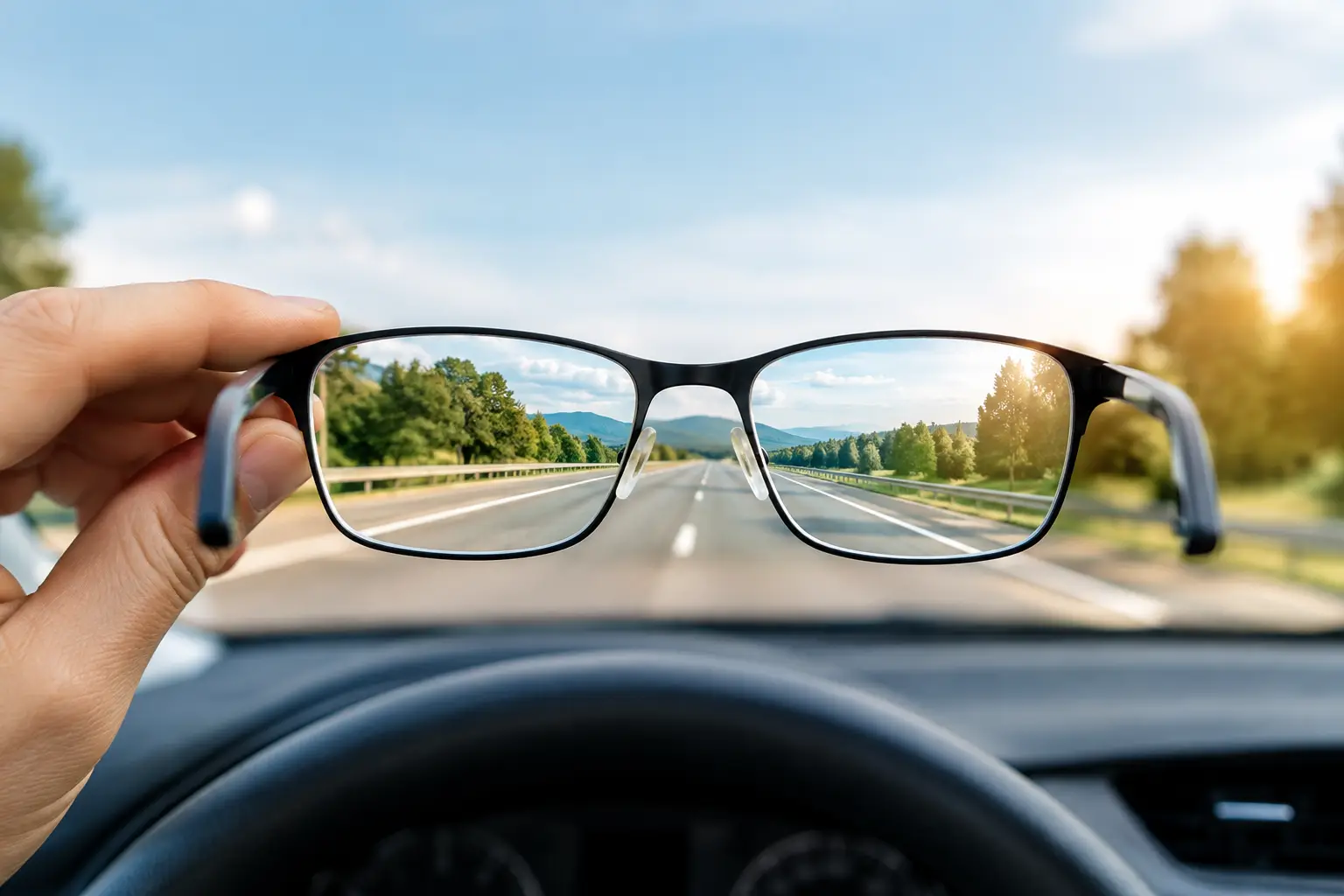
A low winter sun on the A12, headlamps reflected on wet roads, a road sign that seems to appear a second too late – driving places very specific demands on your eyes. The best glasses for driving are not simply the pair with the strongest prescription or darkest tint. They are the pair that gives you reliable, comfortable vision in the conditions you actually face, from school runs around Leytonstone to longer evening journeys.
The right choice starts with an up-to-date eye examination. Once your prescription is accurate, lens design, coatings and frame fit can make a noticeable difference to how confident and relaxed you feel behind the wheel.
What makes the best glasses for driving?
Good driving glasses should provide crisp distance vision, minimise distracting reflections and stay comfortable without blocking your peripheral view. They should also suit the time of day you drive most often. A person who mainly drives in bright daylight may benefit from different features to someone commuting after dark.
Your prescription is the foundation. Even a small change in vision can make road signs, number plates and hazards harder to judge, particularly in rain or low light. Astigmatism, which can cause lights and fine detail to appear stretched or blurred, is especially relevant when driving at night. A precise prescription helps bring those details back into focus.
It is also worth remembering that legal eyesight requirements are a minimum, not necessarily the level at which you feel your most comfortable. If you find yourself squinting at signs, avoiding night driving, suffering headaches after a journey or feeling unusually bothered by glare, it is sensible to arrange an eye examination rather than simply putting up with it.
Anti-reflection coating is often the most useful upgrade
For many drivers, a high-quality anti-reflection coating is one of the most valuable lens features. It reduces reflections from the front and back surfaces of your lenses, helping your vision feel clearer when headlights, streetlights and illuminated dashboards are in view.
This matters after dark, when reflections can compete with the detail you are trying to see. The coating will not remove every source of glare – wet roads and very bright headlamps remain challenging – but it can reduce the distracting reflections created by your spectacles themselves.
Anti-reflection coatings can also make lenses look clearer to others and are commonly paired with a hard coating to help protect against everyday scratches. No lens is completely scratch-proof, so regular cleaning with a clean microfibre cloth and appropriate lens spray remains worthwhile.
Choose sun protection carefully for daytime driving
Bright sunlight can be tiring as well as uncomfortable. Sunglasses with full UV protection are an excellent choice for daytime driving, provided the tint is appropriate. A grey, brown or green tint can all work well, although the best option is partly personal preference.
Grey tints offer natural colour perception, which many people find comfortable for general driving. Brown tints may improve the sense of contrast in changeable light, while green tints can offer a balanced, relaxed view. The key point is that the lens should reduce brightness without making the road, traffic lights or shaded areas too dark.
Avoid very dark lenses for driving. Category 4 sunglasses, often designed for exceptionally bright environments, are not suitable for use on the road. They can reduce your vision too much, especially when moving between bright sun and shade or entering a tunnel.
Are polarised lenses good for driving?
Polarised sunglasses can be very helpful in the daytime because they reduce glare reflected from flat surfaces such as wet roads, car bonnets and puddles. For many drivers, this creates a more comfortable view on sunny days.
There is a trade-off, though. Polarisation can make certain digital displays, dashboard screens and head-up displays harder to read at particular angles. If your vehicle relies heavily on an LCD display, try the lenses while looking at it before committing. A good optician can discuss whether polarised or non-polarised prescription sunglasses are likely to suit your driving routine better.
Why photochromic lenses are not always enough
Photochromic lenses darken in bright light and lighten indoors, which can be convenient for everyday wear. However, many car windscreens filter a significant amount of the UV light that activates them. This means they may not darken as much in the car as they do outdoors.
They can still be a useful all-round option, but frequent drivers often prefer a dedicated pair of prescription sunglasses for dependable daytime comfort. Your habits matter more than a one-size-fits-all answer.
Night driving glasses should stay clear
When night driving feels difficult, it is tempting to look for yellow-tinted or heavily marketed ‘night driving’ lenses. In practice, a tint reduces the amount of light reaching your eyes. That is rarely helpful when you need to see as much detail as possible in already low light.
For most people, clear prescription lenses with a good anti-reflection coating are the better choice for night driving. Clean lenses and a clean windscreen matter too. A thin film on either surface can scatter light and turn oncoming headlights into a much larger distraction.
If glare has become noticeably worse, do not assume it is only a lens problem. Changes to your prescription, dry eyes or early changes within the eye can all affect night vision. An eye examination gives you the opportunity to discuss the symptoms properly and receive advice tailored to you.
Single-vision or varifocal lenses for the road?
Single-vision distance glasses are often straightforward for driving because the whole lens is set up for looking far ahead. They can be ideal if you only need correction for distance.
If you wear varifocals, you should still be able to drive comfortably, but lens design and fitting become particularly important. You need clear distance vision through the upper part of the lens, with a useful intermediate zone for checking the dashboard, mirrors and sat-nav. A carefully measured, well-fitted varifocal lens makes this easier.
Some people prefer a separate pair designed around their driving needs, especially if they spend many hours on the road or find their current varifocals restrictive. This is not essential for everyone, but it can be worth discussing if you frequently move your head to find a clearer part of the lens or feel less assured at junctions and roundabouts.
Frame fit affects safety and comfort
The best lenses can only do so much if the frame is poorly fitted. A frame should sit securely without sliding down your nose, pinching at the temples or pressing uncomfortably behind your ears. If your glasses move every time you check a mirror, they will quickly become frustrating.
For driving, consider how much of your peripheral vision the frame blocks. Very thick sides or oversized decorative details may be stylish, but they can create a more noticeable blind spot when you glance sideways. A well-proportioned frame with a comfortable bridge and a stable fit is usually the practical choice.
It is also useful to think about coverage. Larger lenses can provide a generous field of vision and reduce light entering around the edges, particularly in sunglasses. The aim is not to choose the biggest frame available, but one that suits your face and keeps your view open.
A simple way to decide what you need
Before choosing new driving glasses, think about the journeys that cause the most difficulty. Is it glare on a rainy evening, low sun during the morning commute, blurred motorway signs or discomfort after an hour at the wheel? Those details help guide the recommendation.
At Eyespy Eye and Dental Care, an eye examination is a chance to discuss more than the letters on the chart. Explaining when and where your vision feels challenging helps your optometrist recommend a prescription, lens type and fitting that are appropriate for your day-to-day life.
The most reassuring driving glasses are the ones you stop noticing. They should let you concentrate on the road ahead, not on glare, blur or an uncomfortable frame. If your current pair is making journeys feel harder than they should, a careful prescription check is a sensible place to start.