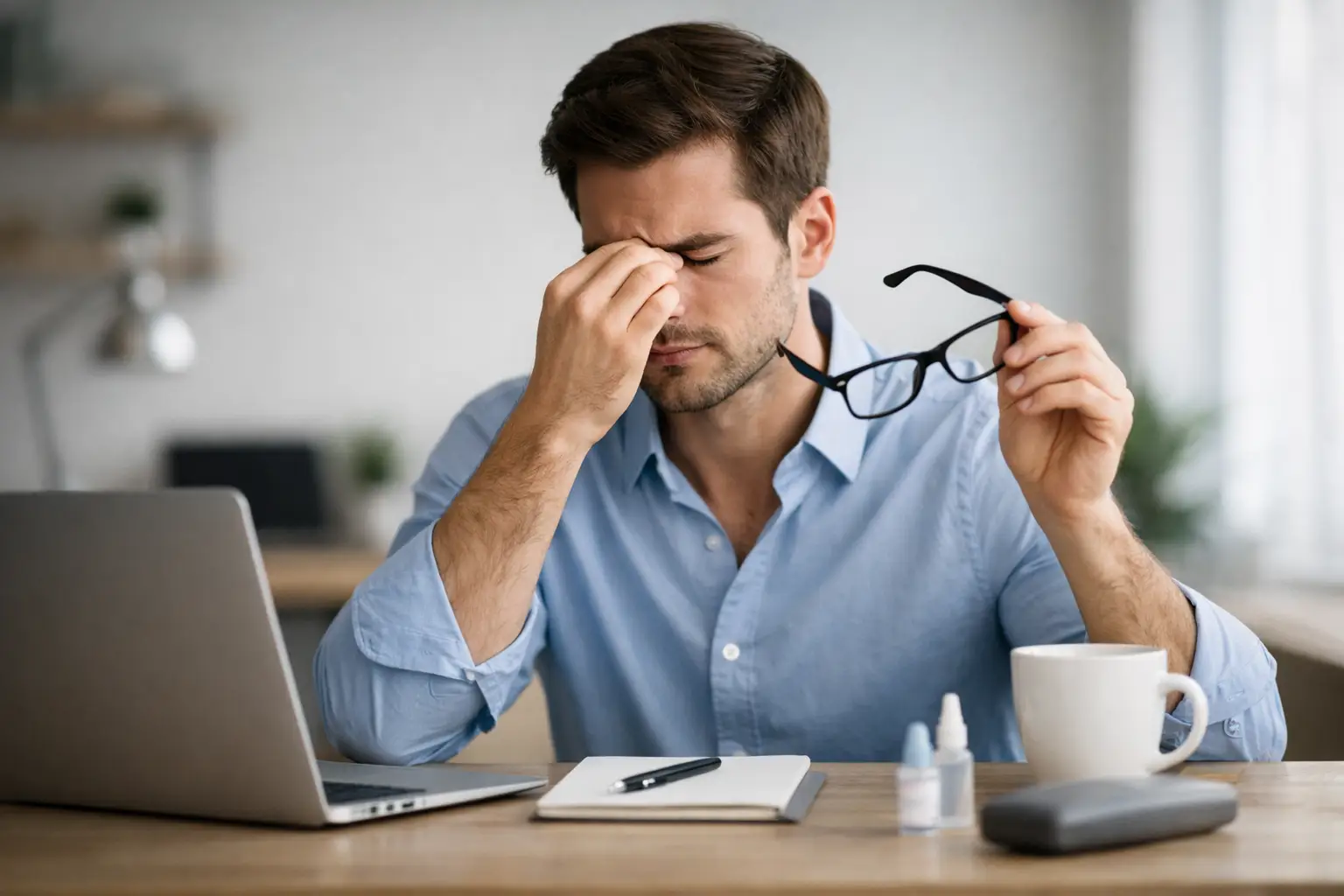
A long afternoon at a screen can leave your eyes feeling tired, dry or oddly heavy, even when you can still read every word clearly. So, can glasses reduce eye strain? Often, yes – but only when they address the reason your eyes are working harder than they should.
Eye strain is not usually a sign that your eyes are being permanently damaged. It is, however, a useful signal that something about your vision, working environment or visual habits needs attention. A careful eye examination can help separate a simple prescription issue from dry eye, screen habits or a problem that needs further assessment.
Can glasses reduce eye strain?
Glasses can reduce eye strain when uncorrected or under-corrected vision is making your eyes constantly compensate. Even a small prescription can matter, particularly when you spend hours focusing at one distance, such as on a laptop, phone, book or paperwork.
Your eyes use a focusing system to keep near objects clear. If you are short-sighted, long-sighted, have astigmatism or are beginning to need help with close work, that system may have to work harder throughout the day. The result can be tired eyes, headaches around the forehead or temples, blurred vision that comes and goes, and difficulty concentrating.
The right glasses reduce that unnecessary effort. They do not simply make text sharper; they can make sustained visual tasks feel more comfortable. That said, glasses are not a cure-all. If your prescription is already accurate, a new pair may not solve discomfort caused mainly by dry eyes, poor lighting or long periods without blinking.
When a prescription is the likely answer
A prescription check is particularly worthwhile if symptoms appear during reading, computer work or driving, or if you find yourself squinting, moving closer to the screen or holding books further away. You may also notice that one eye seems to work harder than the other, or that headaches improve after you stop using your eyes for close tasks.
Small changes can have a noticeable effect
It is easy to assume that only a strong prescription causes problems. In practice, mild long-sightedness and small amounts of astigmatism can be tiring because your eyes may manage to compensate for much of the day. The effort is often most noticeable when you are busy, tired or working under artificial light.
For adults over about 40, a gradual change in near focus is also common. You may be able to see a menu or a message on your phone, but only by holding it at an uncomfortable distance or after a few moments of effort. Reading glasses or a tailored near-vision prescription can make close tasks more relaxed.
The glasses need to suit the task
One prescription is not always ideal for every activity. Someone who spends most of their day switching between a desktop monitor, notes and colleagues across the room may benefit from lenses designed around those working distances. A person who mainly reads in the evening may need something different.
This is why it helps to explain how you use your eyes, rather than simply asking for the strongest possible correction. Tell your optometrist about screen time, night driving, detailed work, hobbies and any points in the day when discomfort is worst. The best solution should support your real routine.
Screen glasses and blue-light lenses: what to expect
Screen glasses are a broad term. Sometimes they mean glasses with a prescription set for computer distance. Sometimes they refer to lenses with an anti-reflection coating or a blue-light filter. These options can be useful for some people, but the reasons matter.
Anti-reflection coatings can reduce distracting reflections from overhead lights and screens. This may improve comfort and clarity, especially in bright offices or when driving after dark. They also help lenses look clearer in photographs and face-to-face conversations.
Blue-light filtering lenses are often marketed for digital eye strain. Current evidence does not show that blue light from ordinary screens is the main cause of eye strain, or that filters reliably prevent it for everyone. Screen discomfort is more commonly linked to prolonged close focusing, reduced blinking, glare and dry eyes.
That does not mean these lenses are never worth considering. Some people prefer them for subjective comfort, and an optician can talk through the available choices. They should not, however, replace an accurate prescription, sensible screen setup or healthy breaks.
Why glasses may not be enough
Digital eye strain often has more than one cause. When concentrating, people blink less often and less fully. Tears evaporate faster, leaving the eyes dry, gritty, watery or sensitive to light. Air conditioning, heating, contact lens wear and some health conditions can add to the problem.
Your workspace can also contribute. A screen that is too bright, too close or positioned higher than eye level may encourage glare and reduce blinking. Small print, poor contrast and long stretches of uninterrupted work make it harder still.
Try placing your screen roughly an arm’s length away, with the top of it at or slightly below eye level. Adjust brightness so it is comfortable compared with the room around you, rather than turning it up to the maximum. If you use several screens, arrange them so you are not repeatedly twisting your head or changing focus across large distances.
The 20-20-20 approach is a simple habit: every 20 minutes, look at something around 20 feet away for 20 seconds. It is not a magic rule, but it gives your focusing system a brief rest. Making a conscious effort to blink fully can also help, particularly when your eyes feel dry.
How an eye examination can identify the cause
Eye strain is a symptom, not a diagnosis. A comprehensive eye examination checks more than whether you can read the letters on a chart. It assesses how clearly each eye sees, whether your eyes work together comfortably, whether your prescription has changed and whether the front and back of the eye look healthy.
This fuller picture matters. Headaches and tired eyes may stem from a prescription issue, but they can also be related to dry eye, binocular vision difficulties or an eye health concern. It is better to investigate than to keep buying over-the-counter reading glasses in the hope that one pair will solve everything.
Bring your current glasses to the appointment and be specific about your symptoms. Mention when they happen, how long they last, whether they affect one or both eyes, and what seems to relieve them. If you use contact lenses, include how many hours you wear them and whether discomfort increases later in the day.
At Eyespy Eye and Dental Care, our optometry team takes time to discuss these everyday details, so any recommendation is based on how you live and work, not just a number on a prescription.
When to seek advice promptly
Most eye strain improves with the right correction and changes to visual habits. However, do not assume every episode of eye discomfort is routine. Arrange prompt professional advice if you have sudden vision loss, flashes of light, a shower of new floaters, severe eye pain, marked redness, double vision or a sudden, persistent headache with visual changes.
If eye strain keeps returning despite updated glasses and sensible screen breaks, book an eye examination. Persistent symptoms deserve a proper assessment, especially if they interfere with work, driving or reading.
Comfortable vision is not about forcing yourself through the day with tired eyes. A small adjustment to your prescription, lenses or routine can make close work feel far less demanding – and give your eyes the attention they have been asking for.