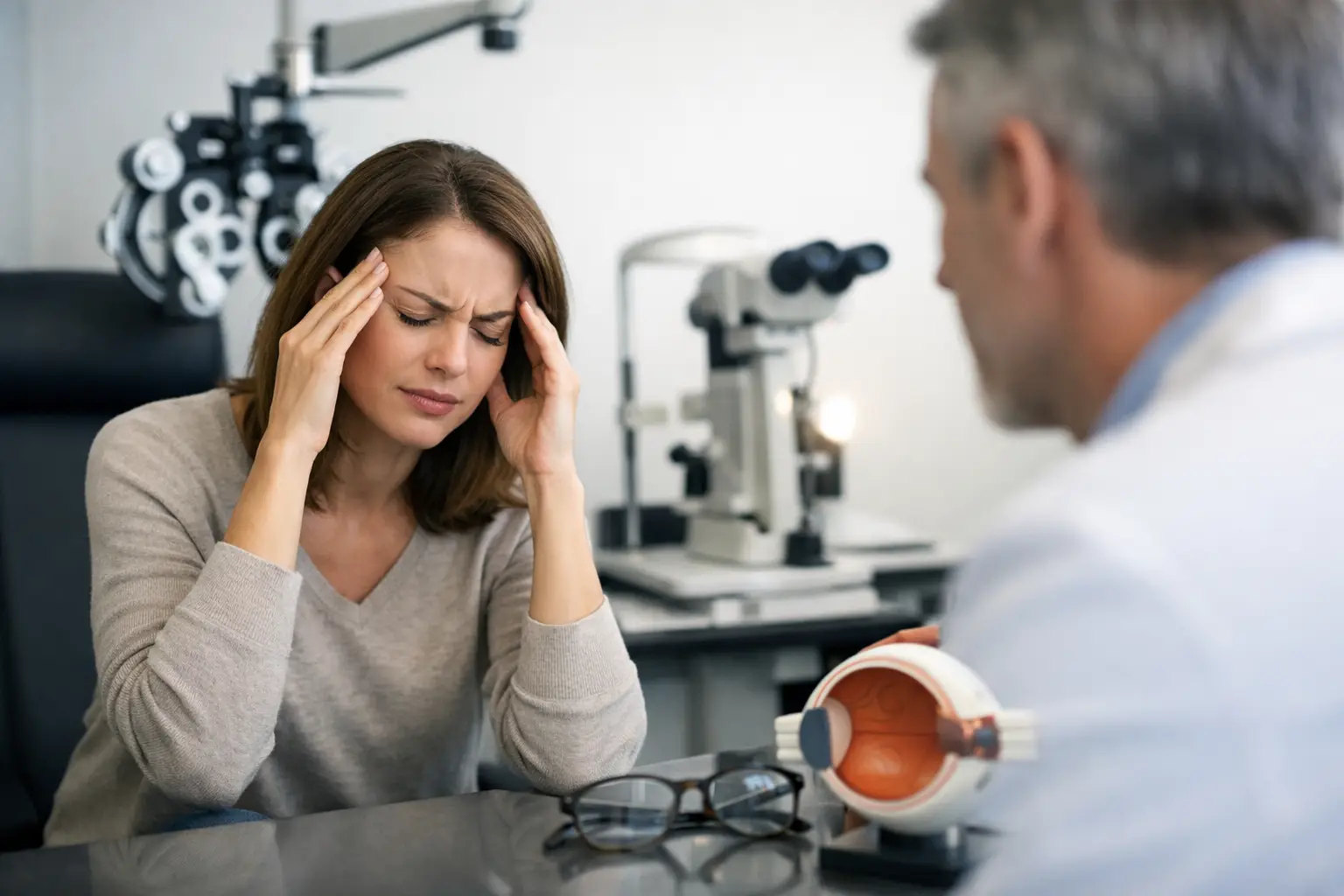
A headache that shows up halfway through the working day, after school pick-up, or during an evening on your mobile phone can be easy to brush off. Many people reach for water, rest, or pain relief and carry on. But if headaches keep returning, an eye exam for headaches is often a sensible place to start – especially when the pain seems tied to reading, screen use, driving, or tired eyes.
Headaches do not always come from your eyes, and that matters. They can be linked to stress, dehydration, poor sleep, sinus problems, hormones, migraines, blood pressure, and many other causes. Still, vision can play a bigger role than people expect. When your eyes are working harder than they should, the strain can build into discomfort around the forehead, temples, behind the eyes, or across the whole head.
Can an eye exam for headaches actually help?
Sometimes, yes. If the headaches are being triggered or worsened by an uncorrected vision problem, the right eye examination can identify what is going on. That might be a glasses prescription that has changed, eye strain from close work, difficulty focusing, or a problem with how the eyes work together.
This is one reason people are often surprised when headaches improve after updating their prescription. They may not have noticed obvious blurred vision, but the eyes have still been compensating. Small changes in sight can lead to a lot of effort, particularly if you spend long hours reading, using a laptop, or switching between screens and distance vision.
Children can be affected too. They may not say that their vision feels different, because they assume everyone sees the same way they do. Instead, they might squint, avoid reading, rub their eyes, lose concentration, or complain of headaches after school.
How vision problems can trigger headaches
The link between eyes and headaches usually comes down to effort. When the visual system is under strain, the muscles involved in focusing and eye coordination can become overworked.
One common issue is an out-of-date prescription. If you are long-sighted, short-sighted, or have astigmatism, your eyes may be trying to sharpen what you see throughout the day. Even if you can manage, that extra effort can be tiring.
Another cause is difficulty focusing at near distances. This can affect children, adults with heavy screen use, and people beginning to notice age-related changes in close vision. You may find that reading gets tiring, words seem to move slightly, or you need more breaks than before.
Eye teaming can matter as well. If the eyes are not working together comfortably, close tasks can become surprisingly draining. Some people describe this as pressure behind the eyes, others as headaches that arrive after sustained concentration.
Dry eyes can also contribute. They do not usually cause classic tension headaches on their own, but they can make the eyes feel sore, irritated, and strained, especially during screen use. That discomfort can feed into headaches, particularly by the end of the day.
Signs your headaches may be eye-related
There is no single pattern that proves headaches are caused by vision, but some clues make it more likely.
If headaches appear after reading, computer work, driving, or watching television, it is worth considering your eyes. The same applies if you notice blurred vision, double vision, squinting, tired eyes, or a need to hold things closer or further away than usual.
Some people also find the pain sits around the brow line or behind the eyes. Others notice headaches after wearing old glasses, skipping their glasses, or using contact lenses for long periods.
For children, the signs are often behavioural. They may seem reluctant to do homework, lose their place while reading, or complain that their eyes feel funny without being able to explain much more.
None of this confirms the cause, but it does make an eye examination a worthwhile step.
What happens during an eye exam for headaches
A proper eye examination is not just about reading letters off a chart. If headaches are part of the reason for booking, that should shape the appointment.
Your optometrist will usually ask when the headaches happen, how often they occur, where the pain is, and whether they relate to screens, reading, driving, tiredness, or your current glasses. These details matter because patterns can point towards eye strain or suggest that something else may be going on.
Your vision will be checked to see whether your prescription has changed. The health of your eyes will also be assessed, because in some cases headaches can be associated with underlying eye conditions. Your optometrist may also look at how well your eyes focus and work together, particularly if symptoms are strongest during close work.
If you already wear glasses or contact lenses, those will usually be reviewed too. A pair that is slightly wrong, poorly centred, or no longer suitable for your daily habits can create unnecessary strain.
Just as important, a good clinician will explain the findings clearly. If your eyes do seem to be contributing to the problem, you should come away understanding why and what can be done next.
When headaches are not caused by your eyes
This is the part that often gets overlooked. An eye exam for headaches can be helpful even when the eyes are not the cause, because ruling out visual strain is useful in itself.
Not every headache points to a vision issue. If your examination is normal, that can help narrow things down and support the next step with your GP or another healthcare professional. In that sense, the appointment is still doing an important job.
It also helps avoid guessing. People sometimes assume headaches must be due to screen time or needing glasses, when the real trigger is stress, jaw tension, migraines, sinus trouble, medication, posture, or poor sleep. The right answer depends on the pattern of symptoms, not on assumptions.
Red flags that need urgent medical advice
Most headaches are not emergencies, but some situations should never be left to a routine eye appointment alone.
Seek urgent medical help if you develop a sudden severe headache unlike anything you have had before, a headache with weakness, confusion, facial drooping, trouble speaking, or loss of consciousness. The same applies if there is sudden vision loss, new flashing lights with a curtain-like shadow over the vision, or headache with fever, neck stiffness, or persistent vomiting.
If you have eye pain, redness, and reduced vision, that should also be assessed promptly. An optometrist can advise in some urgent eye situations, but severe or sudden symptoms should be treated as time-sensitive.
Who should consider booking?
If headaches are recurring and you have not had your eyes checked in a while, booking is reasonable. That is especially true if you use screens for work, have noticed changes in vision, are getting more tired during reading, or your current glasses no longer feel quite right.
Parents should think about this for children who complain of headaches regularly or seem to struggle with schoolwork in a way that might be visual. Adults over 40 may also notice headaches linked to changing near vision, especially when reading small print or switching between mobile phone, paperwork, and distance tasks.
Even if the issue turns out not to be eye-related, having a thorough check gives you clearer information about what to do next.
The value of a local, thorough eye examination
When you are dealing with headaches, being listened to properly matters. A rushed appointment can miss useful details, particularly when symptoms are intermittent or tied to certain tasks. A community practice that takes time to ask the right questions and explain the outcome can make the whole process feel much more straightforward.
At Eyespy Eye and Dental Care, that patient-centred approach is a big part of what local families value. People want clear answers, honest advice, and the confidence that if their eyes are part of the problem, they will know what the next step should be.
If headaches have become a regular feature of your week, it is worth paying attention to the pattern rather than simply putting up with it. Sometimes the answer is as simple as updating your prescription. Sometimes it is reassurance and a nudge towards a different kind of medical advice. Either way, a careful eye examination can give you something useful – clarity.