You sit down, read a few letters, and leave with a glasses prescription – that is what many people expect. In reality, what happens at an eye test is a little more thorough than that, and that is a good thing. A proper eye examination checks your vision, of course, but it can also pick up early changes in your eye health before they start affecting daily life.
For many patients, the biggest worry is not the test itself. It is the unknown. Will it hurt? Will it take ages? What if something is wrong? The reassuring answer is that an eye test is straightforward, painless, and designed to give you clear answers about your sight and eye health.
What happens at an eye test from the moment you arrive
An eye test usually begins with a few questions about your vision, general health, and any concerns you have noticed. You might be asked whether you are getting headaches, struggling to read, finding night driving harder, or noticing tired eyes after screen use. If you already wear glasses or contact lenses, the optometrist will want to know how you are getting on with them.
This part matters more than many people realise. Your answers help shape the examination. Someone who is having problems with close work may need a slightly different focus from someone who has noticed glare while driving. If you have conditions such as diabetes or high blood pressure, or a family history of glaucoma, that can also affect which checks are especially important.
Once that background is covered, the clinical testing begins.
Checking how well you can see
One of the first parts of the appointment is measuring your visual acuity. In simple terms, that means checking how clearly you can see letters or symbols at a distance and sometimes close up as well. This is the part most people recognise.
You will usually be asked to cover one eye and read from a chart, then repeat the process with the other eye. If you wear glasses, your vision may be checked both with and without them depending on the reason for your appointment.
This test does not just tell the optometrist whether you need glasses. It also helps show whether each eye is working as expected. If one eye sees less clearly than it should, that may need further investigation rather than simply a stronger prescription.
Finding the right prescription
If your vision needs correcting, the optometrist will carry out refraction. This is the part where you look through different lenses and answer the familiar question, “Which is clearer, one or two?”
Although it can feel repetitive, this stage is how your prescription is refined. The aim is not to make things look artificially sharp for a few seconds. It is to find a prescription that gives you clear, comfortable vision in everyday life.
Sometimes the result is obvious. Sometimes it is more balanced. For example, a tiny change in prescription may sharpen the chart but feel less comfortable for long hours at work. That is why a good eye test is not rushed. It is about accuracy, but also about what feels right for you.
Eye health checks are a key part of the test
A routine eye examination is not only about whether you need glasses. It is also an important health check for your eyes.
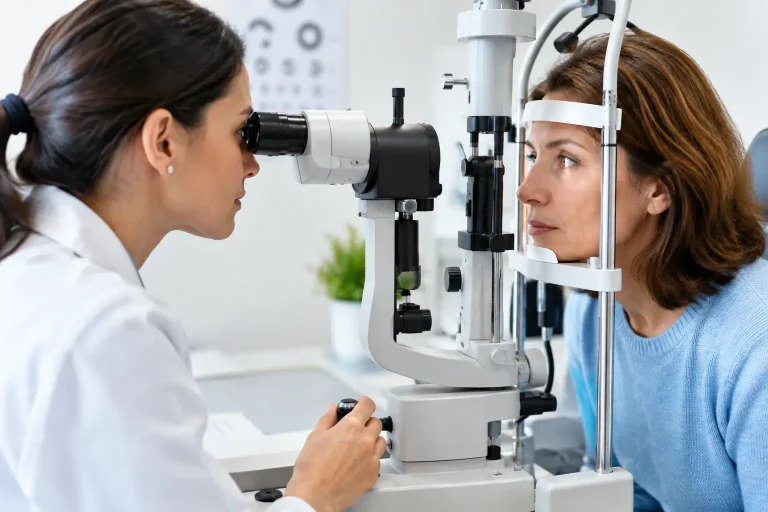
The optometrist will examine the front and inside of the eye using specialist equipment. You may be asked to place your chin on a support while a bright light is used to look at different structures of the eye, such as the cornea, lens, retina, and optic nerve. It sounds more dramatic than it feels. Most people find it mildly bright rather than uncomfortable.
These checks can help detect signs of common eye conditions, including cataracts, glaucoma, and age-related changes in the retina. They can also show signs of strain, dryness, inflammation, or contact lens-related problems.
In some cases, changes seen in the eyes can point to wider health concerns too. That does not mean an eye test replaces a GP appointment, but it does mean routine examinations can be useful in ways people do not always expect.
Will they test eye pressure?
Quite often, yes. Measuring the pressure inside the eye can form part of the examination, especially for adults and those with certain risk factors. Raised eye pressure can be linked to glaucoma, although pressure alone does not confirm it.
There are different ways to do this. Sometimes it involves a gentle puff of air. In other cases, the optometrist may use a small instrument after numbing drops are applied. Neither method should be painful.
If you are nervous about this part, say so. A good clinician will explain what they are doing before they do it.
What happens at an eye test if you have specific symptoms?
If you have booked because something feels off, the appointment may include extra checks. That might be because you have flashes or floaters, blurred vision, double vision, frequent headaches, sore eyes, or difficulty focusing.
This is where the answer to what happens at an eye test can vary a little. Not every appointment is identical, because not every pair of eyes has the same story. A patient with red, irritated eyes may need a close look at the tear film and eyelids. A child may need tests that assess how the eyes work together. Someone over 40 may need more discussion around reading vision and age-related changes.
That flexibility is a strength, not a complication. It means the appointment is built around your needs rather than treated like a one-size-fits-all process.
How long does an eye test take?
Most routine eye tests take around 20 to 30 minutes, although it can be longer if extra checks are needed or if you want time to talk through new glasses or contact lens options afterwards.
If you have not had an eye test for several years, or if you have noticeable symptoms, it is sensible to allow a little more time. A thorough appointment should not feel rushed. Clear explanations are part of good care, not an optional extra.
At an independent local practice such as Eyespy Eye and Dental Care, many patients value that extra time. Being able to ask questions and get straightforward answers can make the whole experience feel much easier.
Will you always need glasses after an eye test?
Not necessarily. Some people leave with the same prescription, some need a change, and some do not need glasses at all. The outcome depends on your age, your symptoms, your daily habits, and whether your sight has altered since your last visit.
There are also times when a prescription changes only slightly. In those cases, the optometrist may talk you through whether replacing your glasses is worthwhile now or whether it makes sense to wait. That kind of honest guidance matters. The best result is not always the most expensive one. It is the option that genuinely suits your vision and your life.
If glasses are recommended, you should also be told what they are for. Distance, reading, screen use, varifocals, and occupational lenses all solve different problems. A clear explanation helps you make a sensible choice rather than guessing.
Do children have the same eye test?
Children’s eye tests are adapted to their age and stage of development. The aim is still to check sight and eye health, but the methods may be different. Younger children may use pictures or shapes instead of letters, and the optometrist will pay close attention to how the eyes move, focus, and work together.
Children do not always realise their vision is reduced, because they assume everyone sees the way they do. That is why routine tests are so useful. Problems with sight can affect reading, concentration, confidence, and comfort at school, sometimes without obvious complaints.
For parents, the main thing to know is that children’s eye tests are designed to be calm and manageable. A patient, friendly approach makes a big difference.
How often should you have an eye test?
It depends on your age, eye health, prescription, and medical history. Many people are advised to come every two years, but some need more frequent checks. If you have a strong prescription, wear contact lenses, have an eye condition, or have been told you are at higher risk of certain problems, your recall period may be shorter.
If your vision has changed suddenly, do not wait for your next routine appointment. New symptoms should always be checked sooner.
A final thought before you book
An eye test is not something to put off until vision becomes a nuisance. It is one of the simplest ways to stay ahead of changes in your sight and eye health, and the appointment itself is usually far easier than people imagine. If you have been wondering what happens at an eye test, the short answer is this: you are listened to, your vision is checked properly, your eyes are examined carefully, and you leave knowing more than when you came in.