A missing tooth can change more than your smile. You may find yourself chewing on one side, avoiding certain foods or feeling less comfortable speaking and laughing. When considering implants versus dentures, the best choice is rarely about which treatment is ‘better’ in every situation. It is about which option suits your mouth, health, budget and day-to-day priorities.
Both treatments can restore appearance and function after tooth loss. The right path starts with a proper assessment and an honest conversation about what you want from your new smile.
Implants versus dentures: the key difference
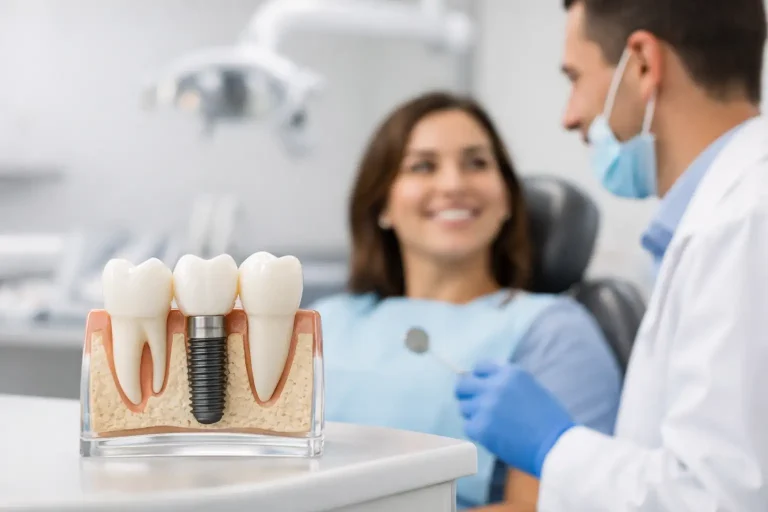
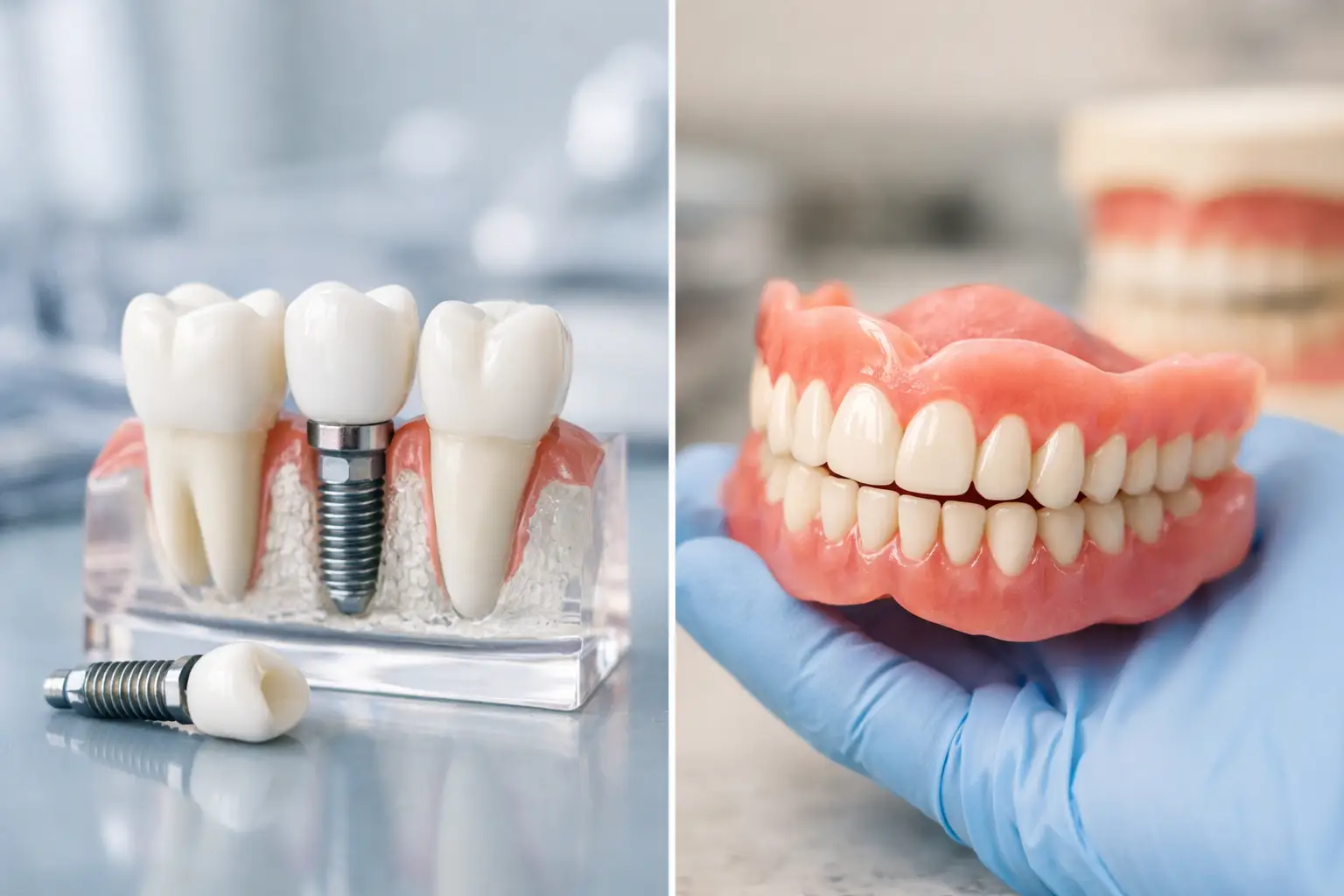
A dental implant is a small titanium post placed into the jawbone to act like a replacement tooth root. Once it has healed and integrated with the bone, it can support a crown, bridge or a denture. Because the implant is fixed in position, it is designed to provide a stable, long-term foundation.
Dentures are removable replacement teeth. A partial denture fills gaps where some natural teeth remain, while a full denture replaces a complete upper or lower arch. Modern dentures can look natural and be carefully shaped to support the lips and facial profile, but they sit on the gums rather than being fixed into the jaw.
There is also a useful middle ground: implant-retained dentures. These are removable dentures that attach securely to implants, offering greater stability than conventional dentures without necessarily requiring an implant for every missing tooth.
How they feel in everyday life
For many people, the biggest practical difference is stability. A well-made conventional denture can fit comfortably, but it may move slightly while eating or speaking, particularly as the gums and jawbone change over time. Denture adhesive can help in some cases, although it is not a substitute for a denture that needs adjustment or replacement.
Implant-supported teeth tend to feel more secure. They can make it easier to bite into firmer foods and speak without worrying about movement. A single implant crown is fixed, so it is cleaned much like a natural tooth. Fixed implant bridges also remain in place, while implant-retained dentures can usually be removed for cleaning.
That said, comfort is personal. Some patients adapt very quickly to dentures and are delighted with the result. Others find even small amounts of movement frustrating. If you have worn dentures for years and are managing well, replacing them with a new, well-fitting set may be the sensible choice. If loose dentures are affecting your confidence or food choices, implants may be worth discussing.
Eating and speaking
Dentures often require a short adjustment period. Starting with softer foods, taking smaller bites and chewing evenly on both sides can help. Certain sticky, hard or very crunchy foods may remain more difficult with a full denture.
Implants usually provide stronger biting stability, especially when replacing individual teeth or anchoring a full arch. This does not mean implant teeth are indestructible. They still need sensible care, and very hard foods can damage the crown or bridge just as they can damage natural teeth.
Looking after your replacement teeth
Dentures need to be removed and cleaned daily. They should be brushed with an appropriate denture brush and cleanser, then stored safely when not being worn. It is also important to clean the gums, tongue and any remaining natural teeth. Dentures can stain, collect plaque and become less well fitting over time, so regular dental reviews matter.
Implants need careful daily cleaning too. Brushing twice daily, cleaning between the teeth and attending hygienist appointments helps protect the gums and bone around them. Implant disease can develop when plaque is allowed to build up, and it can threaten the long-term success of the treatment. An implant is not a maintenance-free option, but good habits make a meaningful difference.
For patients with reduced dexterity, removable dentures may be simpler to handle and clean. For others, fixed teeth feel easier because there is no appliance to take out at night. Your dentist can talk through the practical routine before you decide.
Bone health and facial support
After a tooth is lost, the jawbone in that area gradually shrinks because it no longer receives stimulation from the tooth root. This can affect the fit of dentures over the years and may contribute to changes in facial support, particularly where several teeth are missing.
Implants transfer chewing forces into the jawbone and can help preserve bone in the area around the implant. This is one reason they are often considered a strong long-term option. However, implants need enough healthy bone for secure placement. If bone has already reduced significantly, additional treatment may sometimes be needed before an implant can be placed.
Dentures can still restore the appearance of a fuller smile and support the lips effectively. They simply do not prevent bone changes in the same way as implants. Regular checks allow your dentist to monitor fit and advise when a reline, repair or replacement is needed.
Cost: short-term affordability and long-term value
Dentures usually have a lower upfront cost than implants. They can be an accessible way to replace multiple missing teeth, particularly when treatment needs to be completed without surgery or over a shorter timeframe.
Implants involve a greater initial investment because they require planning, clinical treatment, surgical placement and a custom-made restoration. Treatment can also take several months, as healing time is needed before the final tooth or teeth are fitted.
Cost should be discussed openly, but it should not be the only factor. Dentures may need relining, repairing or replacing as your mouth changes. Implant restorations can also require maintenance and eventual replacement, even though the implant itself may last many years with the right care. Ask for a clear treatment plan that explains what is included, likely maintenance needs and any available finance options before committing.
Who is suitable for dental implants?
Many adults can be considered for implants, but suitability depends on more than age. Your dentist will assess your gums, bone levels, bite, medical history and oral hygiene. Smoking, untreated gum disease and certain health conditions can affect healing and implant success. These factors do not always rule treatment out, but they need to be managed carefully.
Dentures are suitable for a wide range of patients, including people who do not want surgery or who may not be ideal candidates for implants. They can also be used as a temporary solution while planning longer-term treatment.
A thorough examination may include X-rays or a scan to assess the jawbone and surrounding structures. This planning stage is essential. It helps your clinician recommend a treatment that is safe, realistic and tailored to your needs rather than simply choosing the most expensive option.
When implant-retained dentures may make sense
If a lower denture repeatedly lifts or rocks, implant-retained dentures can be particularly helpful. Even a small number of implants can improve retention considerably, making the denture feel more secure during meals and conversation.
This option can suit someone who wants improved stability but prefers a removable appliance for cleaning or is not looking for a full fixed bridge. It is a practical example of why the choice is not always simply implants or dentures. A personalised solution may combine the strengths of both.
Making the decision with confidence
Think about the things that matter most to you. Is your priority the lowest upfront cost, avoiding surgery, eating a wider range of foods, having fixed teeth or reducing the movement of an existing denture? There is no wrong answer, and your priorities may change over time.
At Eyespy Eye and Dental Care, patients are encouraged to ask questions and understand each stage of proposed treatment. For people in Leytonstone and the surrounding East London area, a consultation can clarify whether implants, dentures or an implant-retained option best fits your smile, lifestyle and budget.
The most helpful next step is not to rush into a decision. Arrange an assessment, bring your questions and be clear about what you would like to improve. A treatment that feels comfortable, functions well and is manageable to maintain is the one most likely to serve you well for years to come.