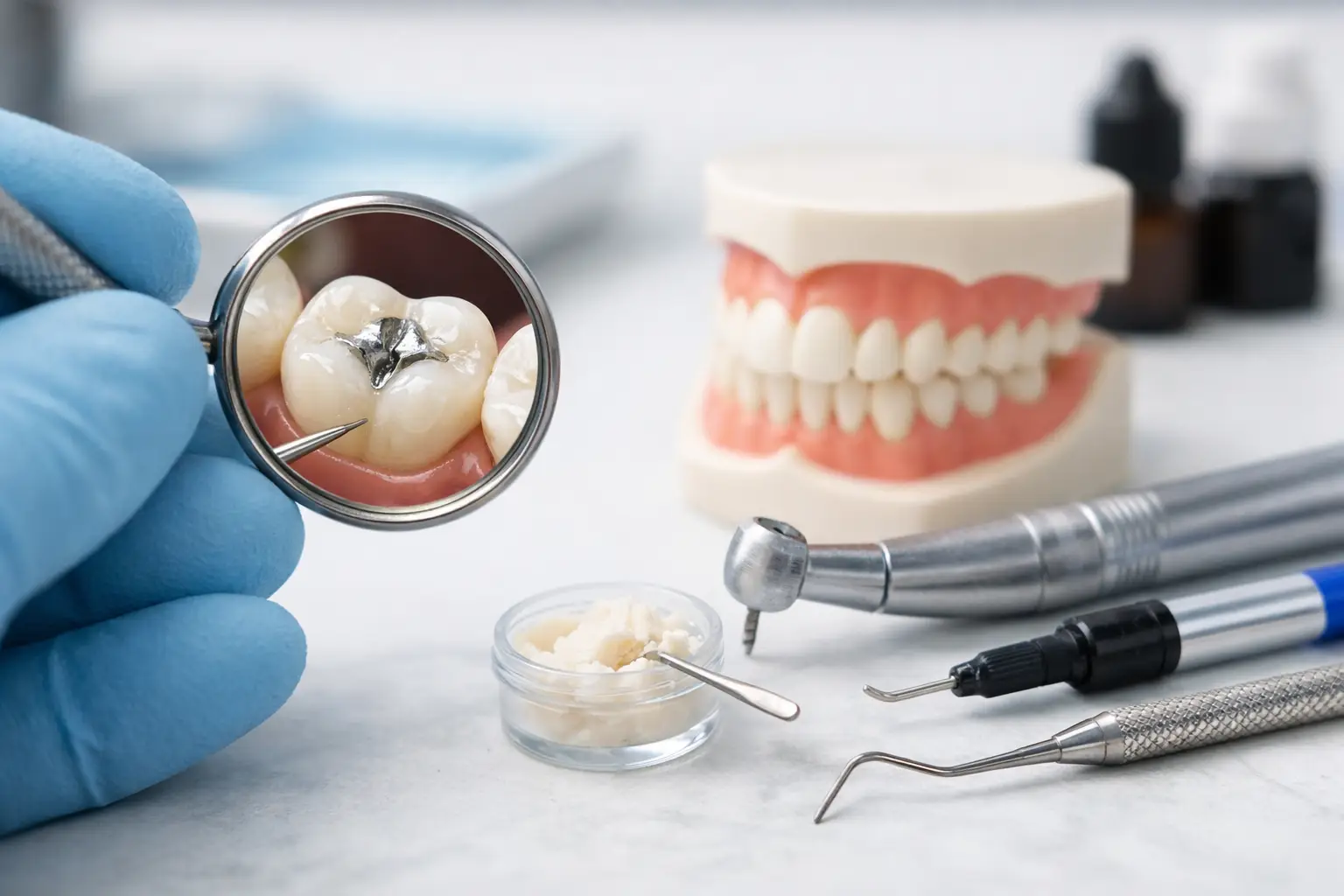
A small cavity can be easy to ignore, particularly if it is not painful. But decay does not repair itself, and waiting can turn a straightforward repair into a more involved treatment. This guide to dental fillings explains what fillings do, what happens at your appointment and how to make an informed choice about your care.
What is a dental filling?
A dental filling restores a tooth that has been damaged by decay, a chip, wear or an old filling that has broken down. Your dentist removes the affected or weakened area, cleans the tooth carefully and replaces the missing section with a suitable filling material.
The aim is not simply to cover a hole. A well-placed filling helps return the tooth to a shape that is comfortable to bite on, protects the inner tooth from further bacteria and supports your everyday function. It should feel natural when you speak, eat and clean your teeth.
Many cavities cause no symptoms at first, which is one reason regular examinations matter. When symptoms do occur, they can include sensitivity to cold, hot or sweet foods, food catching between teeth, a rough edge, discomfort when biting, or a visible dark area. None of these signs automatically means you need a filling, but they are good reasons to arrange a dental assessment.
When a filling is the right treatment
A filling is usually suitable when damage is limited enough for the remaining tooth structure to be reliably restored. During your examination, your dentist may use X-rays to check for decay between teeth or beneath an existing restoration, where it cannot always be seen directly.
There are situations where a filling may not be the best long-term answer. A very small early area of decay may be managed with preventive advice and close monitoring. If a large part of the tooth has fractured or the tooth is heavily weakened, a more protective restoration may be discussed. If decay has reached the nerve, treatment inside the tooth may be needed before it can be restored.
This is why two teeth that look similar in the mirror may need different care. The choice depends on the size and position of the damage, the condition of the tooth, your bite and how likely the restoration is to withstand daily use.
The main types of dental fillings
For many patients, tooth-coloured composite is a popular choice. It is carefully matched to the shade of your natural tooth, so it can blend in well, especially in visible areas. Composite bonds directly to the tooth and can often allow a conservative approach, preserving as much healthy structure as possible.
Composite fillings are versatile, but they are technique-sensitive. The tooth needs to be kept dry while the material is placed and set, and the final result relies on careful shaping and polishing. In areas that take heavy biting forces, your dentist will consider the size of the filling and whether composite is the most dependable option.
Other materials may be appropriate in particular circumstances, such as when rebuilding an extensively damaged tooth or managing a temporary situation. Your dentist should explain the available options in clear terms, including the expected appearance, durability, cost and any limitations. There is rarely one material that is right for every tooth.
What happens during a filling appointment?
Most filling appointments are routine and completed in one visit. If the tooth is sensitive or decay needs to be removed, your dentist will normally numb the area with local anaesthetic. You should remain awake, but the tooth and surrounding gum will be numb so you can stay comfortable.
The dentist removes decay or damaged material, then cleans and prepares the space. With a composite filling, the material is added in small layers and hardened using a curing light. Finally, the filling is shaped, smoothed and checked against your bite.
That final bite check is more significant than it may seem. A filling that is fractionally too high can leave a tooth sore when you chew. Let your dentist know if your teeth meet differently from usual, even if you are unsure. It is easier to make a small adjustment at the time than to put up with discomfort afterwards.
The length of the appointment varies. A small filling may be relatively quick, while a larger or harder-to-reach restoration can take longer. If you feel anxious about dental treatment, say so before you begin. A caring dental team can talk through each stage, agree a signal for a pause and help the appointment feel more manageable.
Is getting a filling painful?
The thought of a filling often feels worse than the treatment itself. Local anaesthetic is designed to prevent pain during the procedure, although you may notice pressure, vibration or the sound of the instruments. If you feel a sharp sensation at any point, raise your hand so your dentist can stop and help.
Afterwards, numbness can last for a few hours. Take care not to bite your cheek, lip or tongue, and wait until normal feeling returns before eating anything that needs firm chewing. It is common for a recently treated tooth to feel mildly sensitive for a short time, particularly with very cold drinks or when biting.
Sensitivity should gradually improve rather than worsen. Contact your dentist if you have persistent or increasing pain, swelling, a cracked filling, a sharp edge, or a bite that still feels uneven after the numbness has worn off. Prompt advice can often prevent a small issue becoming more uncomfortable.
Looking after a new filling
A filling is strong, but it still needs the same daily care as the rest of your teeth. Brush twice a day with fluoride toothpaste and clean between your teeth every day using an option that works for you, such as interdental brushes or floss. This matters because new decay can form at the edge of a filling if plaque is allowed to build up.
Try to avoid repeatedly biting very hard items with filled teeth, including ice or non-food objects. If you clench or grind your teeth, tell your dentist. Heavy forces can wear, chip or loosen restorations over time, and protecting your teeth may be part of the longer-term plan.
A little caution with food is sensible after treatment, especially while numb. However, you do not need to live on soft foods for days after a standard filling. Follow the individual advice given at your appointment, particularly if the restoration was large or your tooth needed additional treatment.
How long do dental fillings last?
There is no fixed expiry date for a filling. Some last for many years, while others need replacement sooner. Longevity depends on the filling material, its size and location, your bite, diet, oral hygiene and whether you grind your teeth.
A small filling in a low-pressure area may have different prospects from a large filling on a back tooth that takes the force of chewing every day. Replacing a filling simply because it is old is not always necessary. Instead, it should be reviewed for signs of leakage, recurrent decay, cracking, poor fit or wear.
Regular check-ups allow changes to be spotted early. This can make the difference between a simple repair and a larger restoration later on.
Understanding the cost of a filling
The cost of dental fillings varies because treatment is tailored to the tooth. Factors include the size of the cavity, the tooth involved, the chosen material, whether an old filling must be removed and whether X-rays or additional care are needed.
It is reasonable to ask for a clear explanation before treatment begins. You should understand what is being recommended, why it is needed and what it is expected to cost. If there are suitable alternatives, your dentist can explain the practical trade-offs so that the decision feels considered rather than rushed.
For patients in Leytonstone and nearby East London communities, Eyespy Eye and Dental Care takes time to discuss treatment recommendations clearly, with personalised care and transparent pricing pathways.
When should you book a dental appointment?
Book soon if you notice toothache, swelling, a lost filling, a broken tooth, pain when biting or sensitivity that does not settle. A missing filling can leave the tooth vulnerable, even if it is not immediately painful. Avoid placing aspirin directly on a sore tooth or gum, as this can irritate the tissues.
If you are not experiencing symptoms but have not had a check-up for some time, an examination is still worthwhile. Decay is often most straightforward to treat before it causes pain. A filling is a common, carefully planned treatment, and asking questions is part of good dental care. The right appointment should leave you clear about what your tooth needs and confident about the next step.