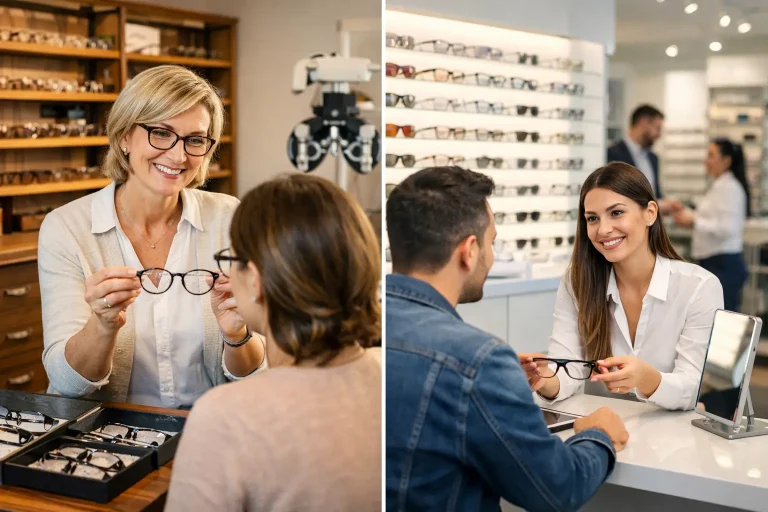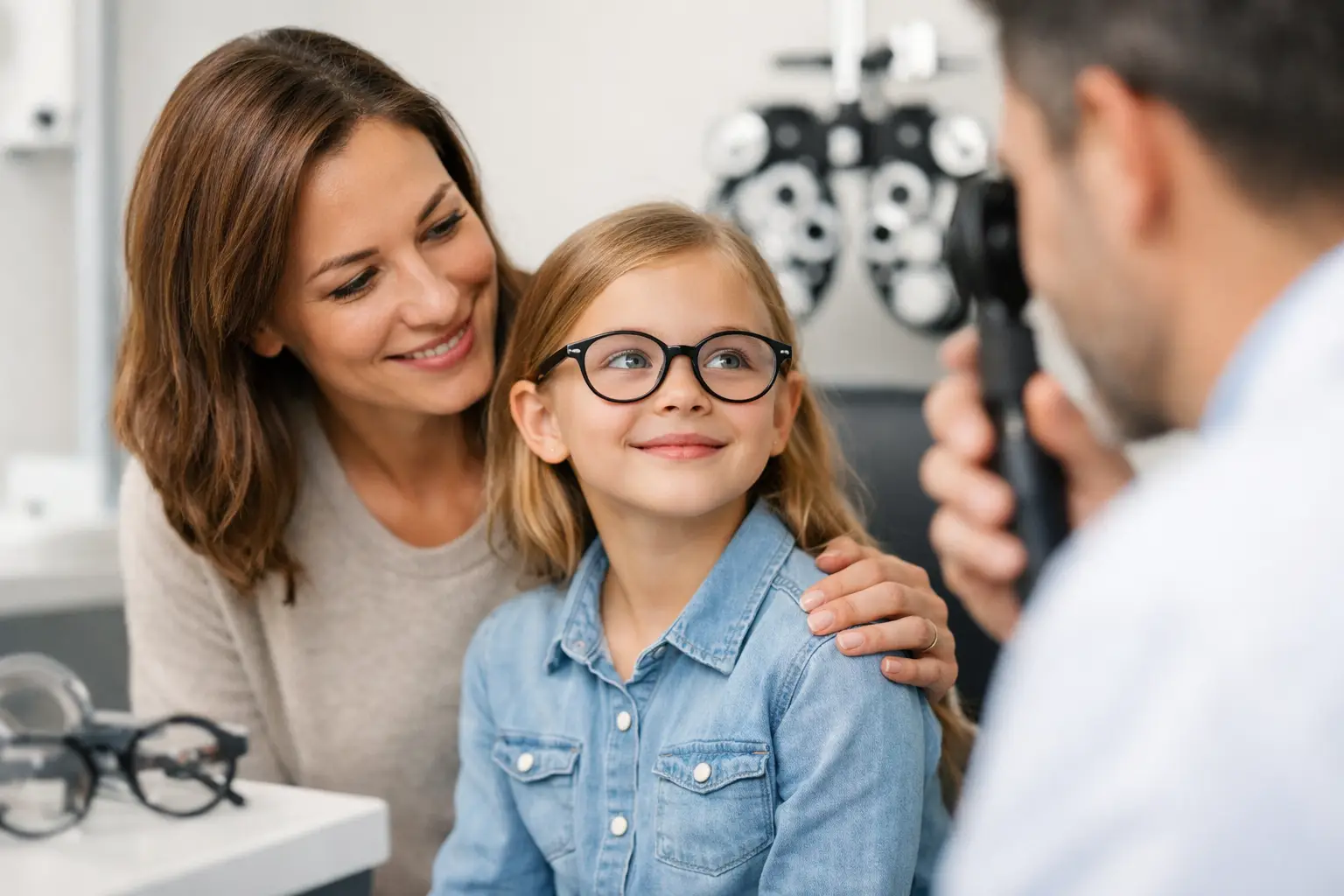
A child who moves closer to the television, loses their place while reading or complains that the classroom board looks blurry is not always simply tired or distracted. These can be small signs that their eyesight needs checking. This guide to children’s eye care is designed to help parents recognise when an eye examination may be helpful, understand what happens at an appointment and support healthy vision as children grow.
Eyes develop rapidly during childhood. Clear, comfortable vision supports learning, confidence, sport, play and everyday independence. The reassuring news is that most eye concerns can be assessed simply and calmly, often before they begin to affect a child’s routine.
Why children need regular eye checks
Children do not always realise that the way they see is different from anyone else. If one eye is weaker than the other, they may naturally rely on the stronger eye and never mention a problem. Equally, a child who has gradually become short-sighted may assume everyone sees distant objects in the same way.
An eye examination checks more than whether your child needs glasses. It can assess how clearly each eye sees, whether the eyes work together comfortably, how well they focus and whether there are signs of eye health concerns. For younger children, the optometrist can use picture charts, matching cards and age-appropriate tests rather than expecting them to read letters.
Vision screening may take place at certain stages of childhood, but it is not a substitute for arranging a full eye examination if you have concerns. A child does not need to be able to read, describe symptoms perfectly or already be struggling at school to have their eyes checked.
When should you book an eye examination?
Book an appointment promptly if your child is reporting visual difficulties or you have noticed a change in their behaviour. Signs worth discussing include frequent headaches, rubbing or blinking their eyes often, sitting unusually close to screens, holding books very near, squinting, avoiding reading, or seeming less confident with catching and ball games.
There are other signs that deserve attention too:
- One eye turning in or out, even if it only happens occasionally.
- Persistent watering, redness, discharge or sensitivity to light.
- Complaints of double vision, eye pain, flashes of light or a sudden change in sight.
- A white or unusual-looking reflection in the pupil in photographs.
A red, painful eye, sudden loss or marked reduction of vision, an eye injury, or a chemical splash requires urgent medical advice. Do not wait for a routine eye test in these situations. For a chemical splash, rinse the eye immediately with clean running water while seeking urgent help.
For routine care, the right timing depends on your child’s age, family history and individual needs. Children with a parent who is very short-sighted, a known eye condition, developmental needs or previous concerns may benefit from closer monitoring. Your optometrist can recommend an appropriate review schedule rather than applying a one-size-fits-all rule.
What happens at a children’s eye appointment?
A good appointment should feel unhurried and child-friendly. The optometrist will usually begin by asking simple questions about schoolwork, reading, screen use, hobbies and any symptoms. Parents can help by mentioning changes they have seen, even if they seem minor.
The visual tests are adapted to the child. Younger children may identify pictures, shapes or matching symbols, while older children commonly read letters from a chart. The optometrist may check eye movements, focusing and coordination using a light or a small target. They will also examine the health of the eyes.
Some children may need eye drops that temporarily widen the pupils so the optometrist can measure focusing more accurately or view the back of the eye in greater detail. If this is recommended, you should be told why, what to expect and whether your child may experience temporary blurred near vision or light sensitivity afterwards.
There is no need to build the visit up as something frightening. Explain that the clinician will look at how their eyes work, much like a teacher checking how they are getting on with reading. Bringing a favourite toy for a younger child or choosing an appointment time when they are usually rested can also make a real difference.
Glasses: comfort, confidence and a good fit
If glasses are recommended, wearing them should make life easier, not feel like a punishment. Some children need glasses all the time, while others may need them mainly for distance work, reading or specific activities. Follow the advice given for your child’s prescription, especially during the adjustment period.
Fit matters as much as the prescription. Frames that slide down the nose, pinch behind the ears or sit unevenly can be uncomfortable and may discourage regular wear. Children are active, so frames should be durable, correctly sized and adjusted to sit securely. Lenses should also suit their age, prescription and daily routine.
Letting a child have a say in the frame colour or style can improve confidence, but practical considerations still count. A frame that looks great but is too loose for playground time may not be the best choice. A knowledgeable optical team can help balance comfort, durability and appearance without pressure.
At first, encourage glasses as part of the usual routine: put them on after getting dressed, keep the case in the same place and use a clean microfibre cloth rather than clothing to wipe the lenses. If your child says the glasses make things look strange, do not assume they are refusing to wear them. Contact the practice for advice, particularly if discomfort persists.
Screens, reading and outdoor time
Screens are often blamed for every eye problem, but the picture is more nuanced. Tablets and computers do not usually damage healthy eyes when used sensibly. They can, however, contribute to tired, dry or uncomfortable eyes because children tend to blink less when concentrating. Long periods of close work can also make existing focusing problems more noticeable.
The practical aim is balance. Encourage regular breaks from close-up activities, including homework and reading as well as screens. A useful habit is looking across the room or out of a window for around 20 seconds after roughly 20 minutes of near work. Good lighting, a comfortable posture and a sensible viewing distance all help.
Time outdoors is also valuable. Research suggests that spending more time outside may help reduce the likelihood of short-sightedness developing or progressing in some children. It is not a replacement for an eye examination or prescribed glasses, but daily outdoor play supports general wellbeing and gives eyes a break from sustained close focus.
Supporting healthy eyes at home and school
Small observations from adults can be very useful. Tell the school if your child has started wearing glasses, and encourage them to use any seating arrangements that help them see the board comfortably. If homework is causing headaches or frustration, do not automatically treat it as a concentration issue.
At home, keep an eye on patterns rather than isolated moments. One headache after a busy day is common; recurring headaches linked to reading or screens deserve a conversation with an eye care professional. Likewise, children can be clumsy for many reasons, but repeated difficulties judging steps, catching objects or navigating unfamiliar spaces may be worth checking.
Healthy habits matter too: a varied diet, plenty of sleep, hand washing before touching the eyes and appropriate protective eyewear for activities where there is a risk of impact. Never share eye drops unless they have been specifically advised for your child, and do not use adult drops to treat an unexplained red eye.
A calm, personal approach makes the difference
Parents know their children best. If something about your child’s vision, comfort or confidence does not feel right, it is reasonable to ask for an eye examination. Clear explanations, a careful assessment and time to ask questions can turn an uncertain experience into a straightforward part of looking after their health.
For families in Leytonstone and nearby East London, Eyespy Eye and Dental Care offers a welcoming setting where children and parents can talk through eye care concerns without feeling rushed. A timely check can bring reassurance, provide the right support where it is needed and help your child see the world with greater ease.