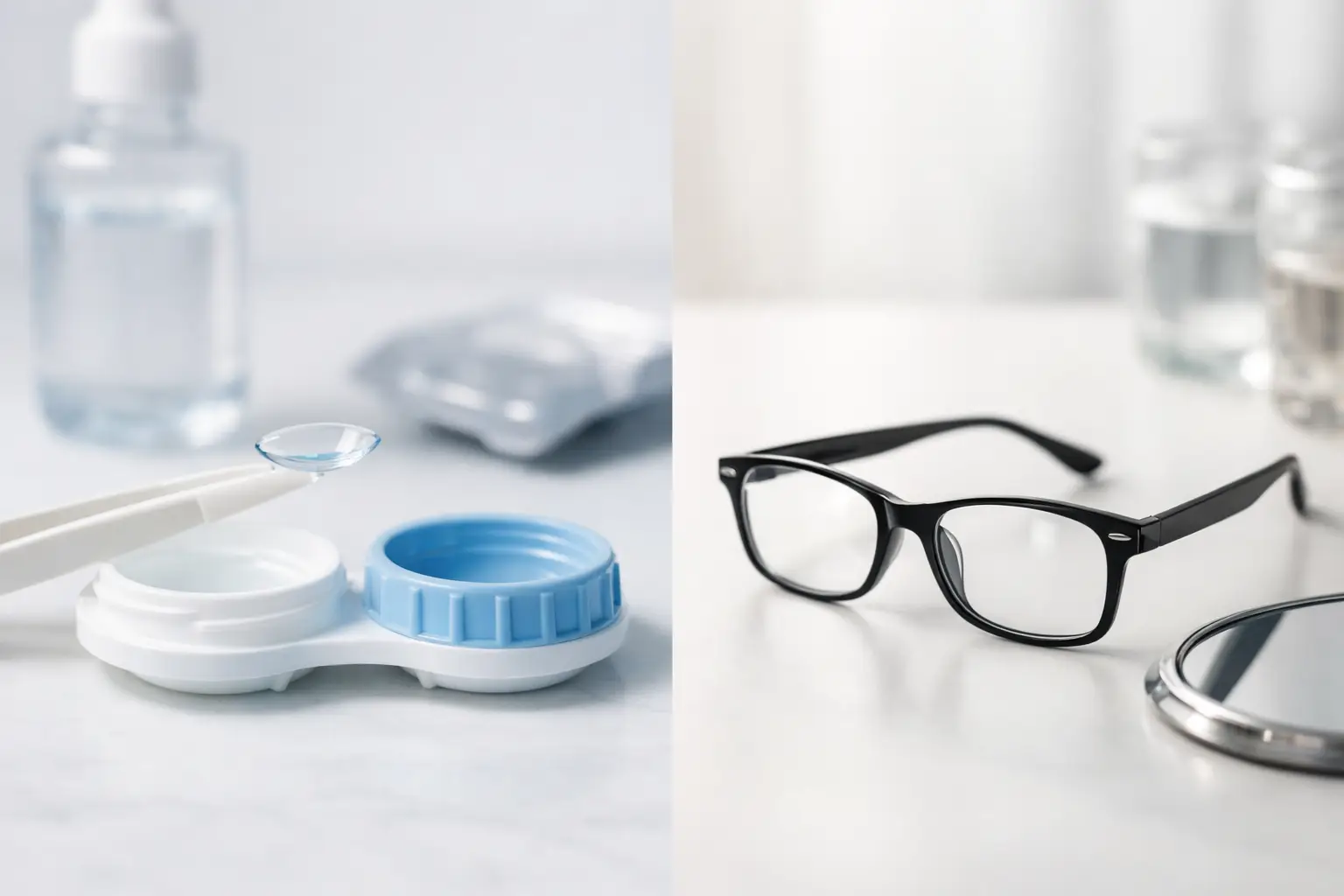
You usually know the question is coming before the eye test is even finished: contact lenses vs glasses – which is actually better? The honest answer is that there is no single winner. What works beautifully for one person can feel awkward, expensive or impractical for someone else, and the right choice often depends on your routine, your prescription and how much day-to-day maintenance you are happy with.
For some people, glasses are simple, dependable and part of their look. For others, contact lenses offer freedom that spectacles cannot match, especially for sport, work or social occasions. Many patients end up using both, which is often the most practical answer rather than a compromise.
Contact lenses vs glasses: the real difference
The biggest difference is not just how they correct your vision, but how they fit into your life. Glasses sit in front of the eyes and are easy to put on and take off. Contact lenses sit directly on the eye, which gives a wider field of vision and no frames in the way, but they do require more care.
That matters more than people sometimes expect. If you want something low effort, glasses tend to win. If you want a more natural visual experience with nothing on your face, contact lenses often feel more convenient once you are used to them. Neither option is automatically better for eye health, comfort or cost in every case.
When glasses make more sense
Glasses are usually the easier option to manage. You put them on, clean them when needed and remove them at night. There is no need to touch the eye, no lens solution for most people to think about, and no concern about inserting lenses properly before the school run or a busy commute.
They can also be a very good choice if your eyes tend to feel dry or irritated. Some people simply do not get on well with contact lenses, particularly if they spend long hours in air-conditioned offices, in front of screens, or in environments that make the eyes tired. In those cases, glasses can feel more comfortable and less demanding.
There is also the cost question. While prices vary depending on prescription and lens type, glasses can sometimes be more economical over time, especially if you wear one reliable pair every day. That said, this depends on whether you prefer designer frames, need specialist coatings, or want more than one pair.
Another benefit is eye safety and routine. If you are prone to falling asleep with lenses in, forgetting cleaning steps or stretching wear longer than advised, glasses remove that risk. They are straightforward, and for many families that simplicity is valuable.
When contact lenses are the better fit
Contact lenses appeal to people who do not like the physical presence of glasses. There are no frames slipping down your nose, steaming up in cold weather, or getting spotted with rain. For active people, that can make a real difference.
Sport is one of the clearest examples. Whether you run, go to the gym or play football, contact lenses usually offer more freedom of movement and a wider field of vision. They can also be helpful if you find glasses awkward under helmets or uncomfortable during exercise.
Some people also prefer contact lenses for cosmetic reasons. They like the way they look without frames, or they want the flexibility to wear sunglasses more easily. Others enjoy being able to switch between glasses and lenses depending on the day, rather than feeling tied to one option.
Vision quality can be another factor. Because contact lenses move with the eye and sit directly on its surface, some people notice clearer peripheral vision. That can be especially useful for more active lifestyles or for those who feel their glasses always sit slightly out of position.
Comfort depends on the person
A common assumption is that glasses are always more comfortable than contact lenses. That is not necessarily true. Some people barely notice their lenses after a few minutes and find glasses more irritating, especially if they press on the nose or behind the ears. Others never quite get comfortable with lenses, no matter how modern or breathable the material.
Dry eye symptoms, allergies and screen use all affect this. If your eyes already feel gritty or tired by the end of the day, contact lenses may make that more noticeable. If your prescription is strong and your glasses feel heavy, contact lenses may actually feel lighter and easier.
This is why personalised advice matters. The best option is the one that suits your eyes as they are, not the one that sounds best in theory.
The adjustment period is real
With glasses, the adjustment is usually about the prescription and frame fit. With contact lenses, there is also the practical side of learning to insert, remove and care for them properly. Most people get the hang of this quite quickly, but it can feel fiddly at first.
That learning curve puts some people off too early. If you are motivated to wear contact lenses, a little patience often goes a long way. If the idea already feels stressful, glasses may be the more comfortable long-term choice.
Cost and value over time
If you are weighing up contact lenses vs glasses, cost is often part of the decision. The answer is not always obvious because both can vary quite a lot.
Glasses often involve a larger upfront spend, especially if you choose premium lenses or extra coatings. After that, costs may be fairly predictable unless your prescription changes or your frames need replacing. Contact lenses can seem more manageable month to month, but they are a recurring expense. Depending on the type you wear, you may also need cleaning solution and regular aftercare appointments.
Value is about more than the cheapest number. A pair of glasses that you rarely wear because they annoy you is not good value. Equally, contact lenses that fit your lifestyle perfectly but are not worn safely can become an expensive false economy. The sensible question is not just what costs less, but what you will realistically use and maintain properly.
Eye health comes first
Glasses are generally lower maintenance from an eye health point of view, simply because they do not sit on the eye itself. Contact lenses are safe for many people when fitted correctly and worn as advised, but they do require good habits.
That means washing your hands before handling lenses, following the replacement schedule, and not wearing them for longer than recommended. Sleeping in lenses when you should not, reusing old solution or skipping checks can increase the risk of irritation or infection.
This is where regular professional support matters. A proper contact lens fitting is not just about finding a lens that seems comfortable for five minutes. It is about making sure the lens suits your eyes, your prescription and your routine, and that you know how to wear it safely.
Should you choose one or both?
For many people, the best answer to contact lenses vs glasses is both. Glasses give your eyes a break and are useful at home, first thing in the morning and late at night. Contact lenses can be ideal for work, exercise, events or days when you want more freedom.
Having both also gives you flexibility if your eyes feel tired or irritated. If you rely only on contact lenses and then cannot wear them for a few days, not having an up-to-date pair of glasses can become a real inconvenience.
A mixed approach often feels more realistic than trying to force yourself into one camp. It lets you match your vision correction to your day rather than the other way round.
Contact lenses vs glasses for children and adults
Adults often choose based on convenience, appearance and work routine. Children and teenagers may have slightly different factors, including confidence, school activities and how responsible they are with cleaning and handling.
Some younger patients do very well with contact lenses, especially for sport. Others are much better off with glasses until they are ready for the extra responsibility. There is no advantage in rushing the decision. What matters is whether the patient can manage the option safely and comfortably.
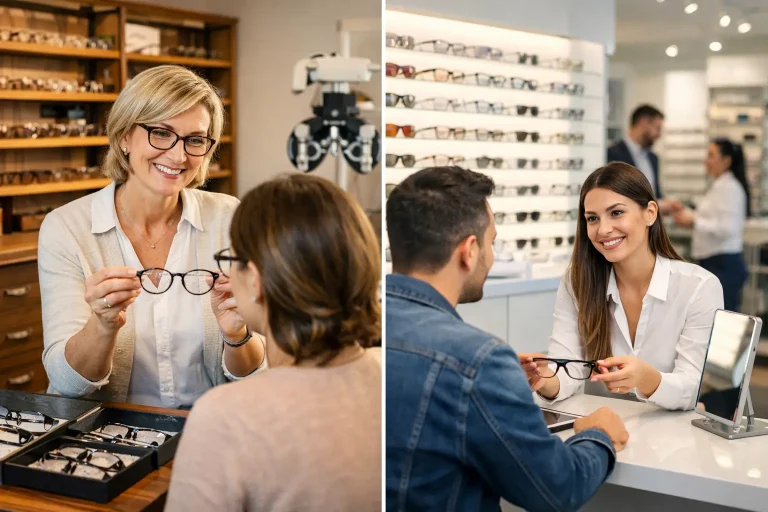
In a local, independent setting such as Eyespy Eye and Dental Care, that conversation can be more personal. It is easier to talk honestly about routine, budget and what will actually work day to day, rather than what sounds ideal on paper.
How to decide what suits you
Start with your lifestyle. If you want simplicity, spend long hours on screens, or know you will not keep up with lens care, glasses may suit you best. If you are active, dislike frames, or want more flexibility in how you look and move, contact lenses could be a better fit.
Then think about your eyes themselves. Dryness, allergies, prescription strength and overall comfort all matter. Finally, be honest about habits. The most suitable option is one you can wear consistently, safely and comfortably.
If you are still undecided, that is perfectly normal. A good eye care appointment should leave you clearer, not more confused. The right choice is the one that makes your vision feel easy in real life, not just in the testing room.