A crooked tooth at the front of your smile can be the feature you notice first in photographs, but tooth straightening is about more than appearance. When patients ask about the best ways to straighten teeth, the right answer depends on how their teeth bite together, the amount of movement needed and what will realistically suit their daily life.
For some people, clear aligners offer a discreet, flexible route to a neater smile. For others, fixed braces provide the precision needed for more complex movements. A proper orthodontic assessment takes the guesswork out of that choice and ensures treatment supports the health of your teeth and gums as well as the way your smile looks.
Best ways to straighten teeth: start with your needs
It is tempting to choose a treatment based on before-and-after photographs alone. However, teeth do not move independently of one another. The position of your roots, the health of your gums, the amount of space in your mouth and the way your upper and lower teeth meet all affect what can be achieved safely.
During a consultation, your dentist will examine your teeth and bite, discuss the changes you would like to see, and may take scans or photographs to plan treatment. This is particularly important if you have crowding, gaps, rotated teeth, previous dental work or a bite that feels uneven. Some cases that seem minor at first glance need careful planning to avoid compromising the final result.
Your priorities matter too. You may want the least visible option, the shortest suitable treatment time or an approach that needs fewer adjustments. There is no single treatment that is best for every smile.
Clear aligners for discreet straightening
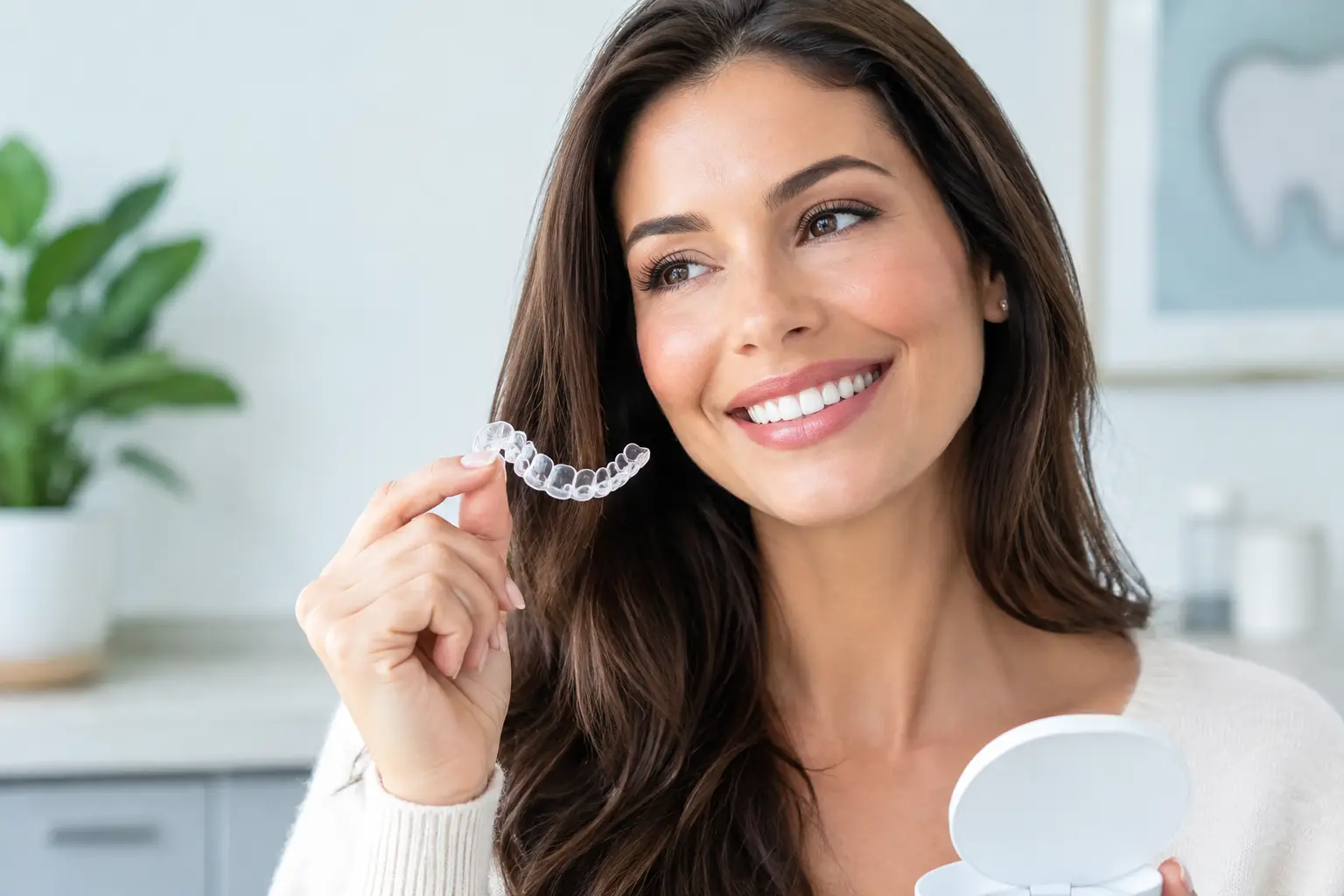
Clear aligners are custom-made, removable trays that gradually move teeth in small stages. Invisalign is a well-known clear-aligner treatment and can be a good choice for adults and older teenagers who want a more subtle alternative to fixed braces.
Each set of aligners is worn for most of the day and night, then changed as directed by your clinician. Because they are removable, you can take them out for meals and brush and floss your teeth as usual. That makes oral hygiene more straightforward than it can be with brackets and wires.
The trade-off is commitment. Aligners only work when they are worn consistently, often for around 20 to 22 hours each day. Leaving them out regularly can slow treatment or affect the result. They also need to be removed before drinking anything other than water to prevent staining and damage.
Clear aligners can treat many common concerns, including mild to moderate crowding, spacing and certain bite issues. More involved cases may still be suitable, but this depends on the movements required. Some patients also need small tooth-coloured attachments during treatment. These help the aligners grip the teeth and are temporary, though they are worth considering if complete invisibility is a priority.
Who tends to suit aligners?
Aligners can work especially well for people who are organised, motivated and keen to keep their treatment discreet at work or socially. They are also helpful for patients who want to continue eating normally without navigating around brackets. If you are likely to misplace trays, find it difficult to maintain a strict wear routine or have a complex bite concern, another option may be more predictable.
Fixed braces for control and precision
Fixed braces use brackets attached to the teeth and a wire that is adjusted over time. They remain in place throughout treatment, so they are continuously working without relying on you to remember to wear them.
This makes fixed braces a dependable choice for more significant crowding, pronounced rotations and complex bite corrections. They give the orthodontic team detailed control over individual tooth movements and can be highly effective where aligners may not be the most suitable approach.
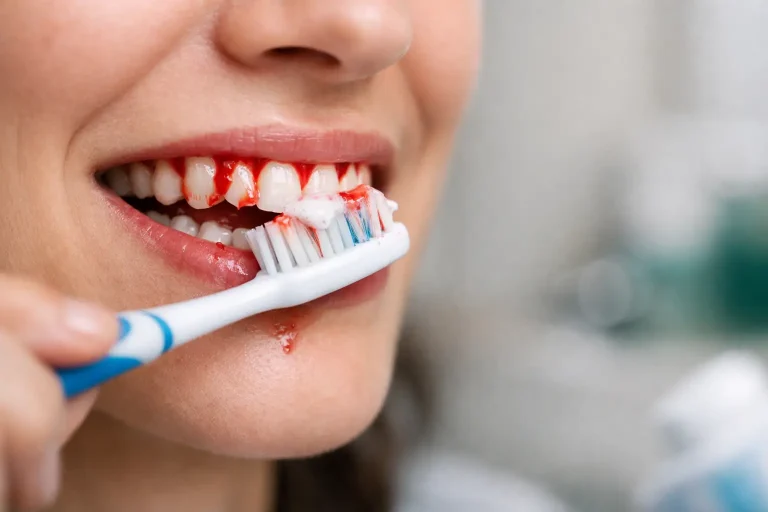
The main consideration is that braces are visible and require more care when cleaning. Food can collect around brackets and wires, so brushing carefully after meals and using interdental cleaning aids becomes part of the routine. Certain hard, sticky or chewy foods may need to be avoided to reduce the risk of damage.
Braces can cause temporary soreness after fitting and adjustments, especially in the first few days. This is normal and usually manageable, but it is sensible to plan for a brief settling-in period. Patients often find that the routine soon becomes familiar.
Treatment time varies
Both braces and clear aligners may take anything from several months to well over a year. The timescale depends on your starting position, the complexity of movement and how closely treatment instructions are followed. A minor alignment concern may be completed relatively quickly, while correcting a bite alongside crowding generally takes longer.
Be cautious about promises of very fast straightening without an individual assessment. Moving teeth too quickly or without accounting for the bite can lead to disappointing results. The aim is not simply to create an even-looking front row of teeth, but to achieve a result that is stable and comfortable.
Straightening before cosmetic dental treatment
Orthodontic treatment can sometimes reduce the need for more extensive cosmetic work. If teeth are crowded, unevenly spaced or protruding, moving them into a better position first may allow you to improve your smile while preserving more natural tooth structure.
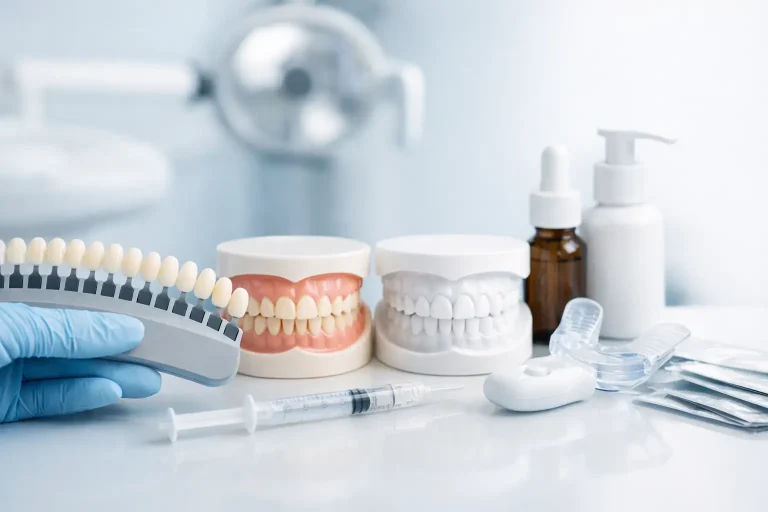
Once teeth are aligned, some patients choose whitening to brighten their smile or composite bonding to refine small chips, worn edges or minor shape differences. These treatments are not substitutes for orthodontics where teeth need to be moved. Bonding can improve shape, but it cannot correct the position of a tooth root or an uneven bite.
Planning the sequence properly matters. Whitening is generally considered before shade-matched cosmetic work, while bonding is often best considered after teeth have reached their final aligned position. Your dentist can explain which order makes sense for your goals.
Retainers are part of the treatment, not an extra
Teeth naturally have a tendency to shift over time. This is why retainers are essential after braces or aligner treatment. They hold teeth in their new positions while the surrounding tissues adapt.
You may be advised to wear a removable retainer at night, have a fixed retainer bonded discreetly behind the front teeth, or use both. The right approach depends on your case and your clinician’s recommendations. A retainer should be treated as a long-term part of maintaining your smile, rather than something to stop wearing after a few months.
If a retainer breaks, feels loose or no longer fits, arrange an appointment promptly. Trying to force it into place can damage it or put unwanted pressure on your teeth.
Choosing with confidence
Cost is understandably part of the decision, but it is worth looking beyond the headline figure. Ask what is included in the treatment plan, such as assessments, aligners or brace adjustments, monitoring appointments and retainers. You should also understand what happens if treatment needs refinement or if an appliance is lost or damaged.
At Eyespy Eye and Dental Care in Leytonstone, we believe patients should have clear explanations and time to consider their options. For suitable treatments, 0% finance options may help spread the cost, allowing you to choose a plan that feels manageable without rushing a decision.
The most helpful next step is a personal consultation. A clinician can show you what is possible for your teeth, explain the commitment involved and recommend a route that fits your health, budget and confidence. A straighter smile is most rewarding when the treatment feels right from the start and the result is one you can maintain for years to come.