A missing tooth can affect far more than a photograph. It may change how you chew, make certain words feel awkward, allow nearby teeth to drift, or leave you avoiding foods you once enjoyed. The best ways to replace teeth depend on where the gap is, how many teeth are missing, the health of your gums and jawbone, and what feels manageable for your budget and daily life.
There is no single treatment that suits everyone. A good dental consultation should feel unhurried and clear, with time to discuss the advantages, limitations and likely costs of each option before you decide.
Best ways to replace teeth: the main options
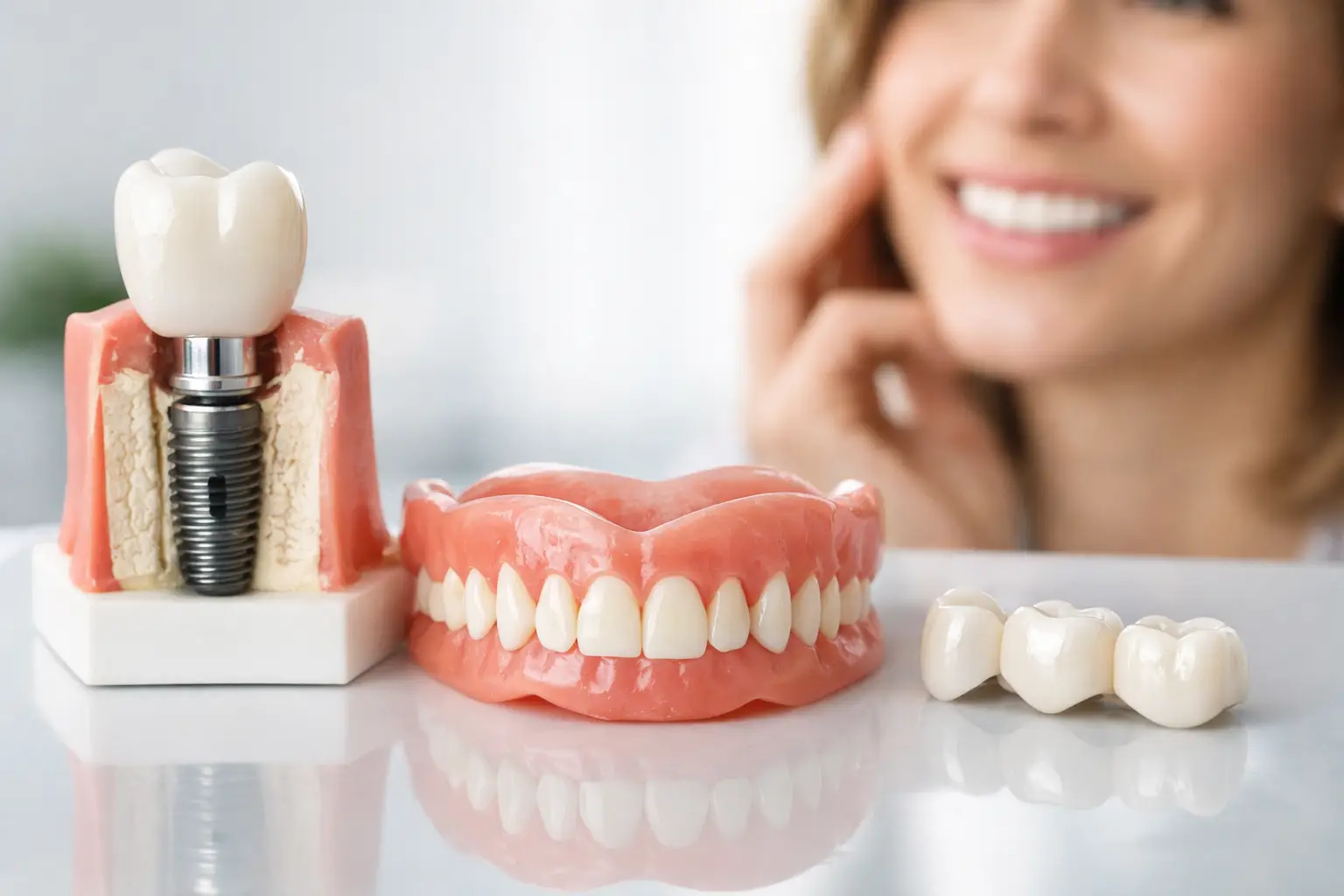
For most adults, the three main approaches are a dental implant, a fixed bridge or a removable denture. Each can restore the appearance and function of your smile, but they do so in different ways.
The right choice is not always the most expensive one, nor the fastest. It is the option that protects your long-term oral health while fitting comfortably into your circumstances.
Dental implants
A dental implant replaces the root of a missing tooth. A small titanium post is placed in the jawbone and, after a period of healing, supports a custom-made crown. Where several teeth are missing, implants can also support a bridge or stabilise a denture.
For many patients, an implant is the closest replacement to a natural tooth. It is fixed in place, does not rely on neighbouring teeth for support and can make biting and chewing feel more secure. Because the implant stimulates the jawbone, it may also help reduce the bone loss that can happen after a tooth is lost.
Implants do require careful planning. You need healthy enough gums and sufficient bone to support the implant, although additional preparatory treatment may sometimes be considered. The process also takes longer than some alternatives because healing is essential. Good home cleaning and regular dental reviews remain vital, as implants can develop gum problems if plaque is allowed to build up around them.
An implant can be an excellent long-term investment, particularly for a single visible tooth or a gap that affects how you eat. It is usually the higher upfront-cost option, so asking for a written treatment plan and discussing available payment pathways can make the decision easier to plan for.
Fixed dental bridges
A bridge fills a gap by attaching a replacement tooth to the teeth on either side, or in some situations to one supporting tooth. A conventional bridge usually involves reshaping the supporting teeth so that crowns can be fitted over them. Other designs may require less preparation, depending on the position of the gap and the condition of the surrounding teeth.
Bridges are fixed, so they cannot be removed at home. They can look highly natural and usually restore function more quickly than an implant. For someone who is not suitable for implant treatment, does not want surgery, or needs a practical solution within a shorter timeframe, a bridge may be a sensible choice.
The trade-off is that some bridge designs involve altering neighbouring healthy teeth. Cleaning beneath the replacement tooth also needs a little more attention, often with specialised floss or small interdental brushes. A bridge can last well when cared for properly, but the supporting teeth and gums must stay healthy for it to remain stable.
Removable dentures
A denture is a removable appliance that replaces one tooth, several teeth or a full arch of teeth. Modern dentures can be made to look natural and can provide valuable support for the lips and cheeks, especially when several teeth have been lost.
Dentures are often a more affordable way to replace multiple teeth. They can also be made without preparing surrounding teeth, which may make them appropriate where other options are not advisable. They are removable for cleaning and should be taken out at night unless your dentist gives different advice.
There is usually an adjustment period. A new denture may initially feel bulky, and eating or speaking can take practice. Over time, the shape of the gums and jawbone can change, meaning a denture may need adjusting, relining or replacing to maintain its fit. If movement is a concern, implant-supported dentures can offer greater stability for suitable patients.
How to choose the right tooth replacement
Start with the practical question: what needs replacing? A single missing tooth at the front of the mouth may call for a different solution from several missing back teeth that make meals difficult. The condition of the teeth beside the gap matters too. If they already have large fillings or crowns, a bridge might be more appropriate than it would be next to completely healthy teeth.
Your gum health is equally important. Active gum disease should be brought under control before any long-term replacement is considered. A dentist may take X-rays or digital scans to assess the bone beneath the gums, the roots of nearby teeth and the bite. This planning helps avoid choosing a treatment that looks good initially but does not cope well with everyday forces.
Think honestly about maintenance. An implant feels like a fixed tooth, but it still needs meticulous cleaning. A bridge needs cleaning underneath, while a denture needs to be removed and cleaned daily. The best option is one you can care for consistently, rather than one that only looks ideal on paper.
Cost matters, and it should be discussed openly. Ask what the quoted fee includes, whether temporary teeth, scans, follow-up appointments or future maintenance may involve additional costs, and what happens if further treatment is needed. At Eyespy Eye and Dental Care, patients can discuss personalised treatment planning and whether 0% finance options may be suitable for their circumstances.
Replacing a tooth sooner can protect your smile
Not every gap is an emergency. Some people live comfortably with a missing tooth for years, particularly if it is at the back of the mouth. However, leaving a gap can sometimes place extra pressure on other teeth, allow teeth to tip into the space or alter the way your upper and lower teeth meet.
Bone changes can also occur after a tooth is removed. This does not mean an implant is impossible later, but it can make planning more complex. If you have recently lost a tooth, arranging an assessment promptly gives you more choices, even if you decide to wait before beginning treatment.
A temporary replacement may be appropriate while you heal after an extraction or consider a more permanent solution. This can be particularly helpful for a front tooth, where appearance and confidence are immediate concerns.
What a thoughtful consultation should cover
A tooth replacement plan should never be based on a quick glance alone. Your dentist should examine your mouth, discuss your medical history and ask what you want to achieve. Some patients prioritise a fixed solution; others want to minimise treatment time, avoid affecting adjacent teeth or keep costs within a set range.
You should leave knowing why a particular option has been recommended, what treatment involves, how long it is likely to take and how to care for it afterwards. It is also reasonable to ask about alternatives. Clear explanations are part of good care, not an extra.
If a missing tooth is changing how you eat, speak or smile, you do not have to settle for it. Book a consultation, bring your questions, and choose a replacement that feels right for your mouth, your routine and the years ahead.