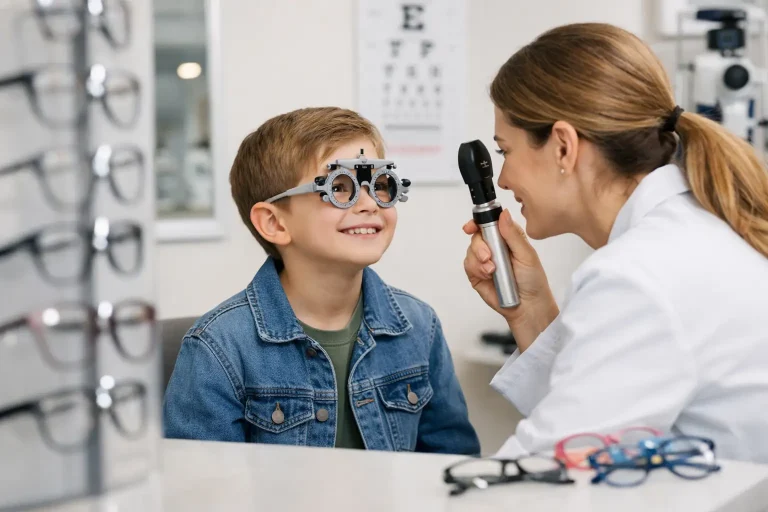
A child who can see clearly is better placed to follow lessons, enjoy books, judge a ball’s distance and feel confident in everyday situations. When parents begin looking for children’s glasses Woodford options, the most useful starting point is not the frame colour or brand. It is a thorough eye examination and advice that takes account of how that child learns, plays and grows.
Children do not always realise that their vision is different from everyone else’s. They may assume that blurred writing on a classroom board, tired eyes after reading or sitting very close to a screen is normal. A calm, child-friendly appointment can identify whether glasses could make day-to-day life more comfortable.
When should a child have an eye examination?
There is no need to wait until a child complains about their sight. Vision can change gradually, and younger children may not have the words to explain what they are experiencing. Routine eye checks are a sensible part of looking after their health, particularly before starting school or when there is a family history of short-sightedness, squint or other eye conditions.
Some signs are more noticeable than others. A child may hold books very close, lose their place when reading, rub their eyes regularly or complain of headaches. They might avoid drawing, become frustrated with homework, screw up their eyes to see in the distance or seem less confident with catching and ball games. These behaviours do not always mean they need glasses, but they are good reasons to arrange an eye examination.
A proper children’s eye examination is designed to be clear and reassuring. The clinician assesses how each eye sees, how the eyes work together and whether there is a prescription that could help. Parents should leave understanding the findings, rather than simply being told that their child does or does not need glasses.
Choosing children’s glasses in Woodford
Once a prescription has been confirmed, fit matters as much as appearance. Children’s glasses need to stay in the right position through lessons, playtimes and the ordinary fidgeting that comes with a busy day. If frames slip down the nose or sit too wide, a child may end up looking over the lenses rather than through them.
The best choice depends on the child. A reserved seven-year-old who mostly reads and draws may prefer a light, understated frame. An energetic child who spends every break outside may need a more flexible option with a secure fit. Older children often care strongly about style, and that matters too. Glasses are far more likely to be worn consistently when a child feels happy in them.
A trained dispenser should check that the bridge sits comfortably, the temples are the right length and the frame width suits the face. The lenses should be positioned correctly in front of the eyes. This is particularly important for stronger prescriptions, where even a good-looking frame can be the wrong practical choice if it does not hold the lenses accurately.
Comfort helps children wear their glasses
A child should not be expected to simply get used to pinching, rubbing or constantly slipping glasses. Small adjustments can make a substantial difference. Well-fitted frames should feel secure without leaving painful marks behind the ears or on the nose.
It is worth allowing time to try on several shapes and materials. Some children prefer the softness and flexibility of a lightweight plastic frame, while others like the more grown-up look of metal. There is no universal best frame. The right option is one that suits the prescription, fits safely and feels like something the child genuinely wants to wear.
Lenses should suit real life
Parents often ask which lenses are most suitable. For most children, impact-resistant lens materials are a sensible choice because glasses have to cope with a great deal more than careful desk work. Scratch-resistant coatings can also be helpful, although no lens is completely scratch-proof.
For higher prescriptions, thinner lenses may improve comfort and reduce the weight of the glasses. The recommendation should be explained in plain language, including any additional cost, so you can make a decision without pressure. Clear advice is especially valuable when choosing a first pair, as parents are often balancing durability, appearance and budget at the same time.
Helping a child adjust to new glasses
The first few days can take a little patience. Some children put their new glasses on and immediately notice a difference. Others need encouragement, especially if they have never worn frames before or their prescription is stronger than expected.
Try making glasses part of the usual morning routine, alongside getting dressed and brushing teeth. Positive, matter-of-fact language tends to work better than repeated reminders. Rather than asking whether they want to wear their glasses, explain when they need them: for school, reading, watching television or all day, depending on the advice they have been given.
If a child says the glasses feel strange, listen carefully. A short adjustment period can be normal, but persistent discomfort, blurred vision, headaches or glasses that will not stay in place should be checked. The frames may simply need adjusting, or the clinician may need to review the prescription. It is always better to ask than to let a child stop wearing glasses because something does not feel right.
Looking after glasses without making it a battle
Children’s glasses will occasionally end up under a jumper, at the bottom of a school bag or on the floor after a busy afternoon. A simple routine makes accidents less likely. Keep a hard case somewhere predictable, encourage two hands when taking glasses off and use a clean microfibre cloth rather than a sleeve or tissue to wipe the lenses.
For younger children, it can help to have a second safe place for glasses at school, such as a named case in their bag. Speak to their teacher if glasses are needed for board work or specific classroom activities. Children should feel able to say if their frames become uncomfortable or damaged, rather than hiding the problem because they are worried about being told off.
Regular fitting checks are worthwhile as children grow. A frame that was perfect six months ago may begin to sit differently as facial features change. Screws can also loosen and lenses can collect small scratches that make vision less clear. Prompt adjustments are usually easier than waiting until the glasses are barely wearable.
Cost, eligibility and clear choices
Cost is understandably a consideration for families, particularly when children are growing quickly or are likely to need replacement frames. Some children may be eligible for NHS help with the cost of an eye examination and glasses through an optical voucher, depending on their circumstances. Your optical practice can explain the current eligibility process and what any voucher contributes towards.
It is also reasonable to ask for prices before selecting frames or lens options. A good practice will explain what is included, identify any optional upgrades and help you compare suitable choices. The most expensive pair is not automatically the best pair. The aim is reliable, comfortable glasses that a child can see well in and wear with confidence.
At Eyespy Eye and Dental Care, families from Woodford and the surrounding area can expect the time to ask questions, understand their child’s prescription and choose frames without a rushed, one-size-fits-all approach.
A child’s prescription can change
Children’s eyes continue to develop, so prescriptions may change over time. This is one reason follow-up eye examinations matter even when a child appears to be managing well. A child who has become used to blurred vision may not mention it, while another may outgrow their frames before the prescription itself changes.
Keep appointments as advised by the optometrist, and book sooner if you notice a sudden change in how your child sees or uses their glasses. With the right checks, a careful fitting and frames that feel like their own, glasses can become an ordinary, confidence-building part of a child’s day rather than something they are reluctant to wear.