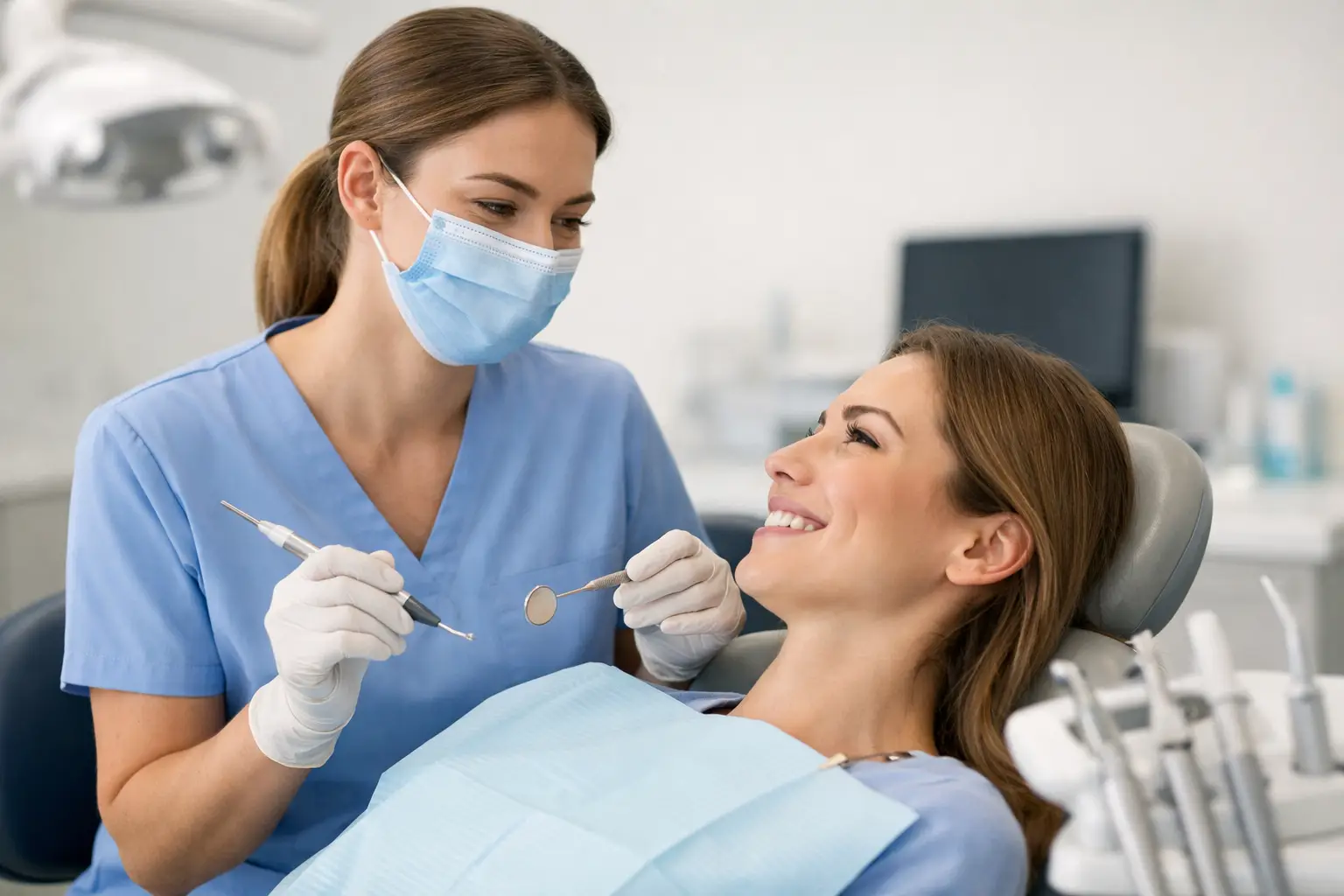
A dental hygienist in Wanstead can help you stay ahead of the problems that are easy to miss at home. Even careful brushing does not always remove hardened plaque deposits, and early gum disease can be surprisingly quiet. A hygienist appointment is a practical way to protect your teeth, refresh your smile and get clear, personal advice without being judged for your current routine.
At Eyespy Eye and Dental Care, we know that some people put off hygiene visits because they expect discomfort, a lecture or an unnecessary expense. Good hygiene care should feel different: calm, well explained and tailored to what your mouth actually needs.
What does a dental hygienist do?
A dental hygienist focuses on preventing and managing the build-up that can affect your teeth and gums. During an appointment, they assess the condition of your gums, look for signs of inflammation and professionally remove plaque and tartar from areas that are difficult to clean thoroughly at home.
Plaque is a sticky film of bacteria that forms continually on teeth. If it is not removed, it can irritate the gums. Over time, it may harden into tartar, also called calculus. Once tartar has formed, no toothbrush or interdental brush can remove it safely – professional cleaning is needed.
The hygienist may also clean surface staining caused by everyday things such as tea, coffee, red wine or smoking. This can make teeth look brighter, but it is not the same as tooth whitening. A hygiene clean removes external stains and deposits; whitening treatment changes the shade of the teeth and should be discussed separately if that is your goal.
Just as valuable is the advice you receive. Small adjustments to your brushing technique, the size of your interdental brushes or the products you use can make a meaningful difference between appointments.
What happens at a hygienist appointment?
Your visit starts with a conversation. Let the clinician know if your gums bleed when you brush, your teeth feel sensitive, you have persistent bad breath, or you are worried about a particular area. There is no benefit in minimising these details – they help your hygienist provide the right care.
They will examine your gums and teeth, then explain what they can see before starting. Professional cleaning commonly involves instruments that gently remove tartar, followed by polishing where appropriate. An ultrasonic scaler may be used to loosen deposits with vibration and water, alongside hand instruments for more detailed areas.
For many patients, the appointment feels straightforward and leaves their mouth feeling notably fresher. However, if there is significant tartar build-up, inflamed gums or sensitivity, some areas may feel tender. Your hygienist can work carefully, pause when needed and talk you through what is happening. If you are nervous about dental treatment, say so at the start. A considerate clinician will adapt the pace rather than rushing you through it.
You may notice that your gums bleed during the clean. This is often a sign of existing gum inflammation, not that cleaning has harmed them. With consistent cleaning at home and professional support, bleeding commonly improves. If the hygienist identifies concerns that need further assessment or treatment planning, they will explain the next sensible step.
Why healthy gums matter as much as clean teeth
People often book a hygienist because they want a cleaner-looking smile, and that is a perfectly valid reason. The greater benefit is what happens below the visible surface. Healthy gums form the foundation around your teeth.
Bleeding when brushing, soreness, swelling, a lingering unpleasant taste or bad breath should not simply be accepted as normal. These can be signs that your gums need more attention. Gum disease is common, but early action is far easier than waiting until symptoms become more noticeable.
Regular hygiene care does not replace routine dental examinations. Your dentist checks your teeth, restorations and overall oral health, while your hygienist provides focused gum care and cleaning guidance. Together, these appointments give you a clearer picture of your oral health and help problems get picked up sooner.
How often should you see a dental hygienist in Wanstead?
There is no single timetable that suits every patient. Some people benefit from a hygiene visit every six months alongside their routine dental check-up. Others may be advised to attend more frequently because of gum concerns, rapid tartar build-up, smoking, certain health conditions or difficulties cleaning around braces, crowns or implants.
Equally, a patient with healthy gums and an effective home-care routine may need less frequent visits. The right interval is based on clinical need, not a one-size-fits-all package. Your clinician should explain why they are recommending a particular recall period so you can make an informed decision.
If it has been a long time since your last visit, do not wait until you have a dental emergency. Booking a hygiene appointment now can be a positive reset. It gives you professional support and a realistic plan for maintaining your mouth at home.
Making your clean last between appointments
A hygienist clean gives you an excellent starting point, but daily habits are what maintain the result. Brush twice a day for two minutes with fluoride toothpaste, taking time around the gumline rather than scrubbing hard. Spit after brushing rather than rinsing straight away, so the fluoride can remain on your teeth for longer.
Cleaning between your teeth once a day matters too. A toothbrush cannot reach every contact point, especially towards the back of the mouth. Interdental brushes are highly effective for many people, while floss may be more suitable where spaces are very tight. The key is using the right size and technique, which your hygienist can demonstrate.
Try not to be discouraged if your gums bleed when you first begin cleaning between your teeth. Gentle, consistent cleaning is often what helps reduce inflammation. If bleeding continues, becomes heavy or you are unsure what to use, arrange professional advice rather than stopping altogether.
Your diet also has a role. Frequent sugary snacks and drinks give mouth bacteria repeated opportunities to produce acid. Keeping sweet foods and drinks to mealtimes where possible, and choosing water between meals, can support both teeth and gums. It is about sustainable habits, not perfection.
Choosing hygiene care that feels personal
When looking for hygiene care near Wanstead, convenience matters, but so does the experience in the chair. You should feel able to ask questions, understand the recommended care and know what costs are involved before proceeding. For families and busy local patients, a practice that takes time to explain things clearly can make routine care much easier to keep up with.
Look for a team that treats nervousness with respect and gives advice that fits your circumstances. Someone with sensitivity, extensive staining or a history of gum problems may need a different approach from someone booking their first clean in several years. Personalised care is not about making an appointment complicated. It is about making it useful.
When to book sooner rather than later
Do not wait for your next planned check-up if you have gums that bleed regularly, persistent bad breath, swelling, pain when chewing, loose teeth or a sudden change in how your gums look or feel. These symptoms do not always mean something serious, but they do deserve a prompt professional assessment.
A hygiene appointment is also worth considering before a special occasion if surface staining is bothering you. Allow a little time before the event, particularly if your gums have been sensitive or it has been a while since your last clean. Your clinician can advise honestly on what hygiene cleaning can achieve and whether any cosmetic treatment would be relevant.
The best time to look after your gums is before they start demanding your attention. A thoughtful hygiene visit can leave you with more than a polished smile – it can give you the confidence of knowing exactly how to care for it.