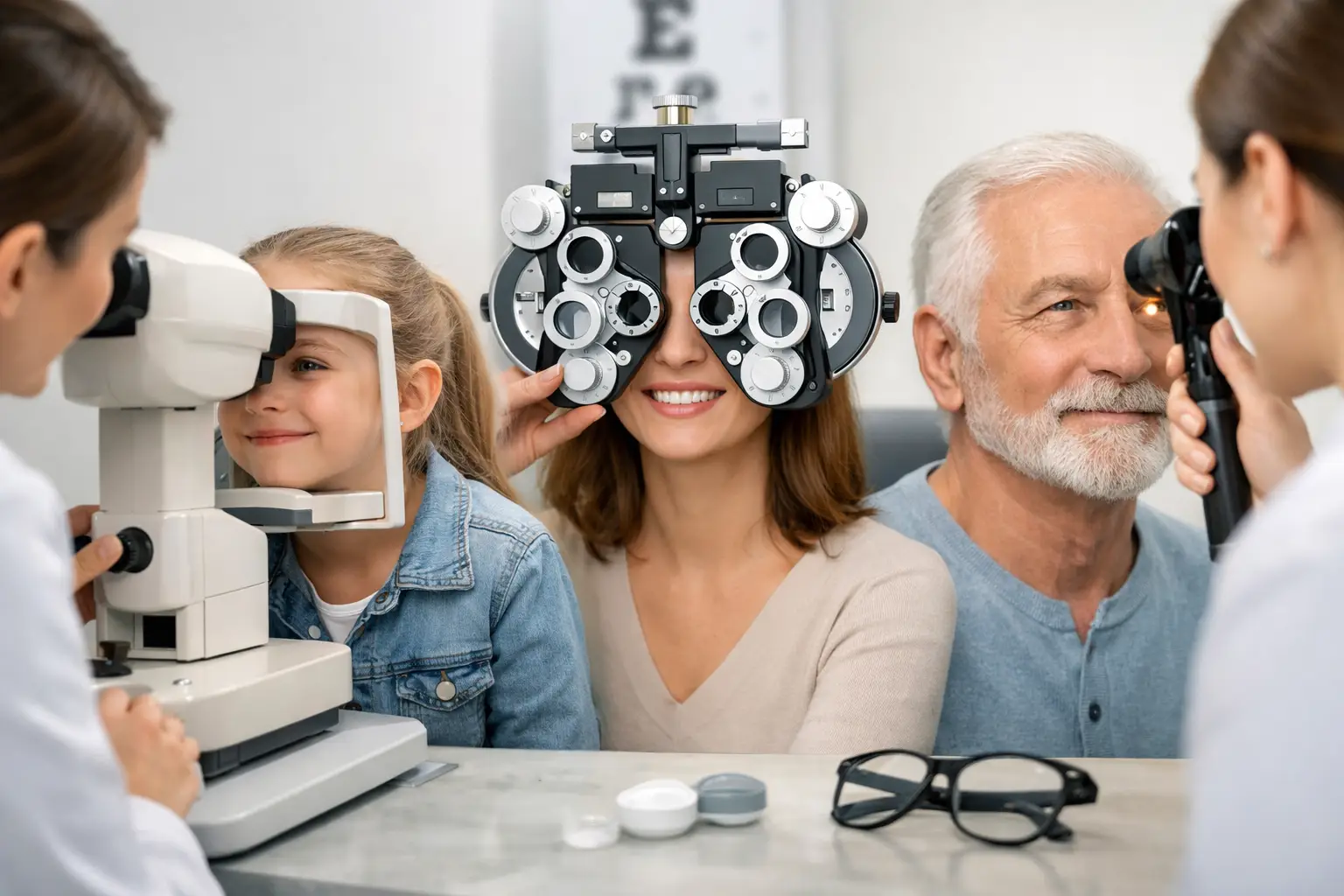
A routine eye exam is not simply about whether you can read the bottom line of a chart. This guide to routine eye exams explains how a professional sight test checks your vision, looks for signs of eye conditions and helps you make informed choices about glasses or contact lenses. For many people, it is a straightforward appointment that brings reassurance. For others, it can spot a change before it has begun to affect daily life.
Whether you have noticed headaches while working, find road signs less clear at night, or have not had your eyes tested for a few years, knowing what to expect can make booking feel much easier.
What happens during a routine eye exam?
Your appointment should feel unhurried and personal. An optometrist will begin by asking about your eyesight, general health and any changes you have noticed. Mention practical details, even if they seem minor: struggling with small print, tired eyes after screens, glare from headlights, dry or watery eyes, or needing to hold your phone further away.
You may also be asked about medicines you take and whether close relatives have glaucoma, macular degeneration or other eye conditions. Family history does not mean you will develop the same problem, but it can help your optometrist decide which checks are most relevant.
The sight test itself measures how clearly you see at different distances. You will look at letters or symbols and compare different lens strengths to find the prescription that provides comfortable, clear vision. This is not a test you can pass or fail. Honest answers are more useful than trying to guess the smallest line.
Your optometrist will also examine the health of the front and back of your eyes. Depending on your needs, this may involve lights, lenses, photographs or other imaging. These checks can help identify changes linked to common eye conditions, as well as signs that may need further medical attention. If anything needs monitoring, you should be told clearly what has been found, what it means and what happens next.
Why eye health checks matter even when your vision seems fine
Eyes can change gradually. It is easy to adapt without realising it – sitting closer to the television, increasing the text size on your phone or avoiding driving in poor light. A routine examination creates a useful record, making subtle changes easier to identify over time.
Some eye conditions have few noticeable symptoms in their early stages. Glaucoma, for example, can affect peripheral vision gradually. Age-related macular changes may affect detailed central vision, while cataracts can make colours appear less vivid or lights seem more dazzling. Early detection does not guarantee that every condition can be prevented, but it often gives you more options for monitoring, treatment or referral.
An eye examination can also reveal clues about general health. Changes in the small blood vessels at the back of the eye may sometimes be associated with conditions such as high blood pressure or diabetes. An optometrist does not replace your GP, but can advise you when a medical check is sensible.
How often should you book an eye examination?
For most adults, an eye exam every two years is a sensible starting point. Your optometrist may recommend a shorter interval if you have a particular eye condition, diabetes, a strong family history of glaucoma, a higher prescription, or changes that need watching.
Children should have regular eye checks too. Good vision supports reading, learning, sports and confidence at school, yet children may not realise that what they see is different from everyone else. Squinting, sitting very close to screens, frequent eye rubbing or losing their place while reading can be worth mentioning, but many children with vision changes show no obvious signs at all.
Adults over 60 may benefit from more frequent checks because the likelihood of certain age-related eye changes increases. The right interval is individual, so it is always best to follow the advice given at your appointment rather than relying on a one-size-fits-all rule.
If you are eligible for an NHS-funded sight test, ask the practice when booking. Eligibility can depend on age, certain health conditions, benefits or your level of risk for particular eye conditions. The team can explain the available options and any likely costs before your appointment.
Preparing for your appointment
There is very little you need to do, but a few details make the visit more useful. Bring your current glasses, even if you rarely wear them, and your contact lens details if you use lenses. A list of medications is helpful, especially if you have started something new since your last examination.
Think about the situations where your vision feels less comfortable. Is close work difficult by late afternoon? Do you struggle to recognise faces at a distance? Are headlights troublesome when driving? Specific examples give your optometrist a clearer picture than simply saying your sight feels worse.
If drops are needed to examine your eyes more closely, your vision may be temporarily blurred and you may be more sensitive to light. Your optometrist will explain this beforehand. It may be sensible to avoid driving immediately afterwards and arrange your journey home accordingly.
Glasses, contact lenses and the choices after your test
If your prescription has changed, you do not have to make a rushed decision. A good optical team will explain the options in plain language, including what is useful and what may be unnecessary for your lifestyle.
For example, someone who spends long days switching between a laptop, meetings and reading may benefit from a different lens design than someone who mainly needs glasses for driving or watching television. Thin lenses can improve the appearance and weight of a stronger prescription, but may not be essential for every prescription. Coatings can reduce reflections or make cleaning easier, yet the best choice depends on how and when you use your glasses.
Frame selection matters too. Comfort, fit and clear vision are just as important as colour or style. Frames should sit securely without pinching, and the lenses need to be positioned accurately in front of your eyes. For contact lens wearers, a separate assessment may be needed to confirm that the lenses fit well and that your eyes remain healthy.
When not to wait for a routine appointment
Routine checks are valuable, but sudden symptoms need more urgent advice. Contact an eye care professional promptly if you experience sudden vision loss, a curtain or shadow across your vision, a sudden increase in flashes or floaters, severe eye pain, a red painful eye, or an eye injury.
Not every new floater or episode of irritation is serious, but it is better to get clear advice than to wait and hope. Tell the person you speak to exactly when the symptom started and whether it is getting worse.
Making eye care part of family life
The easiest way to stay on top of eye health is to treat examinations like any other regular health appointment. Put a reminder in your calendar, book children around school hours where possible, and bring questions with you rather than trying to remember them on the day.
For families in Leytonstone and nearby East London communities, a local independent practice can offer the benefit of continuity: clinicians and staff who take time to understand your history, explain the findings and help you feel comfortable with the next step. At Eyespy Eye and Dental Care, the focus is on clear advice and personalised care, whether you need reassurance, an updated prescription or ongoing monitoring.
Your eyes work hard every day. Giving them a regular professional check is a practical way to look after the vision that helps you read, work, travel, connect and enjoy the small details around you.