A smile can feel like a small thing until you find yourself avoiding photographs, covering your mouth when you laugh, or noticing a tooth that has shifted every time you look in the mirror. For many people, the reasons adults choose Invisalign are not about chasing perfection. They are about feeling more comfortable, looking after their teeth properly and making a change that fits around a busy adult life.
Clear aligner treatment has made orthodontics feel more accessible for people who assumed they had missed their chance to straighten their teeth. Whether you have always had crowding, developed gaps over time or noticed movement after previous braces, treatment can be planned around your individual teeth, bite and goals.
Reasons adults choose Invisalign
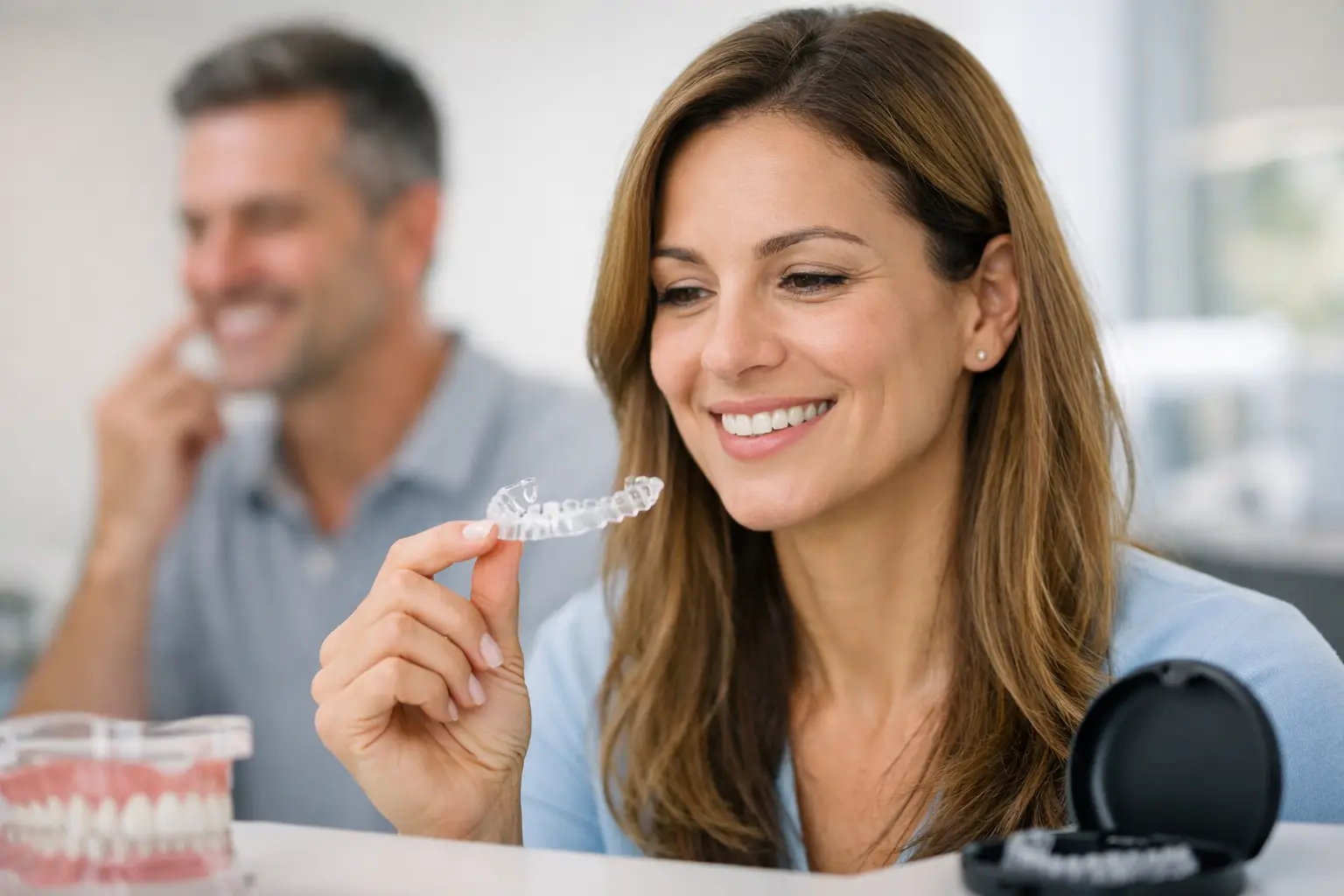
The most obvious reason is discretion. Invisalign aligners are made from clear plastic and sit closely over the teeth, so they are far less noticeable than traditional fixed braces. Most people will still see them at close range, but they do not immediately draw attention to your orthodontic treatment in the way metal brackets can.
That matters when you are speaking with clients, working in a customer-facing role, attending social events or simply do not want your treatment to become a conversation topic. Adults often put off teeth straightening because they picture the braces they had as teenagers. Clear aligners offer a different experience, while still requiring commitment and care.
Another important factor is that the aligners are removable. You take them out to eat and drink anything other than water, then brush your teeth before putting them back in. There are no brackets or wires to clean around, which many patients find more manageable alongside work, family life and meals out.
Removability is a benefit, but it is also a responsibility. Aligners generally need to be worn for around 20 to 22 hours a day to keep treatment moving as planned. If they spend too long in a case, progress can slow down and treatment may take longer. The best option is therefore not always the least visible one – it is the option you can realistically follow every day.
A treatment plan with a clear destination
Adults often value knowing what they are working towards. Before treatment begins, a dentist will assess your teeth, gums and bite, take records and discuss whether clear aligners are suitable. Digital treatment planning can show a projected sequence of tooth movements and give a useful indication of the intended result.
This is reassuring, particularly if you have been unhappy with your smile for years but are unsure whether improvement is possible. It also supports informed choices. You can discuss which concerns matter most, such as a front tooth that sits behind another, spacing between the upper teeth or a bite that feels uneven.
A projection is not a guarantee, and teeth do not always behave exactly as predicted. Some cases require refinement aligners towards the end of treatment to fine-tune the result. A good consultation should explain this from the start, rather than suggesting every case follows a perfectly fixed timetable.
Confidence without putting life on hold
Many adult patients are not looking for a dramatic new appearance. They want to smile freely in photographs, feel less self-conscious in meetings or stop noticing one particular tooth in the mirror. A straighter smile can make a meaningful difference to confidence because it removes a recurring source of hesitation.
This is also why the timing is often practical. People begin treatment before a wedding, milestone birthday, career change or return to dating, but there is no need for a major occasion to justify it. Choosing orthodontic treatment because it would help you feel more at ease is a valid reason.
For people in Leytonstone and across East London, convenient appointments can make the decision easier too. Orthodontic treatment involves regular monitoring, so choosing a local practice where you can ask questions and receive clear explanations can make a long-term commitment feel much more manageable.
Invisalign and day-to-day oral hygiene
Crowded or overlapping teeth can create areas that are harder to brush and clean between. Straightening teeth may make those spaces more accessible, although it is not a replacement for good brushing, interdental cleaning and regular dental check-ups.
With removable aligners, you can clean your teeth as normal rather than navigating fixed brackets and wires. That is a genuine practical advantage for adults who are already focused on maintaining their oral health. You will need to clean the aligners too, and avoid placing them back over teeth after sugary food or drinks without brushing where possible.
Healthy gums are particularly important before orthodontic treatment. If there is active gum disease, decay or another dental issue, it should be addressed first. Moving teeth without a stable foundation is not in your best interests, so a careful assessment is an essential part of responsible treatment.
A comfortable alternative for many patients
Clear aligners have smooth edges and do not involve wires that can rub against the cheeks or lips. Many adults find this more comfortable than they expect. There can still be pressure when you move to a new set of aligners, especially for the first day or two. That feeling is usually a sign that the aligners are applying gentle force to move the teeth.
Comfort is personal, however. Some people experience a short adjustment period with speech, extra saliva or minor irritation. These effects are usually temporary, but they should be discussed openly rather than dismissed. Treatment should feel supported, not like something you have to simply endure in silence.
When Invisalign may not be the right choice
Clear aligners can treat a wide range of orthodontic concerns, but they are not automatically the best solution for every smile. More complex bite problems, significant tooth movement or particular jaw relationships may need a different approach. In some cases, additional attachments on the teeth, small spaces created between teeth or other planned techniques are needed to achieve predictable movement.
It also depends on your habits. If you know you are unlikely to wear aligners consistently, fixed braces may offer more reliable control because they remain in place. Equally, if you regularly snack, drink hot beverages throughout the day or struggle to maintain a cleaning routine away from home, the removable nature of aligners may feel less convenient than expected.
The right clinician will not pressure you towards a cosmetic treatment. They will assess whether your teeth and gums are suitable, explain the likely benefits and limitations, and give you time to consider the commitment. Transparent discussion is especially valuable when treatment is an investment in both time and money.
Cost, finance and long-term retention
Cost is naturally one of the reasons adults pause before starting. The fee can vary depending on the complexity of the case, the number of aligners needed and whether refinements are included. Ask for a written breakdown of what your treatment covers, including appointments, retainers and any likely additional costs.
Spreading the cost through 0% finance, where available and subject to eligibility, can make treatment more manageable for some patients. It should never be a reason to rush a decision. The priority is understanding the total cost and choosing a payment route that is comfortable for your circumstances.
Once your teeth have been straightened, retainers are crucial. Teeth can gradually shift throughout life, even after orthodontic treatment. Wearing retainers as advised protects the result you have invested in and should be viewed as part of treatment, not an optional extra at the end.
A well-planned Invisalign journey is about more than receiving a series of clear trays. It is about being listened to, understanding what is realistic and having support from the first assessment through to retainers. If a straighter smile has been on your mind, a personal consultation at Eyespy Eye and Dental Care can help you decide whether this is the right time and the right treatment for you.