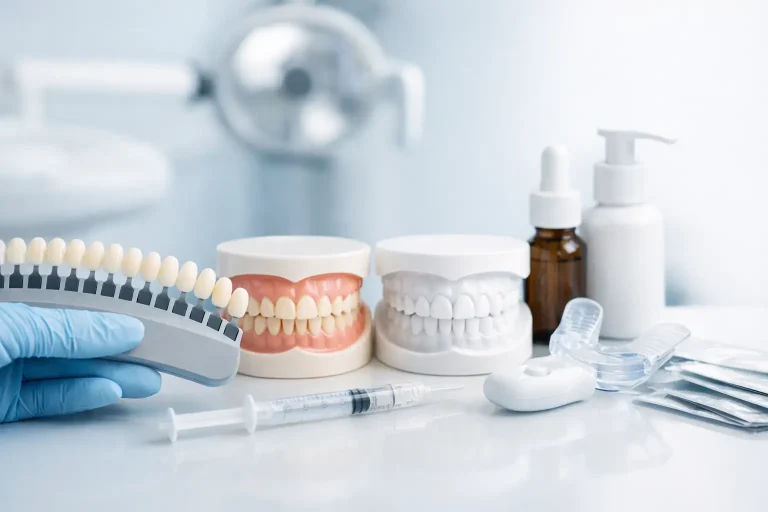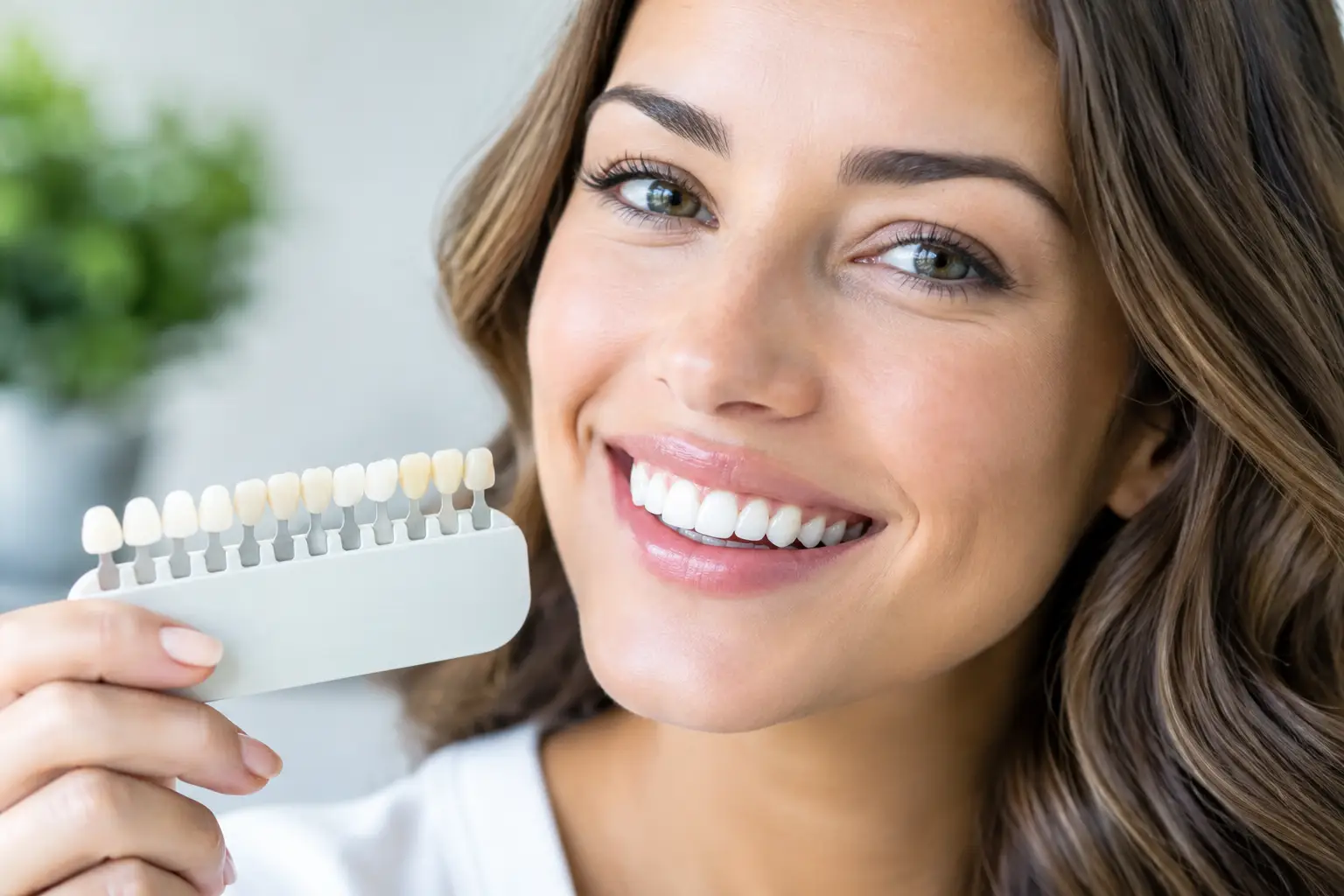
A brighter smile can make a real difference when you look in the mirror, speak to colleagues or appear in photographs. Tooth whitening is one of the most popular cosmetic dental treatments because it can lift everyday staining without changing the shape of healthy teeth. The best approach, however, is not simply choosing the strongest product. It is understanding why your teeth look darker, selecting a clinically appropriate treatment and protecting the result afterwards.
Why teeth become discoloured
Teeth naturally vary in shade. Some people have naturally brighter enamel, while others have teeth with a warmer or slightly greyer tone. Over time, the outer enamel can also pick up stains from tea, coffee, red wine, curry, tobacco and richly coloured foods. These surface stains can make teeth appear less bright even when they are otherwise healthy.
Age plays a part too. Enamel gradually becomes thinner, allowing more of the naturally darker dentine beneath to show through. Previous trauma to a tooth, some medicines and certain developmental changes can affect colour from inside the tooth. These deeper causes do not always respond in the same way as ordinary surface staining, which is one reason a dental assessment matters before treatment begins.
A hygienist appointment may be the right first step for some patients. Removing plaque, tartar and surface staining can noticeably freshen a smile, although it is not the same as whitening. Professional whitening changes the shade of the tooth itself; cleaning restores the natural tooth surface.
Professional tooth whitening: what to expect
Safe tooth whitening starts with an examination. Your dentist will check your teeth and gums, discuss the shade you would like to achieve and make sure there are no issues, such as untreated decay, leaking fillings or gum inflammation, that should be addressed first. Whitening is elective treatment, so it should never take priority over your oral health.
At Eyespy Eye and Dental Care, treatment planning is personal rather than one-size-fits-all. Some patients want a subtle lift that still looks completely natural. Others are preparing for a wedding, a special occasion or simply feel ready to address years of staining. A conversation about your expectations helps set a realistic and attractive goal.
Professional whitening uses products and techniques chosen for your teeth, rather than a generic kit. In the UK, whitening should be carried out by, or under the direction of, a registered dental professional. This provides important safeguards, including a proper suitability check, clear instructions and support if sensitivity occurs.
Home whitening with custom trays
Custom-fitted trays are made from impressions or scans of your teeth. You place a small amount of whitening gel into the trays and wear them at home as directed, usually over a period of days or weeks. Because the trays fit closely, the gel is held where it is needed and less likely to irritate the gums.
This option suits people who prefer a gradual change and the flexibility to whiten around their routine. It also gives you a practical way to top up your colour later, if advised by your dentist. Enlighten whitening is one professionally managed system that may be discussed where appropriate, particularly for patients looking for a predictable, noticeable improvement.
In-practice whitening for a quicker change
In-practice treatment can be a good choice when you would like a more immediate result. Philips Zoom! whitening uses a professional whitening gel activated in the dental chair, with the appointment carefully supervised throughout. Your clinician will explain what to expect, protect the soft tissues around your mouth and assess how your teeth respond.
For some people, a combination of in-practice whitening and home trays offers the best balance of a prompt initial improvement and continued refinement. The right route depends on your starting shade, your timetable, your sensitivity history and the result you are hoping for. A trustworthy recommendation should explain those trade-offs clearly.
What whitening can and cannot change
Tooth whitening can brighten natural enamel and dentine, but it does not change the colour of crowns, veneers, composite bonding or fillings. This is particularly important if you have visible dental work at the front of your smile. Whitening first, then reviewing whether any existing restorations need replacing to match, usually gives the most cohesive result.
It is also worth being cautious about promises of an unnaturally white smile. Tooth colour is affected by lighting, skin tone and the shade of neighbouring teeth. A well-planned result should look fresh and healthy, not artificial. Your dentist can use a shade guide to show the likely improvement, while recognising that every smile responds differently.
Whitening may need to wait if you are pregnant or breastfeeding, have active dental problems or are experiencing significant sensitivity. It is generally not recommended for children. If one tooth has darkened after injury or root canal treatment, it may need a different approach from standard external whitening. These are exactly the details that a consultation can identify.
Managing sensitivity and looking after your new shade
Temporary sensitivity is the most common side effect of whitening. It may feel like brief sharp twinges when eating or drinking something cold, or a general awareness in the teeth. It is usually manageable and settles after treatment, but do tell your dental team if it is uncomfortable. They may recommend adjusting how often you whiten, pausing for a short period or using products designed to help sensitive teeth.
Once you have reached your chosen shade, your everyday habits influence how long it lasts. You do not need to give up every favourite drink, but rinsing with water after tea, coffee or red wine can help reduce fresh staining. Using a straw for cold dark drinks may also limit contact with front teeth. Brushing twice a day with fluoride toothpaste, cleaning between your teeth and attending regular hygiene appointments all support a cleaner-looking smile.
Smoking and tobacco use can cause stubborn staining and make the effects of whitening fade sooner. Reducing or stopping is beneficial for your mouth as well as your general health. If you do notice colour gradually returning, do not reach for an unregulated online product. A professional top-up plan using your existing trays can be a safer and more controlled option.
Common questions about tooth whitening
Will whitening damage my enamel?
When it is prescribed and monitored appropriately, professional whitening is designed to be safe for healthy teeth and gums. The key is using the correct product, concentration and technique for the individual patient. Overusing products, applying too much gel or ignoring gum irritation can create avoidable problems, which is why professional guidance is valuable.
How long do results last?
There is no single answer. Some patients enjoy their chosen shade for many months, while others need a top-up sooner because of diet, smoking or the original level of staining. Good oral hygiene and sensible aftercare make a genuine difference. Your dental team can advise on a maintenance schedule that suits your smile and lifestyle.
Are shop-bought whitening products as effective?
Over-the-counter products may remove some surface staining or create a small short-term change, but they are not a substitute for professionally prescribed treatment. They are also less tailored to the shape of your teeth, the condition of your gums and the cause of your discolouration. If you have tried products without seeing the improvement you wanted, an assessment can clarify what is realistically achievable.
A brighter smile should feel like your own smile, simply refreshed. Taking time to choose the right tooth whitening plan, rather than chasing the fastest promise, gives you the best chance of a comfortable treatment and a result you will be happy to show.