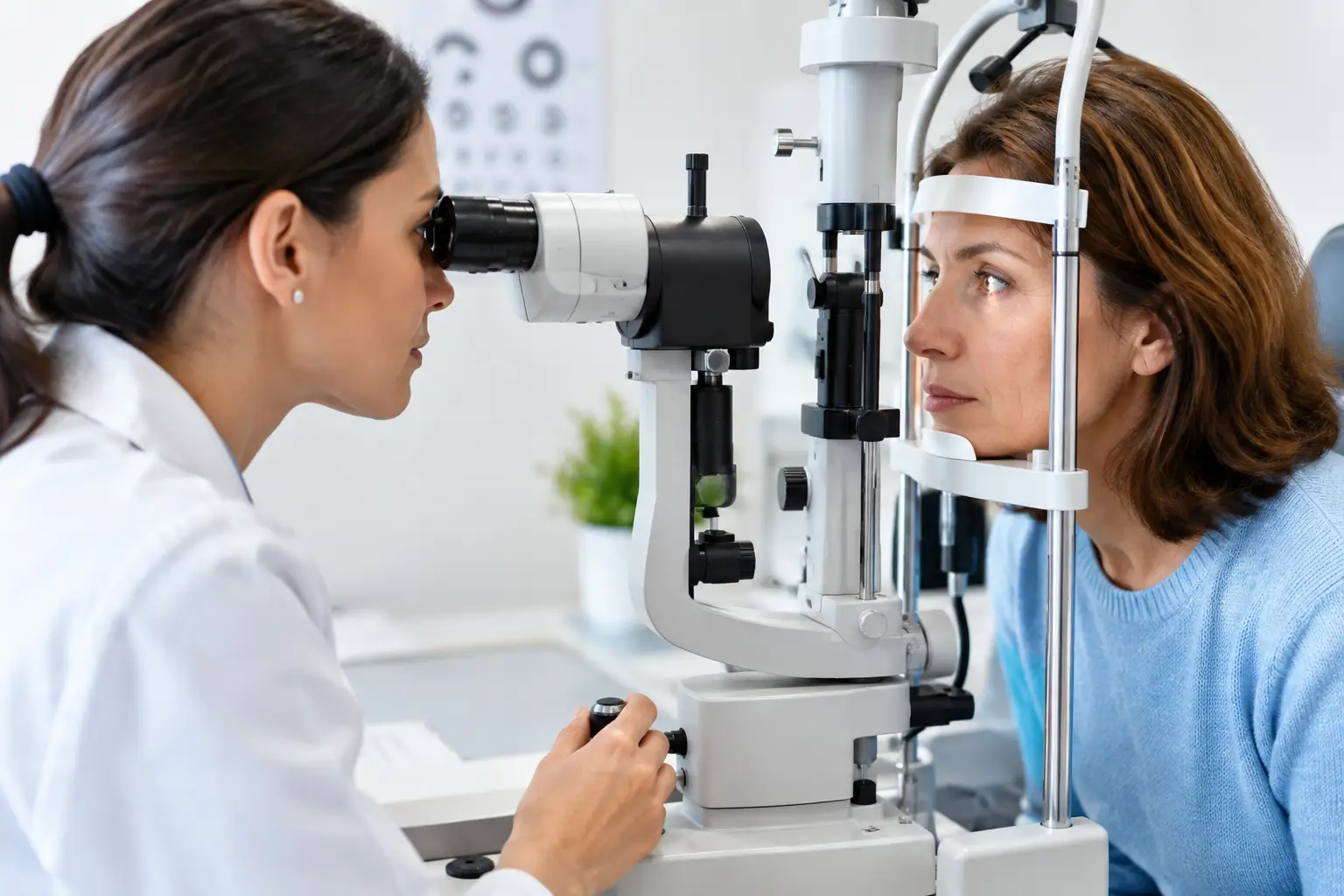
A new glasses prescription is often the reason people book an eye test, but the appointment can offer much more than clearer vision. So, can opticians detect eye disease? A thorough eye examination can identify signs that may point to an eye condition, sometimes before you have noticed any change in your sight.
That early warning matters. Several eye diseases develop gradually and without discomfort, particularly in their early stages. Finding suspicious changes promptly gives you the best possible chance of protecting your vision through monitoring, treatment or a specialist referral where needed.
Can opticians detect eye disease during an eye test?
In everyday conversation, people often use “optician” to describe anyone working in eye care. In the UK, it is usually an optometrist who carries out the clinical eye examination and assesses eye health. A dispensing optician helps you choose and fit glasses or contact lenses, while an ophthalmologist is a medical doctor specialising in eye conditions and surgery.
An optometrist can examine the front and back of the eye, measure aspects of its function and look for changes that could indicate disease. They may be able to identify a condition or, just as importantly, recognise when findings need further investigation. If there is a concern, they can explain it clearly and advise whether you should see your GP, attend an eye hospital or seek urgent care.
An eye examination is not a guarantee that every condition will be found, and it cannot replace specialist care when that is required. Some problems are subtle, intermittent or outside the scope of a routine test. However, regular appointments remain one of the most practical ways to spot potential problems early.
What can an eye examination reveal?
The eye is the only place in the body where a clinician can directly view blood vessels and nerve tissue without an operation. This means eye health checks can reveal changes related to the eyes themselves and, on occasion, signs that warrant investigation of your wider health.
Glaucoma
Glaucoma is a group of conditions that damages the optic nerve, often linked with raised pressure inside the eye. It can cause gradual loss of peripheral vision, yet many people have no obvious symptoms until damage has already occurred.
An optometrist may assess eye pressure, examine the optic nerve and, where clinically appropriate, check your field of vision. No single result alone confirms or rules out glaucoma. The overall picture, including your age, family history and the appearance of the optic nerve, helps determine whether a referral is sensible.
Cataracts
A cataract is a clouding of the eye’s natural lens. It can make vision seem misty, increase glare from headlights or make colours appear less vivid. Cataracts are common with age, though they can affect younger adults too.
During an eye examination, the lens can be assessed and the likely effect on your vision discussed. If a cataract is affecting daily life, such as driving, reading or recognising faces, you can be advised on the appropriate next step.
Age-related macular degeneration
Age-related macular degeneration, often shortened to AMD, affects the macula – the small central area of the retina responsible for detailed vision. It may make straight lines appear distorted, create a blurred or missing patch in the centre of vision, or make close work harder.
Looking carefully at the retina can reveal early changes. Retinal photography or scans may also be used when available and clinically indicated. Prompt assessment is particularly important if distortion or a sudden change in central vision develops.
Diabetic eye disease and blood vessel changes
Diabetes can affect the tiny blood vessels at the back of the eye. Diabetic eye screening is a separate NHS service and should still be attended when you are invited, even if you have had a recent sight test. An optometrist may nevertheless notice changes that need attention, particularly if you have not yet been diagnosed with diabetes or if symptoms have changed.
Changes in retinal blood vessels can also sometimes suggest that other health checks may be worthwhile. This does not mean an eye test diagnoses conditions such as high blood pressure or diabetes on its own. It means the findings can provide a valuable reason to arrange further assessment with the right healthcare professional.
What happens in a detailed eye health check?
A good appointment starts with listening. Your optometrist should ask whether you have noticed blurred vision, headaches, flashes, floaters, dry or uncomfortable eyes, or difficulties with glare and night driving. Your general health, medication and family history can all matter too.
The examination usually includes a sight test to establish how clearly you see and whether glasses or contact lens changes would help. Eye health checks then assess the structures of the eye. Depending on your needs and clinical findings, this may include measuring eye pressure, examining the retina and optic nerve, checking peripheral vision, or using imaging to record detailed views.
You may sometimes be offered drops to widen your pupils. These can give a clearer view of the back of the eye, but they can temporarily blur close vision and make you more sensitive to light. It is sensible to ask how long the effects may last and whether driving afterwards is appropriate.
At Eyespy Eye and Dental Care, the aim is not to rush through results or leave you wondering what they mean. A personalised examination should include an explanation of what has been checked, what has been found and what happens next, whether that is a new prescription, a routine review or a referral.
When should you book an eye test?
For many adults, an eye examination every two years is a sensible starting point. Your optometrist may recommend more frequent checks if you have diabetes, a family history of glaucoma, high short-sightedness, previous eye problems or a finding that needs monitoring. Children and contact lens wearers may also need reviews on a different schedule.
Do not wait for your next routine appointment if you notice a sudden or significant change. Seek urgent advice if you experience:
- a curtain or shadow moving across your vision
- sudden loss of vision, even if it improves
- new flashing lights or a rapid shower of floaters
- a painful red eye, particularly with blurred vision, nausea or halos around lights
These symptoms do not always mean a serious condition, but they should be assessed without delay. For new distortion, a patch of missing central vision, or a persistent change in one eye, contact an eye care professional promptly rather than assuming you simply need stronger glasses.
Why regular checks are worth making time for
It is easy to put off an eye test when your current glasses seem fine. But your prescription and your eye health are not the same thing. You can read comfortably and still have changes at the back of the eye that need watching.
Regular eye care is especially valuable for families because children may not realise their vision is different from everyone else’s, and older relatives can adapt gradually to reduced sight without recognising the change. A calm, unhurried appointment gives you an opportunity to raise concerns that may otherwise be dismissed as tiredness, ageing or too much screen time.
If you are due a check, have noticed a change in your vision, or simply want reassurance about your eye health, booking an examination is a positive step. Clear explanations and timely action can make a real difference to how confidently you see the world around you.