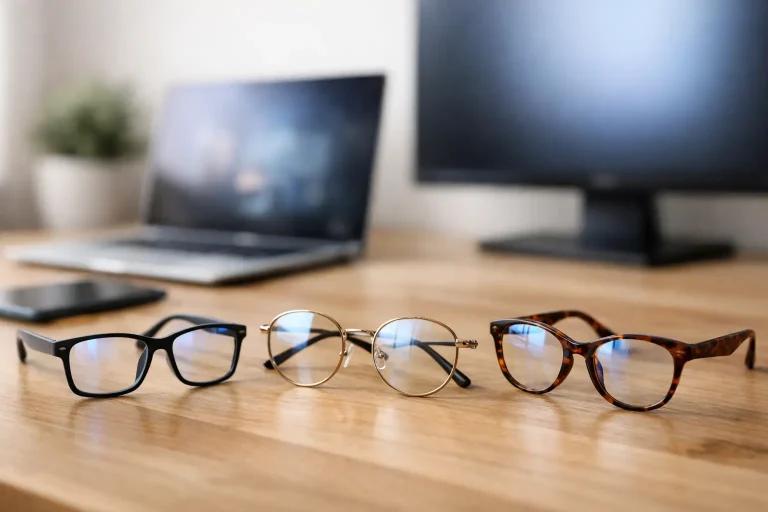
A pair of glasses can be technically the right prescription and still feel wrong by lunchtime. Red marks across the nose, aching behind the ears, frames sliding down when you look at your phone, or a headache that appears after reading are not things you should simply put up with. Knowing how to fix glasses discomfort starts with working out whether the issue is the fit, the lenses, your daily habits, or a change in your vision.
Most discomfort can be resolved with a careful adjustment or a review of your prescription. The key is not to force yourself to adapt to persistent pain. Glasses should feel secure and balanced, not like something you cannot wait to remove.
How to fix glasses discomfort: start with the fit
Frames need to sit in the right position on three main contact points: the bridge of your nose, the sides of your head and behind your ears. A small shift at any of these points can make the whole pair feel uncomfortable.
If your glasses leave deep nose marks, feel heavy at the front, or keep slipping down, the bridge may be too wide or the nose pads may need adjusting. Nose pads can become uneven over time, especially if the glasses are regularly taken on and off with one hand. Plastic frames do not have adjustable pads, so the bridge shape and frame size matter even more.
Pressure behind the ears often means the arms are too tight, too short, or bent at the wrong angle. Conversely, frames that feel loose may have widened slightly with everyday wear. Heat, frequent use and being left in a hot car can all affect the shape of a frame.
Avoid trying to bend your glasses at home, particularly if they are metal, acetate or rimless. It is easy to create an uneven fit, loosen a screw or damage the lenses. An optician can assess the frame on your face and make small, controlled adjustments that are much more likely to last.
Check whether the frames are sitting level
Put your glasses on in front of a mirror and look for a simple clue: are both eyes sitting at a similar height behind the lenses? If one side of the frame sits higher, one arm may be twisted or the frame may have become misshapen. You may also notice that one lens appears closer to your eye than the other.
This can cause more than a cosmetic annoyance. When lenses are not positioned correctly, you may find yourself tilting your head, raising your eyebrows, or moving your glasses repeatedly to find a clearer point of focus. Those small compensations can lead to facial tension and headaches over a working day.
A professional fitting appointment is especially worthwhile after a frame has been dropped, sat on, or handled by a young child. Even when there is no obvious damage, a slight twist can affect comfort and vision.
Give a new prescription a sensible settling-in period
New glasses can feel unfamiliar at first, particularly if your prescription has changed significantly or you have moved into varifocal lenses. Straight lines may seem slightly curved at the edges, stairs can feel unusual, and close work may require you to hold reading material in a different position. For many people, this settles as the brain adjusts.
However, adjustment should mean mild unfamiliarity, not ongoing pain or blurred vision. If you have worn the glasses consistently for around one to two weeks and still experience headaches, nausea, double vision, strain or difficulty finding a clear area of the lens, arrange a review. The lenses may need checking for prescription accuracy, optical positioning or fitting height.
It also depends on how often you wear glasses. Someone who only uses a reading prescription for short periods may take longer to get used to a change than someone who wears their glasses all day. The right approach is usually to build wear time steadily, rather than switching constantly between old and new pairs.
Notice when discomfort happens
The timing of the problem gives useful clues. Discomfort that begins as soon as you put your glasses on is more likely to be related to the frame fit. Pain that builds after screen work, driving or reading may suggest visual strain, dry eyes or a prescription that needs reviewing.
Think about the task that triggers it. If your distance vision is comfortable but a laptop screen causes fatigue, your working distance and lens design may need discussing. If driving at night has become tiring, glare, lens coatings or a change in prescription may be relevant. Reading glasses used for a phone may not be ideal for a desktop monitor that sits farther away.
Keeping a brief note for a few days can make an eye appointment more useful. Record when the discomfort starts, where you feel it, whether it affects one or both eyes, and whether it improves when you remove your glasses. This gives your optometrist a clearer picture than simply saying the glasses feel uncomfortable.
Keep lenses and nose pads clean
Smudged lenses make your eyes work harder to maintain clear focus. Fingerprints, make-up, skin oils and dust can all create a hazy surface that is easy to overlook until you compare it with a freshly cleaned lens. Use a clean microfibre cloth and a suitable lens cleaner, rather than tissues, kitchen roll or clothing, which may scratch the coating.
Nose pads and the bridge area also collect oil and skincare products. This can make glasses slip, irritate sensitive skin and leave more noticeable marks. Gentle regular cleaning helps the frame sit more securely.
If you have developed redness, soreness or a rash where the frame touches your skin, stop treating it as a simple fitting problem. It may be irritation from friction, trapped product or sensitivity to the frame material. An optician can advise on practical adjustments and whether a different frame material would be more comfortable.
Consider whether your lifestyle has changed
Glasses that once felt fine can become uncomfortable because your routine has changed. More screen time, a new desk setup, long commutes, seasonal allergies, medication, poor sleep and dry indoor air can all contribute to eye strain or dryness. The frame has not necessarily failed, but your eyes may now be under greater demand.
Dry eyes can create a gritty feeling, fluctuating blur, watering and the urge to rub your eyes. It is easy to blame the glasses when the real issue is the eye surface. Taking regular visual breaks, blinking fully during close work and discussing persistent symptoms at an eye examination can help identify the cause.
If you wear varifocals, posture matters too. Repeatedly lifting your chin to see a screen can strain the neck and shoulders. The answer may be an adjustment to your workstation, a different lens option for your usual working distance, or both.
When headaches mean you should book an eye test
Headaches are common and do not automatically mean your glasses prescription is wrong. They can be linked to dehydration, stress, sleep, jaw tension and many other causes. But if headaches are new, frequent, seem connected to visual tasks, or improve when you remove your glasses, it is sensible to have your eyes and lenses checked.
Book promptly if you notice a clear change in vision, persistent double vision, flashes, a sudden increase in floaters, eye pain, marked redness or a shadow in your field of vision. These symptoms need professional assessment rather than a frame adjustment.
For families in Leytonstone and nearby East London, an in-person fitting and eye examination can take the guesswork out of the problem. At Eyespy Eye and Dental Care, the aim is to check both how you see through your lenses and how the frame sits on your face, then explain the next step clearly.
A well-fitted pair of glasses should fade into the background of your day. If yours keeps demanding attention, a small adjustment or timely eye check may be all it takes to make wearing them feel natural again.