An eye test can feel like a quick errand until you are faced with a new prescription, dozens of frames and a decision that affects how comfortably you see every day. The independent optician vs chain question is not simply about where you buy glasses. It is about the time you receive, the advice behind your choices and who is there if something does not feel quite right afterwards.
Both types of practice can provide essential eye care and eyewear. The better choice depends on your clinical needs, budget, lifestyle and the sort of service you value. Knowing what to compare can help you book with confidence rather than choosing solely on a headline offer.
Independent optician vs chain: the meaningful differences
The most visible difference is often scale. A chain practice is usually part of a larger national business with standardised systems, centrally selected ranges and promotions that may be available across many locations. An independent optician is locally owned or locally focused, often with more freedom to shape appointments, product choices and aftercare around the people it serves.
Neither model automatically makes an eye examination better. Optometrists in both settings are trained professionals, and a thorough sight test should assess more than whether you need stronger or weaker lenses. It should consider the health of your eyes, any symptoms you have noticed and the demands you place on your vision.
Where patients may feel a difference is in the pace and continuity of care. Independent practices can often place particular emphasis on getting to know individuals and families over time. If you return with concerns about glare when driving, headaches at a screen or discomfort with a new frame, the team may already understand your prescription history and preferences.
A larger provider may be convenient if you are comparing prices, visiting a shopping area or looking for a widely advertised package. The trade-off can be that appointment availability, frame choice and the time available for dispensing advice may vary by branch and by demand. It is worth judging the specific practice, not just the sign above the door.
Eye examinations: time, explanations and clinical care
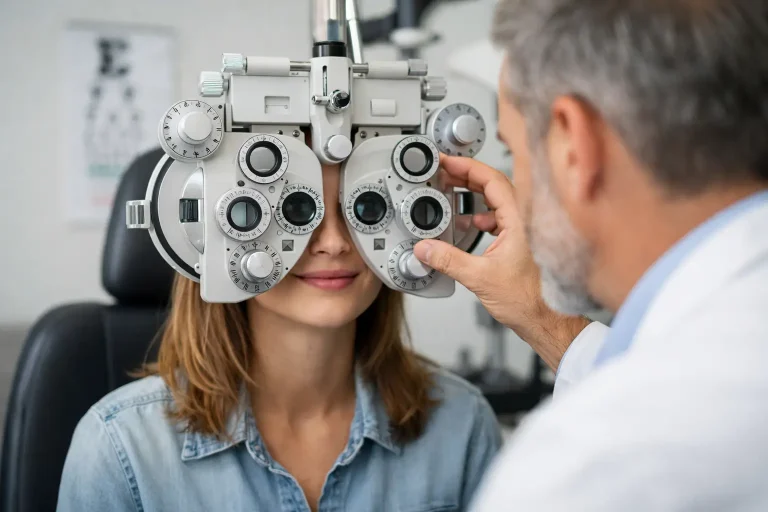
A good eye examination should leave you clearer about your vision than when you arrived. You should understand whether your prescription has changed, what your options are and when you ought to return. If the optometrist identifies something that needs monitoring or further investigation, they should explain what happens next in straightforward language.
Independent practices are often chosen by people who want a more conversational appointment. This can be particularly helpful for first-time glasses wearers, parents bringing a child for an eye test, or anyone who has had an unclear or rushed experience in the past. More time to ask questions can make a real difference when you are deciding whether varifocals, occupational lenses or contact lenses suit your routine.
That said, do not assume that a longer appointment alone equals better care. Ask practical questions when booking: what does the eye examination include, how long should you allow, and can you discuss any particular concerns? Mention symptoms such as flashes, sudden changes in vision, eye pain or a marked loss of sight when you call. Urgent symptoms should not wait for a routine appointment.
At a community practice such as Eyespy Eye and Dental Care, the aim is to combine careful clinical assessment with clear, unpressured advice. For local patients, being able to return to a familiar team can make routine eye care feel much less daunting.
Choosing glasses is more than choosing a frame
A frame might catch your eye first, but the lenses do most of the work. Your prescription, the shape and position of the frame, how you use screens, whether you drive at night and the time you spend outdoors all affect what will be comfortable and useful.
Chains may have access to a broad range of recognisable brands and regular multi-buy promotions. This can be attractive if you need a spare pair, have a straightforward prescription or already know exactly what you want. However, package prices can be difficult to compare if lens thinning, coatings, tints or varifocal upgrades are added later. Always ask for the total cost of the finished pair, including the lenses that meet your needs.
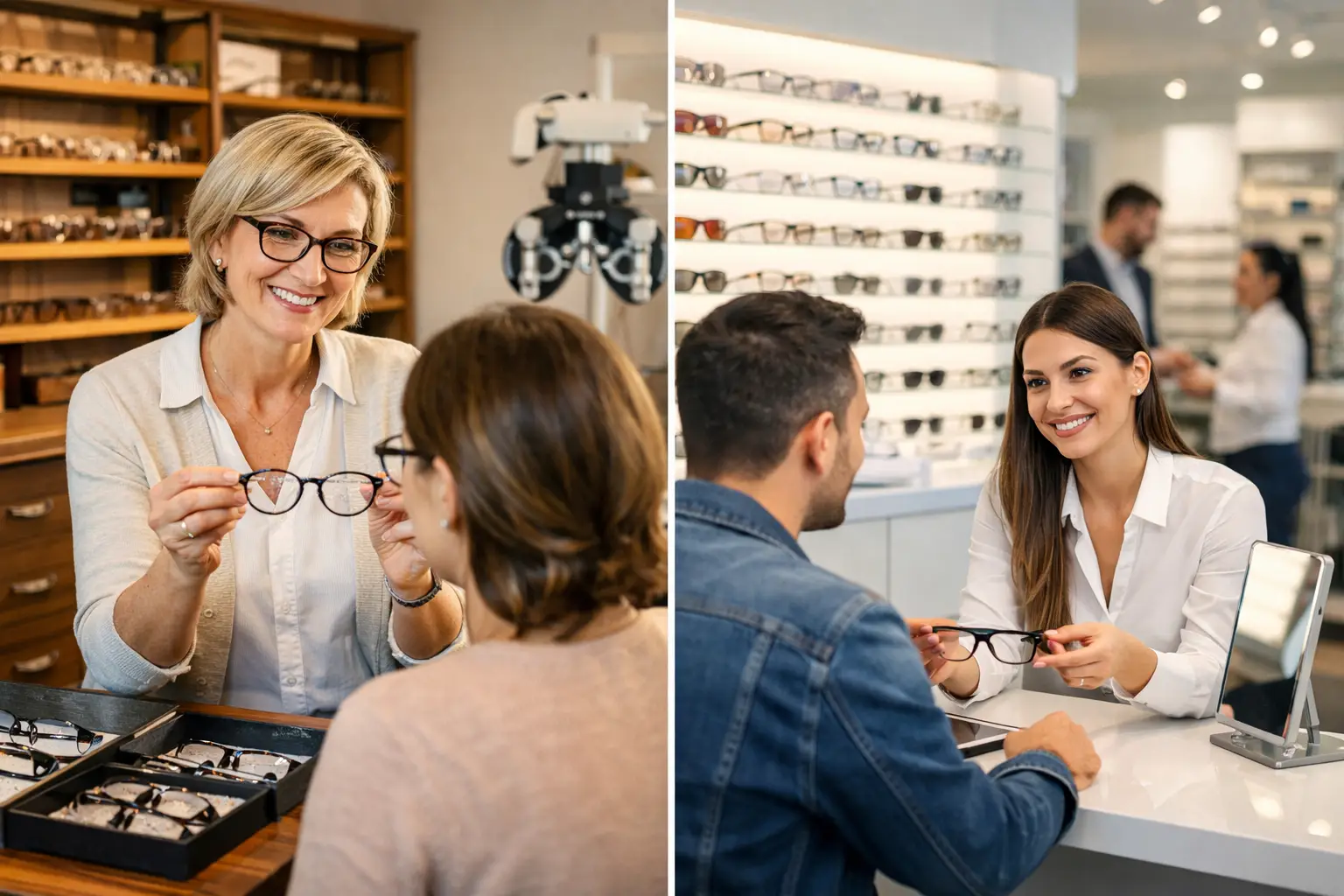
An independent optician may offer a more carefully selected frame range rather than the largest possible wall of options. For many people, that makes the process easier. A dispensing optician can help you narrow the choice by checking fit, bridge position, frame weight and how the frame works with your prescription. The right frame should sit securely, give you a good field of vision and feel like something you will genuinely want to wear.
Personal styling advice is useful, but it should never become pressure to spend more. A helpful conversation starts with your everyday life: whether you work on a laptop, take public transport, play sport, read frequently or need glasses that cope with a busy family routine. From there, you can decide where a premium lens feature is worthwhile and where a simpler option may be perfectly suitable.
Varifocals and specialist lenses need careful fitting
Varifocal lenses are a common area where detailed measurements and patient guidance matter. They provide distance, intermediate and near vision in one pair, but adaptation can take time. Accurate fitting measurements, a frame that sits properly and clear advice on how to use the lenses can make the transition far easier.
The same applies to lenses for computer work, driving or particular hobbies. No lens is universally best. Be wary of anyone presenting an upgrade as essential before they have asked how you use your glasses. The best recommendation is the one that matches your needs, explains the cost clearly and gives you a fair opportunity to ask questions.
Price: look beyond the offer in the window
Cost matters, and it should. A lower starting price may be the right answer for someone who needs a basic pair quickly. Larger chains often use national buying power and promotional offers to make entry-level glasses appear very affordable. Independents may not always match every advertised deal, especially on heavily discounted ranges.
But value is wider than the first figure you see. Compare like for like: the eye examination, frame, lens material, coatings, fitting, adjustments and any adaptation or aftercare policy. A pair that costs less initially but is uncomfortable, poorly adjusted or unsuitable for your routine is not necessarily better value.
Transparent pricing is especially helpful when your prescription is more complex or you are considering more than one pair. You should be able to see what is included, understand the optional extras and take time to decide. There is nothing wrong with asking for a written quote before proceeding.
Aftercare is where the relationship shows
Glasses are not a one-off purchase. They may need a small adjustment after a few days, new nose pads months later or advice if you are struggling to adapt to a lens change. Contact lens wearers also need regular checks to keep their eyes comfortable and healthy.
An independent practice often builds its reputation through this everyday aftercare. Local word of mouth depends on patients feeling looked after after they have paid, not only while they are choosing a frame. A team that welcomes you back for adjustments, listens when something is uncomfortable and explains your options can save a great deal of frustration.
Chains can offer aftercare too, particularly where there is a convenient branch nearby. The key question is how easy it will be for you to access it. If you live or work around Leytonstone, a practice you can visit without turning a minor adjustment into a weekend project has genuine value.
How to make the right choice for you
Start with what you need from the appointment. If your priority is a promotional price on a simple pair of glasses, a chain may suit you well. If you want continuity, more tailored frame and lens advice, or support with a more complex prescription, an independent optician may be a stronger fit.
Before booking, consider whether you can see the same clinician or team over time, whether the practice explains costs before you commit and how it handles adjustments or adaptation concerns. Read patient feedback with care, looking for comments about communication, thoroughness and aftercare rather than only comments about price.
Most importantly, choose a practice where you feel comfortable speaking up. Your glasses and contact lenses should support your life, not become another thing to tolerate. A friendly conversation, a careful fitting and honest advice are often worth far more than the biggest poster in the window.