A missing tooth can affect much more than the appearance of your smile. You may start chewing on one side, avoid certain foods or feel less comfortable speaking and laughing freely. Dental implants offer a fixed, long-term way to replace one or more missing teeth, designed to look, feel and function much like natural teeth.
The right solution is personal. Your oral health, the position of the gap, the condition of your jawbone and your expectations all matter. A careful consultation gives you the chance to understand the process properly, ask questions without pressure and decide whether implants are the right option for you.
What are dental implants?
A dental implant is a small titanium post that is placed into the jawbone to act as an artificial tooth root. Once the area has healed, a custom-made crown is attached to the implant. For several missing teeth, implants can also support a bridge. In some cases, they can be used to stabilise a removable denture.
Titanium is widely used because the bone can grow around it in a process known as osseointegration. This creates a stable foundation for the replacement tooth. The visible crown is then carefully made to complement the shape, shade and character of your surrounding teeth, rather than looking overly bright or artificial.
Unlike a conventional bridge, an implant does not usually require neighbouring healthy teeth to be filed down for support. Unlike a removable denture, it is fixed in place. Those differences can make a real difference to everyday confidence and comfort, but they also mean implant treatment requires planning, surgery and time to heal.
Are dental implants right for you?
Many adults with missing teeth can be suitable candidates for dental implants, including people who lost a tooth years ago. Good general health, healthy gums and enough bone in the jaw are all helpful factors. However, suitability cannot be confirmed from a quick look alone.
Your dentist will assess your teeth and gums, discuss your medical history and take the appropriate images to see the bone beneath the gum line. This helps identify any issues that need treating first, such as gum disease, infection or decay in nearby teeth.
If bone has reduced after a tooth has been missing for a long time, a bone graft may sometimes be recommended before or alongside treatment. This is not needed in every case, but it is one reason why an individual assessment matters. Smoking, uncontrolled diabetes and certain medications can also affect healing, so it is always best to be open about your health and lifestyle.
Dental implants are not automatically the best choice for every gap. A bridge or denture may be more appropriate depending on your needs, budget, timeline and oral health. Good care means explaining those options clearly, including the advantages and compromises of each.
The dental implant treatment journey
Treatment is completed in stages so that your mouth has the time it needs to heal. The overall timeline varies. Some patients may be suitable for a quicker approach, while others need several months from the initial consultation to their final crown.
Planning your treatment
Your first appointment should focus on understanding your priorities as well as examining your mouth. You may want to replace a single tooth at the front, restore comfortable chewing at the back, or secure a denture that moves when you eat. These goals affect the treatment plan.
Following the assessment, you should receive a clear explanation of the recommended steps, expected timeframe, likely costs and any preparatory treatment required. It is sensible to ask what is included in the fee, how reviews and aftercare work, and what happens if additional treatment is found to be necessary.
Placing the implant
The implant is placed under local anaesthetic, so the area is numbed during the procedure. Most people describe pressure rather than pain while treatment is taking place. Afterwards, some tenderness, swelling or bruising is normal for a few days and can usually be managed with the advice and pain relief recommended by your dentist.
The implant then needs time to integrate with the bone. During this healing period, you may have a temporary replacement tooth where appropriate, particularly if the gap is visible when you smile. Your dentist will advise you on eating, cleaning and attending review appointments while the site heals.
Fitting the final tooth
When the implant is stable and the surrounding tissues are healthy, impressions or digital scans are used to make the final crown, bridge or denture. The aim is not simply to fill a space. It is to create a result that sits comfortably within your bite and allows you to clean around it effectively.
Small adjustments may be needed to make sure the bite feels natural. This attention to detail helps protect both the implant and your existing teeth from unnecessary pressure.
The benefits and limits to consider
For the right patient, implants can provide excellent stability and a natural-looking replacement for missing teeth. They can improve chewing ability, help support facial structure and remove the inconvenience of taking a denture out at night. Many patients also value being able to smile without worrying about a gap or a loose appliance.
However, implants are not maintenance-free. The crown itself cannot decay, but the gum and bone around the implant still need protecting. Plaque build-up can lead to inflammation around an implant and, if left untreated, may eventually threaten its long-term stability.
Treatment also involves a greater initial investment than many removable options, and the process is not instant. If you need a solution quickly for a special event, a temporary option may be discussed while a longer-term plan is completed. Being realistic about the commitment from the start usually leads to a better experience.
Understanding costs and planning with confidence
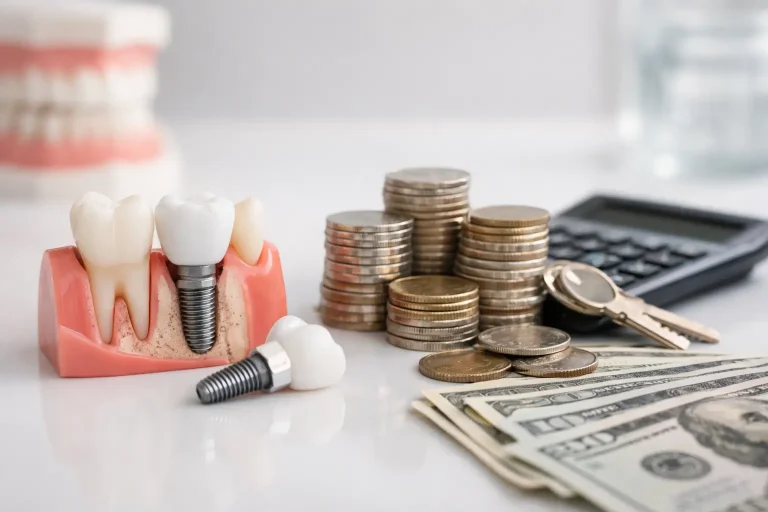
Implant costs vary because no two mouths, or treatment plans, are exactly alike. The final fee may reflect the number of implants needed, the type of restoration, diagnostic imaging, any extractions, bone grafting and the complexity of the case.
A transparent treatment plan is particularly valuable here. Before starting, you should understand what each stage involves and whether the quoted fee includes the implant, final restoration and follow-up care. Ask for costs to be set out in writing, so you can compare options fairly and plan without surprises.
If spreading the cost would make treatment more manageable, ask whether finance options are available and take time to understand the terms. The lowest monthly figure is not the only consideration. You should also feel confident about the full cost, the length of the agreement and what is included in your care.
Looking after implants for the long term
Daily cleaning is essential. Brush twice a day with a suitable toothbrush, clean between your teeth and around the implant using the tools recommended for you, and attend regular dental and hygienist appointments. The best cleaning method can differ depending on whether you have one implant, a bridge or an implant-retained denture.
If you grind your teeth at night, a protective appliance may be advised to reduce excess pressure on the implant and crown. It is also wise to avoid using teeth to open packaging or bite hard objects, just as you would with natural teeth.
At Eyespy Eye and Dental Care in Leytonstone, implant discussions begin with listening. Replacing a tooth is a significant decision, and you should leave your consultation understanding your choices, not feeling rushed into one. A well-planned treatment can restore more than a gap in your smile – it can make everyday eating, speaking and smiling feel comfortable again.