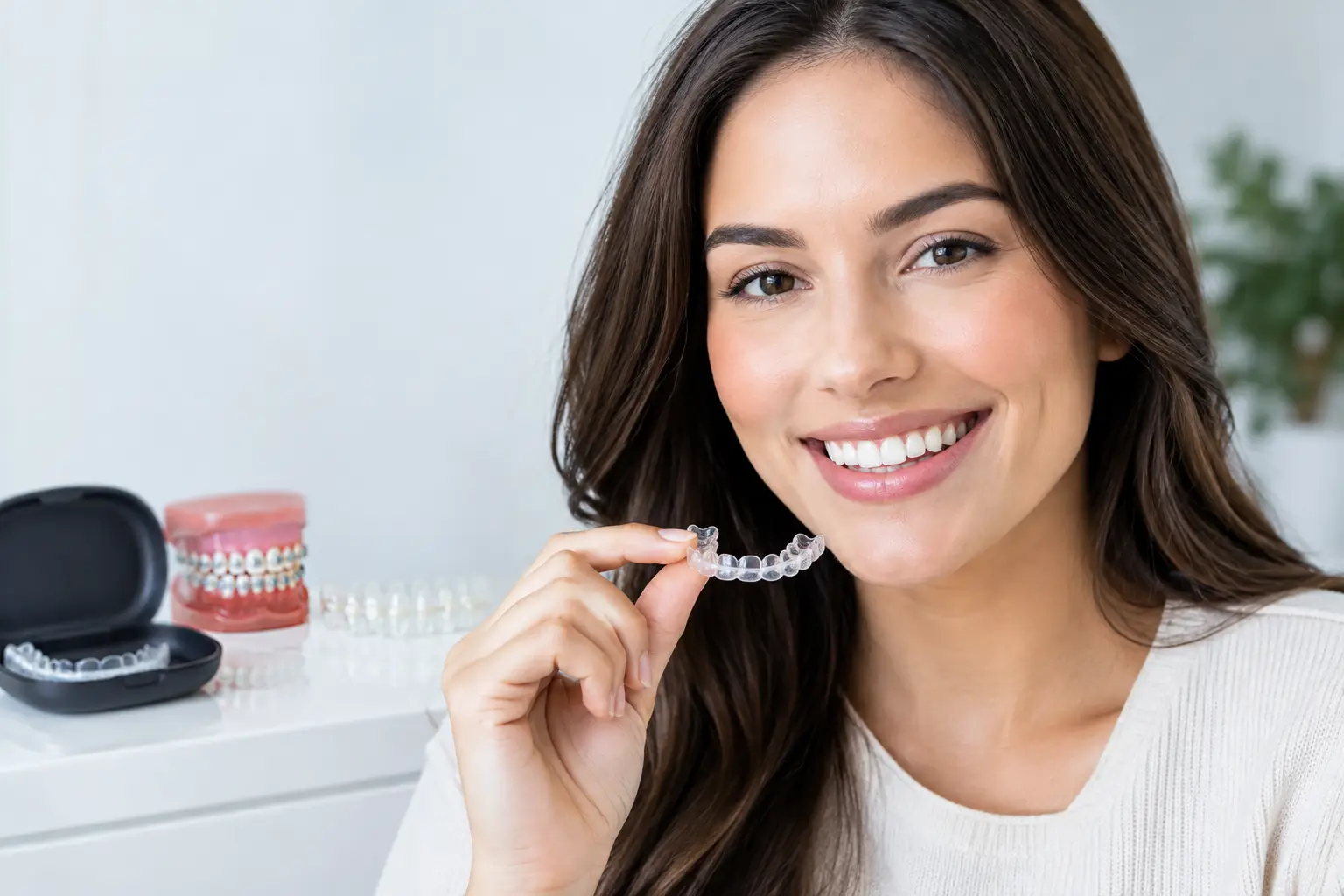
A discreet orthodontic treatment can be appealing, but it is not automatically the right fit for every smile, lifestyle or budget. Invisalign alternatives may offer a better route if you need more control over complex tooth movement, would prefer a fixed option, or simply want to understand what is available before committing to treatment.
The most suitable choice depends on far more than how visible it is. Your bite, the position of your teeth, your gum health, treatment goals and ability to follow the plan all matter. A careful assessment helps make sure the treatment is not only cosmetically pleasing, but also healthy and stable over the long term.
Why patients consider Invisalign alternatives
Clear removable aligners are popular because they are subtle and can be taken out for eating and brushing. However, wearing them successfully means keeping them in for around 20 to 22 hours each day. For some people, especially those with busy routines or a tendency to misplace removable items, that level of consistency can be difficult.
There are also cases where a different orthodontic approach may give the clinician greater precision. Significant crowding, larger gaps, teeth that need to be rotated or moved vertically, and bite concerns can all affect which treatment is recommended. This does not mean aligners are unsuitable in every complex case. It means the plan should be based on your individual teeth rather than a one-size-fits-all promise.
Cost can be part of the conversation too. The right value is not necessarily the lowest initial price. It is a treatment that includes appropriate planning, reviews, aftercare and retention, with no uncertainty about what happens if your teeth need further adjustment.
Invisalign alternatives to discuss with your dentist
Other clear-aligner systems
Not all clear aligner treatments use the same system, planning process or clinical support. Other dentist-led clear-aligner options may be appropriate for certain cases and can still provide the low-visibility appearance many adults want.
The key question is not simply which brand of aligner is used. Ask how your treatment will be planned, how often you will be reviewed and what is included if refinements are needed. Clear aligners work best when the patient wears them as directed and attends the scheduled check-ins, allowing progress to be monitored properly.
They can be a sensible option for people who value the freedom to remove their aligners for meals, special occasions and cleaning. On the other hand, removability is also their main limitation: an aligner cannot work while it is sitting in its case.
Fixed braces
Fixed braces remain one of the most reliable orthodontic options. Brackets are attached to the teeth and connected by a wire, so treatment is working continuously without relying on you to remember to put an appliance back in after eating.
This can make fixed braces particularly helpful where movements need to be carefully controlled. They may be recommended for more involved alignment or bite correction, although suitability will always depend on a clinical examination.
The trade-off is visibility and cleaning. Braces are more noticeable than clear aligners, and food can collect around brackets and wires. Good brushing, cleaning between the teeth and regular hygienist care are especially valuable during treatment. Some people also experience temporary tenderness after adjustments, particularly in the first few days.
Tooth-coloured fixed braces
For patients who need the control of fixed braces but would prefer a more discreet appearance, tooth-coloured brackets may be worth asking about. These blend more closely with the natural shade of the teeth than traditional metal brackets, though they are not invisible.
They still require the same commitment to cleaning and dietary care. Hard or sticky foods can damage brackets, and certain strongly coloured foods and drinks may affect the appearance of elastic components. For many patients, however, they provide a reassuring balance between subtlety and predictability.
Short-term cosmetic alignment
Some orthodontic plans focus on the teeth that show when you smile. This can be appealing if your main concern is minor crowding or small gaps at the front. Treatment may be shorter in selected cases, but it is not the right answer where the bite also needs correction.
A straighter-looking front smile is not always the same as a stable, healthy bite. Before choosing a limited plan, it is worth understanding what the treatment will and will not address. A responsible recommendation should be clear about those boundaries.
How to compare orthodontic options fairly
It helps to begin with your priorities, but do not let them be your only guide. If discretion is your main concern, clear aligners or tooth-coloured brackets may appeal. If you would rather not manage a removable appliance each day, fixed braces could be more practical. If your case is complex, the treatment that offers the greatest precision may be the best use of your time and money.
During a consultation, ask how long treatment is likely to take, how often appointments will be needed and what happens once your teeth have moved into position. Retainers are not an optional extra. Teeth have a natural tendency to shift over time, so retaining the result is an essential part of any orthodontic journey.
You should also ask for a transparent explanation of the fees. Check whether records, follow-up appointments, refinements, retainers and replacement retainers are included or charged separately. Clear information makes it easier to compare options without being caught out by avoidable surprises.
Your oral health comes first
Orthodontic treatment moves teeth, but it should start with a healthy foundation. Gum inflammation, untreated decay and poor plaque control may need attention before treatment begins. This protects your oral health and gives your orthodontic plan the best chance of progressing as expected.
If you are considering whitening or other cosmetic changes, timing matters. Teeth often look their best when any orthodontic treatment is complete and the final tooth positions are stable. Your dentist can help you plan the order of treatment so that each step supports the next.
For families, it is also useful to remember that children and teenagers have different orthodontic needs from adults. Growth, developing teeth and changing bites all influence when treatment should be considered. An assessment can provide reassurance even when active treatment is not needed straight away.
Choosing care close to home
For patients in Leytonstone and nearby East London communities, having dental reviews and orthodontic advice in a familiar local practice can make treatment easier to keep on top of. At Eyespy Eye and Dental Care, the focus is on explaining your options clearly, answering questions without pressure and creating a plan around your goals and clinical needs.
If cost is a concern, it is reasonable to discuss payment options early. Spreading the cost through available 0% finance options, subject to eligibility and terms, may make treatment feel more manageable while allowing you to choose care based on suitability rather than haste.
The best alternative is rarely the one that looks best in a photograph or sounds quickest in an advert. It is the option you can realistically follow, that addresses the way your teeth and bite work, and that leaves you with a smile you feel comfortable maintaining for years to come.