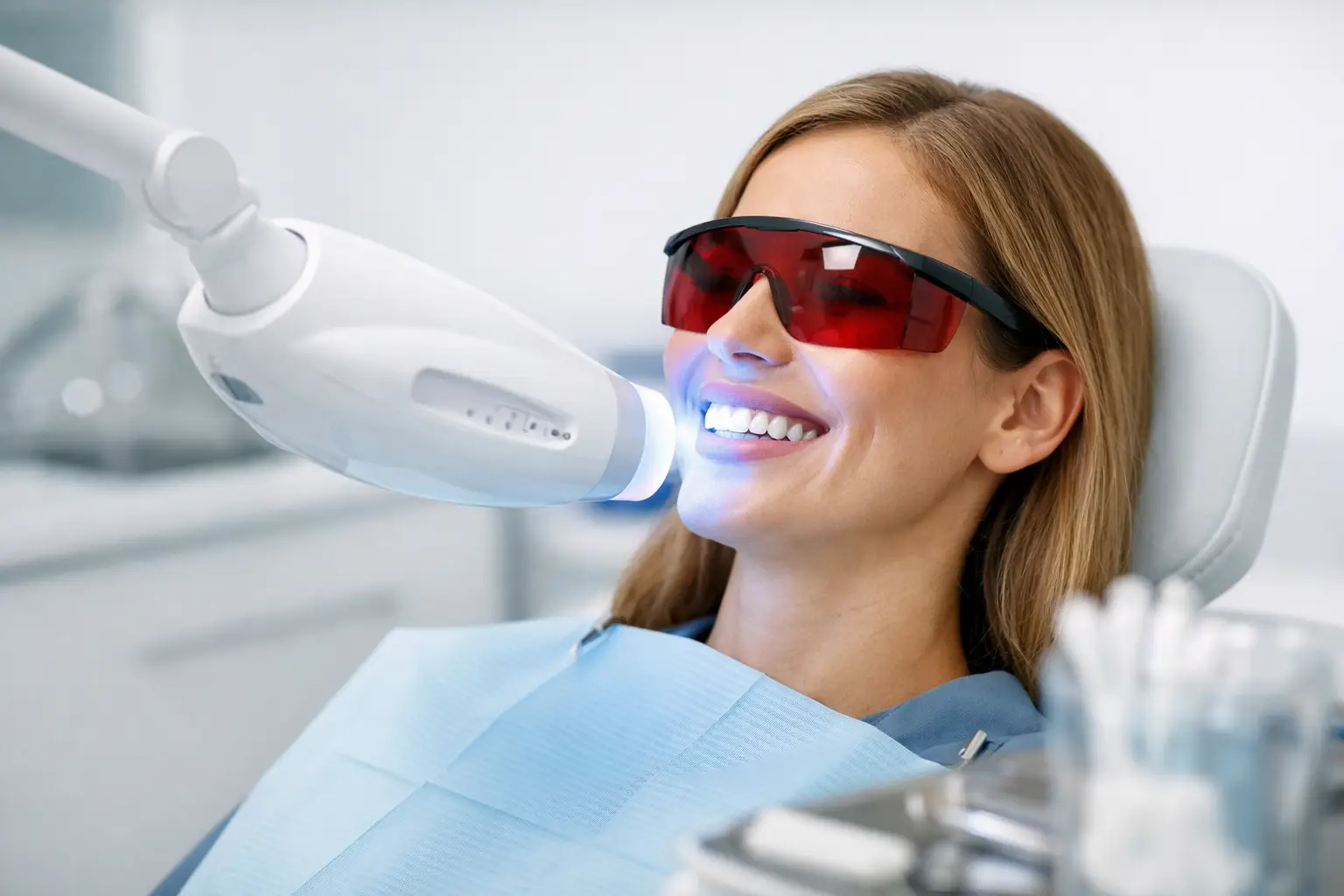
A brighter smile can make a real difference to how you feel in photographs, at work or simply when you look in the mirror. But whitening is not one-size-fits-all. In this Enlighten whitening treatment review, we explain what the treatment involves, what results are realistic and the factors to consider before deciding whether it is right for you.
What is Enlighten whitening?
Enlighten is a dentist-led teeth whitening system that combines whitening at home with a final treatment appointment at the practice. The aim is to lift staining and lighten the natural shade of your teeth in a controlled, personalised way.
It is often chosen by people who want a noticeable improvement but would prefer a gradual process at home rather than relying on a single appointment alone. Your dentist first checks that whitening is suitable for your teeth and gums, then creates custom trays designed to fit comfortably and hold the whitening gel in the right place.
Unlike over-the-counter products, professional whitening is planned around your oral health, current tooth shade and desired outcome. This matters because whitening products can affect people differently, particularly where there is sensitivity, gum recession, old dental work or deep internal staining.
Enlighten whitening treatment review: the process
The treatment starts with a consultation. Your dentist will examine your mouth, discuss what you would like to change and explain what whitening can and cannot achieve. If you have active decay, gum problems or a build-up of plaque and tartar, these concerns should be addressed first. Whitening healthy, clean teeth gives a more predictable result and is more comfortable.
Custom-made trays are then produced from impressions or scans of your teeth. You wear these at home as instructed, usually over a course of several days or weeks. The exact plan depends on your teeth, the strength of gel prescribed and your dentist’s recommendation. Consistency matters: skipping applications or using more gel than advised does not improve the result and can increase sensitivity.
At the end of the home phase, you return for an in-practice whitening session. This final stage is designed to enhance and settle the shade achieved at home. Your dentist can assess the result in person, check your gums and answer any questions about maintenance.
For many patients, the appeal of this approach is the balance between flexibility and supervision. You complete much of the treatment at home, but you are not left to guess whether it is working or whether a reaction is normal.
What results can you expect?
The honest answer is that it depends. Natural tooth colour varies considerably, as do the causes of discolouration. Surface staining from tea, coffee, red wine, smoking or strongly coloured foods often responds well. Yellow-toned teeth can also lighten attractively with professional whitening.
Grey tones, staining caused by trauma, certain medications or changes within a tooth can be less predictable. Your dentist should discuss this before treatment, rather than promising an identical result for every smile.
Professional whitening can create a visibly fresher, brighter appearance, but it will not produce an artificial-looking shade unless that is realistically achievable for your teeth. A good outcome is one that suits your complexion, looks even across the smile and feels like an enhanced version of your natural teeth.
One point that is easily missed: crowns, veneers, composite bonding and fillings do not whiten. If they are visible when you smile, their colour may no longer match your newly whitened teeth. This does not mean whitening is unsuitable, but it does mean the sequence of cosmetic treatment should be planned carefully. In some cases, whitening first allows any replacement work to be matched to the lighter shade.
Is Enlighten whitening comfortable?
Sensitivity is the most common concern with any whitening treatment. Some people experience a short, sharp sensation during the course, while others notice no sensitivity at all. It is usually temporary, but it should never be ignored or pushed through without advice.
A dentist-led treatment gives you a sensible route if sensitivity develops. Your plan may be adjusted by shortening wear time, taking a brief break or using products recommended to settle the teeth. Custom trays also help reduce unnecessary contact between the whitening gel and your gums.
It is worth being realistic here. Whitening is an elective treatment, so comfort matters. Tell your dentist if you already have sensitive teeth, exposed root surfaces, frequent toothache or a history of gum problems. A careful assessment can prevent disappointment and help make the process more manageable.
How long does Enlighten whitening last?
Whitening does not permanently change how your teeth respond to everyday life. Tea, coffee, curries, red wine and tobacco can gradually reintroduce staining, while natural ageing can affect tooth colour over time. The length of time your result lasts depends largely on your habits and how well you maintain it.
Many people keep their smile looking bright with occasional top-up whitening, using their existing trays under professional guidance. This is one practical advantage of having well-made trays that are kept safely after the initial course.
Good daily cleaning and regular hygienist appointments can make a meaningful difference. A hygienist does not whiten teeth, but removing surface deposits helps your smile look cleaner and supports the health of your gums before and after cosmetic treatment. If you enjoy staining drinks, you do not necessarily need to give them up completely, but rinsing with water afterwards and avoiding them immediately after whitening can help.
Who is a good candidate for treatment?
Enlighten whitening may suit adults with healthy teeth and gums who would like to improve the colour of their natural teeth. It can be especially appealing if you are preparing for a wedding, milestone birthday, professional photographs or simply feel your smile has become duller over the years.
However, it is not automatically the right first step for everyone. Whitening should be delayed if you need dental treatment for decay or gum disease. It may also need a different approach if you have significant visible restorations, severe sensitivity or a single dark tooth. Your dentist may advise waiting during pregnancy or breastfeeding as a precaution.
A consultation is therefore more than a formality. It is your opportunity to discuss your concerns openly, see whether your expectations are achievable and receive a clear explanation of the fees, timings and aftercare before committing.
Why dentist-led whitening is worth considering
There are plenty of whitening products available, but a lower price does not always mean better value. Generic strips and kits cannot assess your dental health, create a tailored fit or help if sensitivity becomes a problem. They may also produce uneven results where the product does not sit closely against each tooth.
With professional whitening, you have a treatment plan shaped around your smile. At Eyespy Eye and Dental Care, that means taking time to explain the options without pressure, checking your mouth before treatment and helping you understand how to maintain the result afterwards.
It is also worth asking about the complete cost rather than comparing an advertised starting figure. Find out whether consultation, trays, whitening gel, the final appointment and future top-up options are included. Clear information helps you make a decision based on the treatment you are actually receiving.
A considered choice for a brighter smile
Enlighten whitening is not about chasing a perfect, identical shade seen on someone else. It is about safely improving the colour of your own teeth with professional support and realistic expectations. If you are thinking about whitening, book a consultation, bring your questions and let your dentist help you choose a route that feels comfortable, suitable and right for your smile.