A child does not need to complain about blurry vision to benefit from an eye examination. They may simply sit very close to the television, lose their place while reading, avoid detailed drawing or seem unusually tired after school. A children’s optician in Leytonstone can assess vision in a calm, age-appropriate way, helping parents understand whether these everyday signs point to an eye concern or are simply part of normal development.
Children often assume that everyone sees the way they do. That is why regular checks matter, particularly before starting school and whenever a parent, teacher or child notices a change. Early advice can make reading, learning, sport and day-to-day confidence much easier.
When should a child have an eye test?
A child can have their eyes checked at any age if there is a concern. For most families, a sight test before school starts is a sensible opportunity to establish how well a child sees and whether their eyes are working together comfortably. School screening can be useful, but it is not a replacement for a full eye examination.
After that, the right interval depends on your child’s individual needs. If no correction or monitoring is required, your optometrist will advise when to return. Children who wear glasses, have a family history of eye conditions, or are being monitored for a developing prescription may need more frequent appointments.
It is worth booking sooner if you notice squinting, frequent blinking, headaches, rubbing of the eyes, holding books very close, covering one eye, tilting the head, or a reluctance to read. A teacher may also spot difficulty copying from the board, reduced concentration during close work or a child who struggles to follow text. None of these signs automatically means there is a serious problem, but they are good reasons for a professional check.
What a children’s optician in Leytonstone checks
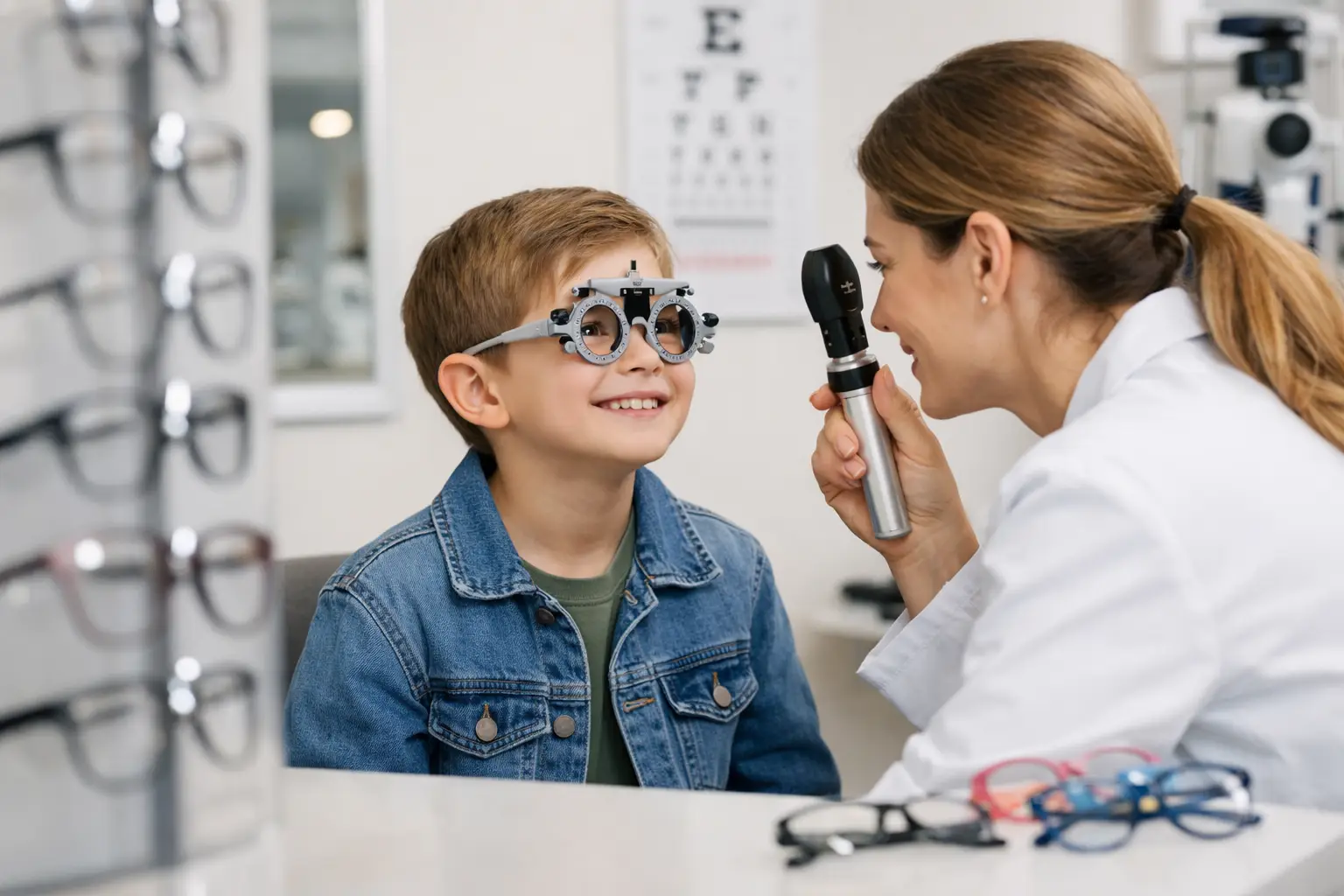
A thorough children’s eye examination is about more than reading letters from a chart. The optometrist assesses how clearly your child sees at different distances, how their eyes focus and move, and whether both eyes work together effectively. They also examine the general health of the eyes.
The appointment is adapted to the child in front of us. Younger children may use pictures, matching shapes or simple games rather than letters. There is no need for them to know the alphabet or to understand complicated instructions. A good examination should feel unhurried and encouraging, with clear explanations for both child and parent.
If a prescription is needed, the optometrist will explain what it means in plain language. Some children need glasses all the time; others only need them for particular activities, such as classroom work or seeing in the distance. The strength of a prescription alone does not tell the whole story. Comfort, visual development and how the eyes work together all influence the recommendation.
Making an eye appointment feel easier
Children are often more relaxed when they know what to expect. You can tell them that the optometrist will look at how their eyes see, just as a teacher might ask them to recognise pictures or shapes. Avoid presenting the visit as a test they can pass or fail. There are no marks, and getting an answer wrong is useful information rather than something to worry about.
Bring along any glasses your child already wears, even if they rarely use them. It can also help to mention any changes you have noticed, relevant family eye history, or comments from school. If your child is nervous, let the practice know when booking. A patient, friendly approach can make a significant difference, especially for a first appointment.
Appointments are generally straightforward, but every child is different. A very young child, a child with additional needs, or a child who feels anxious may need a little longer and more reassurance. It is better to work at their pace than rush through an examination that leaves them unsettled.
Choosing glasses your child will actually wear
The best children’s glasses are the pair your child can see well in, feels comfortable wearing and is happy to put on each morning. Style matters because confidence matters. A child who likes their frames is far more likely to wear them consistently.
Fit is equally important. Frames should sit securely without pinching the nose, slipping down constantly or pressing behind the ears. They need to suit the child’s face and leave the eyes correctly positioned within the lenses. A proper fitting appointment also gives parents a chance to ask about adjustments, care and what to do if frames become bent or damaged.
Durability is a practical consideration, particularly for active children, but the toughest-looking frame is not always the right choice if it feels heavy or uncomfortable. Your optician can help balance fit, lens requirements, lifestyle and personal preference. For children who need glasses for school, sport and play, having a reliable local practice available for advice and adjustments can be reassuring.
Children under 16, and young people under 19 in full-time education, are usually eligible for an NHS sight test. Those who qualify may also receive help towards glasses through an NHS optical voucher. Eligibility and available options can be confirmed before or during the appointment, so families know what to expect without pressure or confusion.
Glasses are only part of the conversation
It is tempting to view an eye test as a simple question of whether a child needs glasses. In reality, it is also an opportunity to discuss habits that support comfortable vision. Good lighting for reading, sensible screen breaks and time outdoors all have a place in a healthy routine.
Screens do not automatically damage a child’s eyes, but prolonged close work can make eyes feel tired or dry, especially when blinking becomes less frequent. Encourage regular breaks, a comfortable viewing distance and a balanced mix of activities. If your child has persistent headaches, eye strain or blurred vision, it is better to arrange an examination than assume screen time is the sole cause.
Outdoor time is beneficial for children in many ways, and research has linked it with a lower risk of short-sightedness developing or progressing. It is not a substitute for clinical advice, particularly where a child already has a prescription, but it is a useful part of a balanced routine.
Personal care makes a difference
Parents should leave an appointment knowing what has been checked, what the findings mean and what happens next. Whether the result is reassurance, a first pair of glasses or a plan to monitor vision, clear explanations help families make confident decisions.
At Eyespy Eye and Dental Care, children’s appointments are approached with the same personal attention that local families expect from an independent practice. The focus is on making eye care approachable, answering questions clearly and ensuring children feel listened to rather than hurried.
If your child has started moving closer to the page, avoiding reading, or saying that things look unclear, trust your instinct and arrange a check. A relaxed eye examination can provide reassurance, and when support is needed, acting early gives your child the best chance to see, learn and play comfortably.