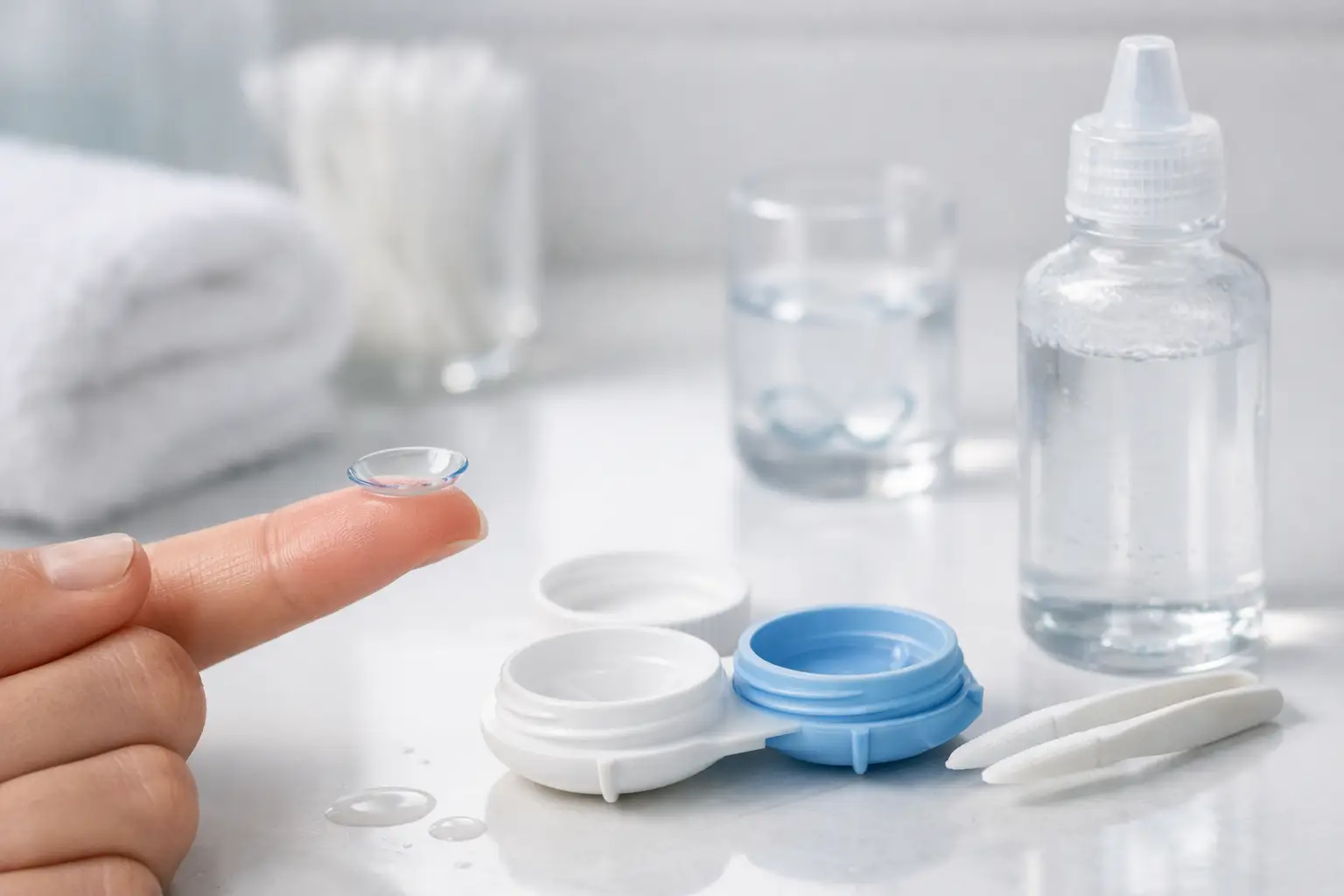
A clear lens can still carry deposits, germs and traces of make-up that are invisible to the eye. Knowing how to clean contact lenses properly is one of the simplest ways to help protect your eye health, keep your vision comfortable and get the best from your lenses.
The right routine depends on the type of lenses you wear. Daily disposable lenses are worn once and thrown away, so they should never be cleaned or reused. Reusable lenses, such as fortnightly or monthly lenses, need careful cleaning and storage every time they are removed. If you are ever unsure which type you have, check the instructions provided with your lenses or ask your optometrist.
How to clean contact lenses step by step
Cleaning reusable contact lenses should become part of your evening routine, even on days when you have only worn them for a few hours. The process takes very little time, but rushing it or skipping a step can make irritation and infection more likely.
Start by washing your hands thoroughly with soap and water. Choose a mild, non-moisturising soap where possible, as creams, oils and perfumes can transfer to the lens. Dry your hands with a clean, lint-free towel. This matters more than many people realise: water, towel fibres and residue from hand cream can all end up on the lens surface.
Remove one lens at a time. This reduces the chance of mixing up your right and left lenses, particularly if the prescriptions differ. Place the lens in the palm of your clean hand, add a few drops of the contact lens solution recommended for your lenses, and gently rub it with a clean fingertip for the time stated on the solution bottle. Usually, this is around 10 to 20 seconds on each side.
Although some solutions are labelled “no-rub”, rubbing remains a sensible extra step for most reusable soft lenses. It helps remove protein, oil and debris that can build up through the day. Be gentle – lenses can tear if pinched, scraped with a nail or handled roughly.
Next, rinse the lens thoroughly with fresh solution. Then place it in the correct side of a clean lens case and fill the case with fresh solution until the lens is fully covered. Repeat the process with the other lens. Close the case securely and leave the lenses to disinfect for the full time specified by the solution manufacturer before wearing them again.
Never top up yesterday’s solution. Emptying out the old liquid and adding a little more may seem economical, but it does not provide proper disinfection. Every storage cycle needs fresh solution.
What never to use to clean contact lenses
Water is not safe for cleaning, rinsing or storing contact lenses. That includes tap water, bottled water, filtered water and saliva. Water can contain microorganisms that may cause serious eye infections, and it does not disinfect lenses effectively.
You should also avoid using homemade saline, household cleaning products, eye drops or any solution that is not specifically designed for your lens type. Saline can rinse a lens but does not disinfect it, while rewetting drops are intended to improve comfort when lenses are being worn, not to clean them.
If you use a hydrogen peroxide lens-care system, follow its instructions exactly. These systems can provide excellent cleaning, but the solution must be fully neutralised in the special case supplied before lenses go back into your eyes. Unneutralised hydrogen peroxide can cause intense stinging and eye injury. Do not use a standard flat lens case with this type of solution.
Look after your contact lens case too
A clean lens is only as clean as the case it is stored in. After putting your lenses in, empty the old solution from the case, rinse it with fresh multipurpose solution and leave it open to air dry on a clean surface. Do not rinse the case with water.
Replace your case regularly, ideally every one to three months or whenever you start a new bottle of solution, depending on the manufacturer’s advice. Replace it sooner if it is cracked, stained or has a lingering residue. A case may look fine while still allowing germs to build up, so this small habit makes a real difference.
Daily habits that keep lenses comfortable
Good lens care continues after cleaning. Put your lenses in before applying make-up and remove them before taking make-up off. This helps limit the transfer of mascara, eyeliner and skincare products to the lens.
Avoid sleeping in your lenses unless your optometrist has specifically prescribed lenses for overnight wear and advised that it is suitable for you. Wearing lenses while asleep can reduce the oxygen reaching your eyes and increase the risk of complications. Swimming, showering and using a hot tub while wearing lenses can also expose them to water-borne organisms. In these situations, prescription goggles are the safer option.
Stick to your replacement schedule, even when lenses still feel comfortable. A monthly lens is not designed to last longer simply because it looks clear. Overwearing lenses can lead to deposits, dryness and reduced oxygen flow to the eye.
It is also wise to keep a pair of up-to-date glasses. If your eyes feel dry, sore or tired, giving them a break from contact lenses can be more comfortable than trying to wear through the irritation.
Common mistakes that can damage your eye health
The most frequent mistakes are easy to make: sleeping in lenses, reusing daily disposables, using water, failing to replace the lens case and wearing lenses beyond their intended schedule. Another common problem is putting lenses back in when the eyes are already red or uncomfortable.
Do not ignore warning signs. Remove your lenses and seek urgent professional advice if you develop pain, significant redness, sensitivity to light, blurred vision, discharge or a feeling that something is stuck in your eye. These symptoms can have different causes, but contact lens-related infections need prompt assessment. Do not put the lenses back in while you wait to be seen, and take the lenses or their case with you if you can.
When to arrange a contact lens check
Regular contact lens aftercare appointments are not just about renewing a prescription. They allow your optometrist to check that your lenses still fit well, that your eyes remain healthy and that your cleaning routine suits the type of lenses you wear.
Book a review sooner if lenses have started to feel dry, move around more than usual, become uncomfortable by the end of the day or leave your eyes red after removal. Changes in health, medication, pregnancy or screen use can affect comfort too, and a different lens material or care product may be more suitable.
For patients in Leytonstone and nearby East London, Eyespy Eye and Dental Care can provide practical contact lens advice and aftercare tailored to your prescription and lifestyle. A quick conversation can often prevent a small comfort issue from becoming a reason to stop wearing lenses altogether.
Clean lenses should feel easy to wear, not like something your eyes have to tolerate. Give the routine a few careful minutes each day, replace what needs replacing, and let discomfort be your cue to pause and ask for advice.